

The Edgar cut has a look you spot instantly: short sides, a textured top, and a straight fringe across the forehead. The classic version pairs that fringe with a high fade. It is bold, and not everyone wants that much contrast.
That is where the mid taper fade Edgar cut comes in. It keeps the blunt fringe but lowers the blend, so the sides look cleaner and the whole cut feels easier to wear day to day.
This guide covers eight styles, how the cut differs from nearby haircuts, and which versions suit your hair type, face shape, and age. You will also get exact guard numbers for the barber chair, a mistakes list, and a maintenance routine.
Quick answer: A mid taper fade Edgar cut is a short haircut with a blunt, straight fringe on top and sides that fade gradually, starting around the temple or the top of the ear and ending at the neckline.
Also read this: https://nexttapper.com/mid-taper-fade-with-dreads/
Mid Taper Fade Edgar Cut Explained: What Makes It Different
The Edgar is a modern take on the French crop, sometimes called the Caesar cut. Both have a short, forward-combed top. The Edgar adds a sharper fade and a more defined, straight fringe.
The mid taper version sits between a low and a high fade. The hair shortens gradually from around the middle of the sides down to the neckline. The fringe stays blunt and straight.
The origin of the name is debated, and sources do not agree on where it came from. What matters in the barber chair is the shape: clean sides and a crisp front line.
Here is what defines it:
- Fringe: Straight and blunt, cut across the forehead.
- Top length: Usually one and a half to two inches before cutting, then shortened and textured.
- Sides and back: Mid taper that finishes at a shadow or skin.
- Finish: Sharp neckline and clean edges around the ears.
A word of caution: if the top is left too long and flat, the cut can look like a bowl cut. Texture on top prevents that.
Taper, Fade, and Mid: Clearing Up the Terms
Barbers use these words in specific ways, and mixing them up leads to the wrong cut.
- Taper: A gradual shortening of hair, usually focused on the sideburns, ears, and neckline. It is subtle.
- Fade: A blend that moves from longer hair to very short hair or skin. It is more dramatic and can start higher on the head.
- Mid: This describes height. The blend begins around the middle of the sides rather than low near the ears or high near the crown.
A mid taper fade combines these ideas. You get a visible gradient, but it does not climb as high as a classic Edgar fade. That is why the style works for men who find a high fade too stark.
Classic Cuts: The Signature Line
1. Classic Mid Taper Edgar Cut
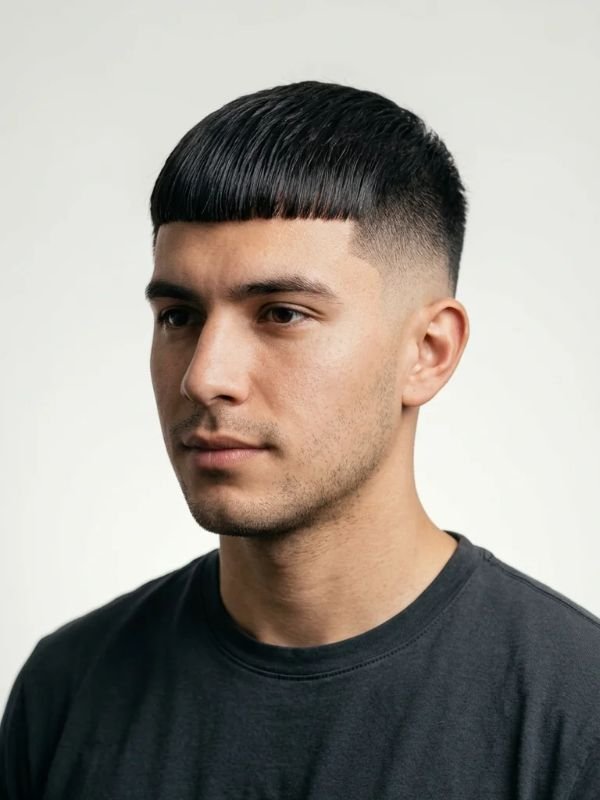
This is the baseline. Straight fringe, mid taper, and a short, slightly rounded top. The contrast between the top and the sides is clear without being extreme.
Style it with a matte paste. Comb the top forward, then flick the ends with your fingers for a lived-in finish.
Best for: Men trying the Edgar for the first time. Barber phrase: “Mid taper, straight fringe, short textured top.”
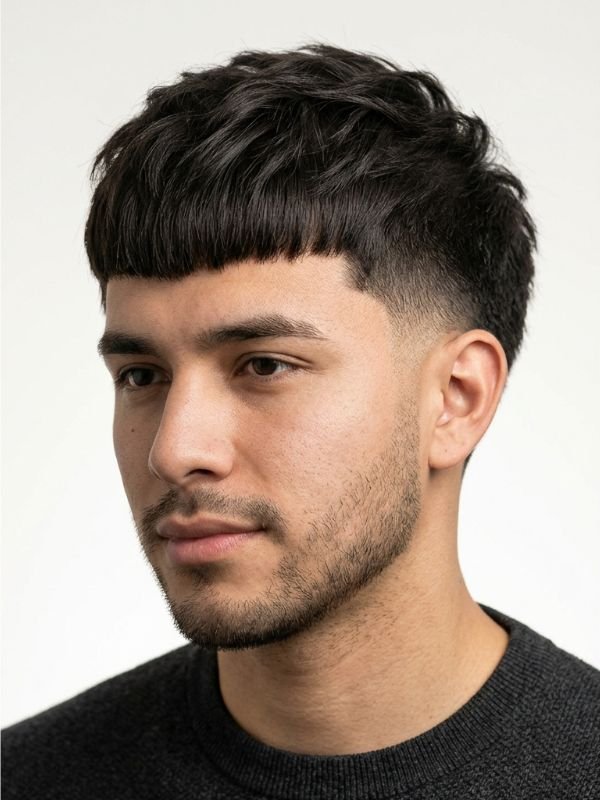
2. Edgar Cut with Straight Hair
Straight hair lies flat and forms the fringe line easily. The mid taper keeps the sides tight so the top does not look heavy.
Use a light texture spray to add grip. Without it, straight hair can look limp by afternoon.
Best for: Fine to medium straight hair. Barber phrase: “Point cut the top so it is not too blunt, but keep the fringe straight.”
Textured and Wavy Variations
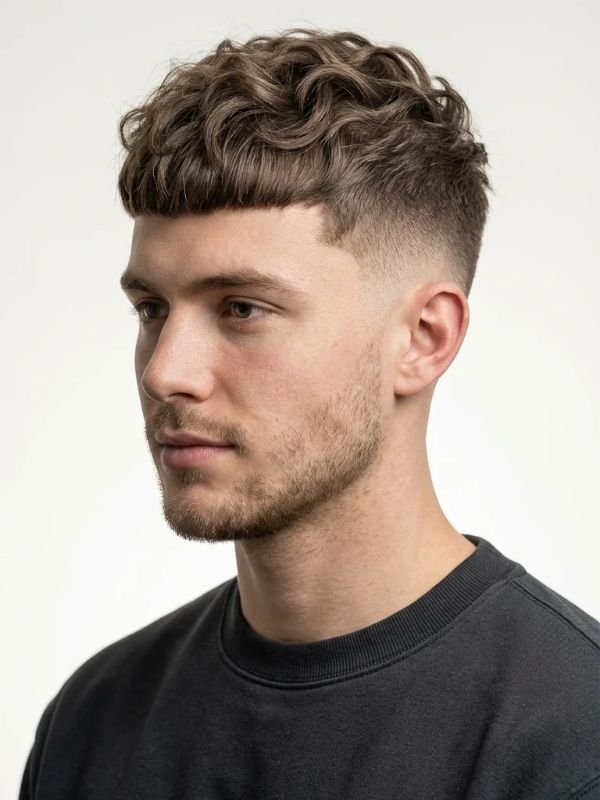
3. Wavy Edgar Cut
Waves add natural movement along the fringe. Keep the top a little longer so the pattern shows, then let the taper frame it.
A sea salt spray or light cream enhances the waves without weighing them down.
Best for: Men with natural wave patterns. Barber phrase: “Leave a little extra length so my waves show, with a straight fringe.”
4. Textured Edgar Cut
Here the barber cuts the top choppy, using point cutting or a razor. The fringe stays straight at the front but looks broken up behind it.
This is a good option if you like a messy, undone look.
Best for: Thick hair that needs weight removed. Barber phrase: “Choppy texture on top, mid taper on the sides, straight fringe.”

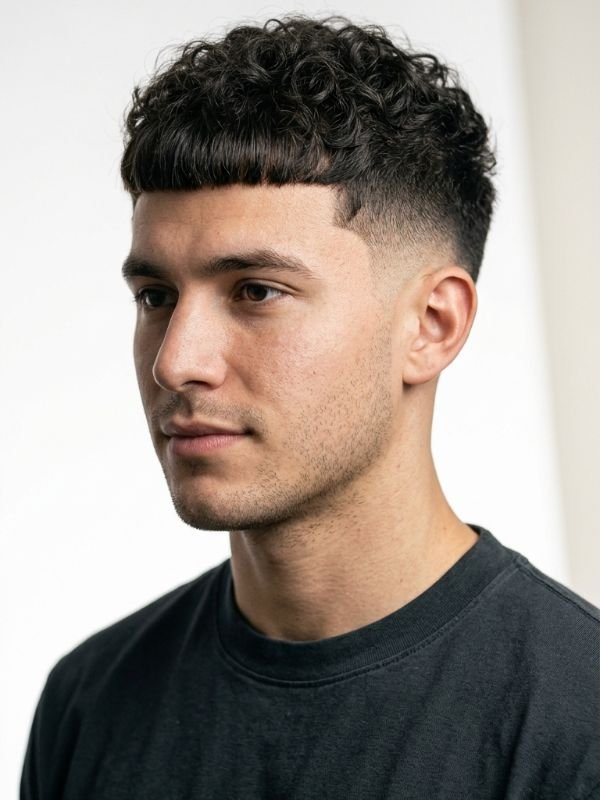
5. Curly Edgar Cut
Curls make the fringe shorter than it looks, because they spring up when dry. Ask for the fringe to be cut with the curls in their natural state.
A mid fade with a little clay is an easy, low-effort combination. Define the curls with a cream and let them air dry.
Best for: Loose to medium curls. Barber phrase: “Cut the fringe dry, so I can see where the curls fall.”
Detail Work
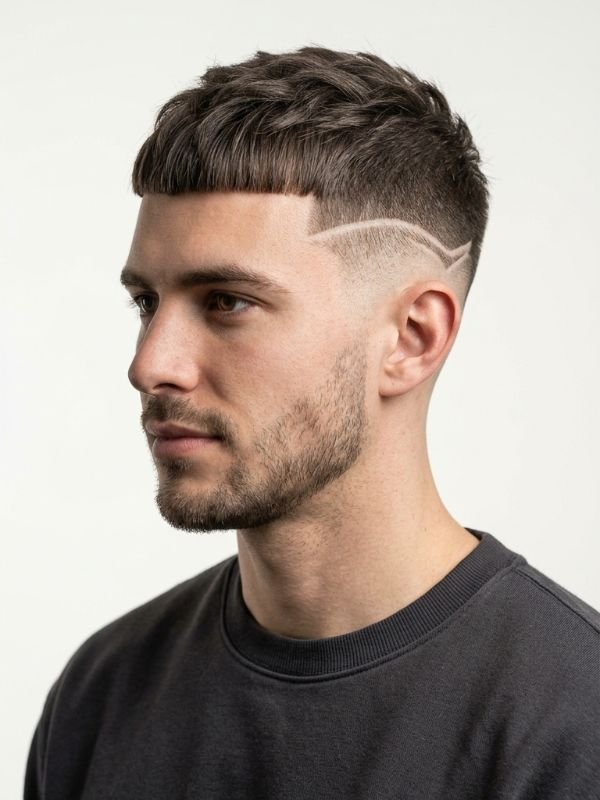
6. Edgar Cut with Design
A shaved line, a small shape at the nape, or a section of color adds personality. Keep it small. A single clean design looks sharper than a cluttered one.
Show your barber a reference photo. Design work is hard to describe in words.
Best for: Men who want a personal touch. Barber phrase: “Add a small freehand design at the nape, keep the rest clean.”
7. Edgar Cut with Beard Connect
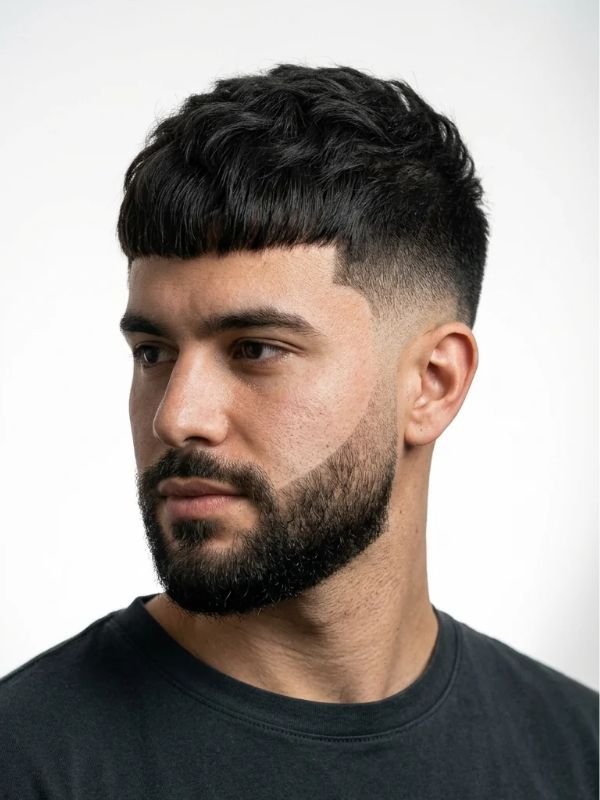
The taper flows into the sideburns and beard. Done well, you cannot see where the haircut ends and the beard begins.
Trim the beard regularly and keep the cheek line defined. A full beard on a short Edgar balances the face.
Best for: Men with a full or medium beard. Barber phrase: “Blend the taper straight into the beard with no visible line.”
Low-Maintenance Version
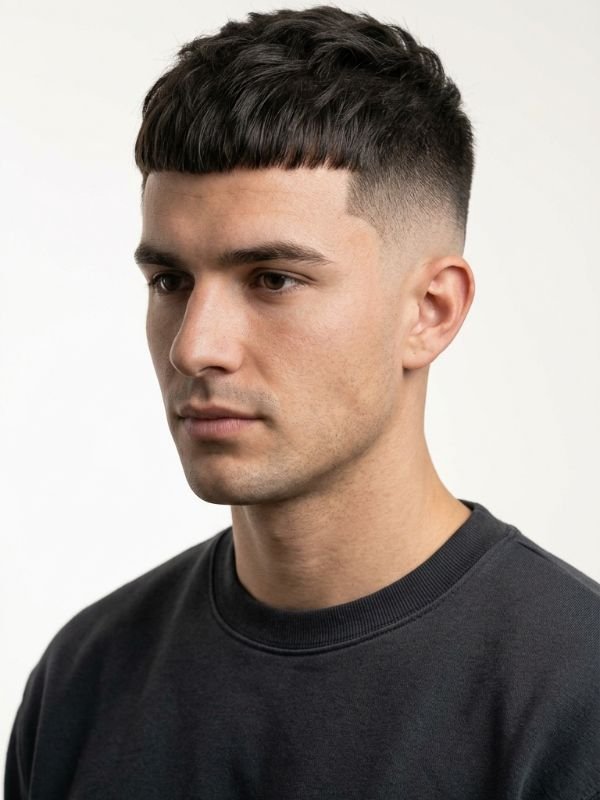
8. Short Fringe Edgar Cut
The fringe is cut shorter, sitting just above the eyebrows or higher. It stays neat with minimal styling.
This version suits men who want the look without daily product. Wash, towel dry, and a touch of paste is enough.
Best for: Busy mornings and first-time fringe wearers. Barber phrase: “Keep the fringe short, just above the eyebrows, with a mid taper.”
Why the Edgar Cut Took Over in 2026
Short, structured cuts keep returning, and the Edgar has stayed in that group. A few things explain its staying power.
It is easy to describe. Photos travel fast online, and barbers see the same reference images daily.
It works with many textures. Straight, wavy, and curly hair can all wear it with small tweaks.
It is practical. The short sides are simple to keep up, and the longer top gives room to style.
It suits different settings. A mid taper tones the cut down, so it fits school, work, and weekends.
It lets you customize. Fade height, fringe length, texture, and color all change the result.
It rewards a good barber. Because the cut relies on a clean straight line and a smooth blend, it pushes men to find a barber they trust. Once you have one, the cut becomes repeatable.
It grows out better than a high fade. The mid taper does not leave a harsh line as it grows, so you have a little more room between visits.
Pros and Cons: What You’re Signing Up For
| Pros | Cons |
| Clean, sharp shape | Fringe needs regular trimming |
| Works with several hair types | Can look like a bowl cut if left flat |
| Quick daily styling | Needs a barber who can cut a straight line |
| Mid taper is less harsh than a high fade | Sides lose definition after a few weeks |
| Easy to customize | A high forehead or receding hairline may need adjustments |
If you like low effort and a defined shape, the pros win. If you prefer a long, flowing style, this is not your cut.
Think about your routine before booking. The Edgar looks best when the fringe line is crisp, and that means a trim every few weeks. If you only visit the barber twice a year, a softer cut may suit you better.
Choosing by Hair Type: Where the Fringe Line Holds Best
Hair texture decides how the fringe behaves. Use this table as a quick reference.
| Hair Type | Best Version | Product |
| Straight | Classic or short fringe | Matte paste, texture spray |
| Wavy | Wavy or textured Edgar | Sea salt spray, light cream |
| Curly | Curly Edgar with mid fade | Curl cream, a little clay |
Straight Hair
Straight hair gives the cleanest fringe line. It can sit flat, so add texture. Ask your barber to point cut the ends.
Fine straight hair needs a lighter touch. Too much product weighs it down and shows the scalp. Thick straight hair can stick out at the sides, so ask for a slightly tighter blend near the ears.
Wavy Hair
Waves create movement and hide small cutting errors. Keep the top slightly longer than usual, and avoid heavy gel.
Wavy hair can change from day to day with humidity. Using a sea salt spray or light cream keeps the shape consistent. If your waves are uneven, a textured top helps blend them together.
Curly Hair
Curls shrink when dry, so tell your barber how the hair looks when styled. A mid fade keeps the sides neat while the curls handle the volume.
Curls also need moisture. Dry curls frizz, and frizz makes a fringe look messy. Use a leave-in product and avoid brushing dry curls, which breaks the pattern. A straight fringe on curly hair will be softer than on straight hair, and that is part of the look.
Face Shape Matchups
The right fringe length and fade height can balance your features. These are guidelines, not rules.
| Face Shape | Suggested Edgar Style |
| Oval | Almost any version |
| Round | Textured top with a slightly longer fringe |
| Square | Wavy or curly Edgar |
| Heart-shaped | Short fringe with a mid taper |
| Long | Short fringe, minimal height |
| Diamond | Textured or wavy Edgar |
| Rectangular | Short fringe, low volume |
Oval Face
Balanced proportions mean you can try any variation. Start with the classic and adjust from there.
Round Face
Add some texture and keep the sides tight. The mid taper slims the sides, and a slightly longer fringe adds length.
Square Face
Soft texture on top balances a strong jaw. A wavy or curly Edgar softens the lines.
Heart-Shaped Face
A short fringe sits well on a wider forehead. The taper keeps the lower face from looking narrow.
Long Face
Avoid height. A short, blunt fringe shortens the face visually.
Diamond Face
Cheekbones are the widest point. A textured top adds width at the forehead, which balances them.
Rectangular Face
Keep the top low and the fringe short. A beard connect can add width at the jaw.
Age Group Breakdown
Teenagers
Teens often want a trendy cut with little upkeep. A short fringe with a mid taper is easy to maintain and works for school. Check dress codes before adding designs or color.
Young Men
This is the age to experiment. Try a textured version, a design, or a beard connect. Bleaching the top is also popular, but it dries the hair out.
Professional Men
A classic or short fringe version looks neat in an office. Keep the fade soft, finish with a shadow, and use a matte product.
Men in client-facing roles often prefer a slightly longer fringe and a lower start for the taper. If your hairline is receding, a shorter, textured fringe can hide it better than a long one.
Talking to Your Barber: The Exact Guard Numbers
Clear instructions prevent most haircut disappointments. Bring a photo, and use these phrases:
- “I want an Edgar cut with a mid taper fade.”
- “Keep a straight, blunt fringe.”
- “Leave the top about an inch and a half to two inches, with texture.”
- “Finish the sides at a shadow, not bald.”
- “Clean up the neckline and edges.”
Guard numbers give a barber a shared language. Here is a quick reference:
| Guard | Length | Typical Use |
| Skin | 0 mm | Bald finish at the bottom of the fade |
| #1 | 3 mm | Tight shadow around the ears |
| #1.5 | 4.5 mm | Light shadow |
| #2 | 6 mm | Upper blend |
| #3 | 10 mm | Longer sides if you prefer less contrast |
One manufacturer’s guide for the Edgar uses a #1 guard on the lower sides and back, then a #2 higher up. That is a good sample of how the blend steps work.
Barbers adjust for each head. The key details to agree on are where the taper starts, how short it ends, how long the fringe is, and whether you want texture on top.
Video Guide: Watch the Fringe Get Cut
If you want to see the cut in motion, search for a clipper maker’s tutorial and compare it with this breakdown. The steps below follow the general method described by clipper makers and barbering publications.
- Prep. Leave around an inch and a half to two inches on top. Dampen and comb out tangles.
- Section the top. Clip the top away from the sides in a horseshoe shape.
- Cut the sides. Start low with a #1 guard and work up. Use a #2 higher on the sides to build the mid taper.
- Blend. Open and close the taper lever to soften any lines.
- Cut the fringe. Comb the hair straight down and cut a straight line across the forehead. Keep it clear of the eyebrows.
- Shorten the top. Use the clipper-over-comb or scissors-over-comb method. Take the same amount off each pass.
- Add texture. Point cut the ends so the top does not look like a helmet.
- Edge up. Use a trimmer on the neckline, ears, and fringe line.
- Style. Apply a matte paste and finish.
Home cutting a fringe is risky. A straight line shows every mistake, so most men are better off with a barber.
Common Mistakes That Ruin an Edgar Cut
- Leaving the top too long and flat. This creates a bowl cut effect.
- Cutting the fringe too short. Hair grows slowly, so start longer.
- Skipping texture. A blunt top with no movement looks stiff.
- Starting the fade too high. A high fade changes the whole style.
- Not explaining your hair type. Curls and waves behave differently when dry.
- Using heavy, shiny products. They fight the matte, textured look.
- Waiting too long between cuts. The taper fades into the top and the fringe grows into your eyes.
Most of these come down to communication. Show a photo, name the fade height, and say how short you want the fringe. If your barber suggests a change, ask why. A good one will explain how your hairline, crown, or hair density affects the result.
If you have a cowlick at the front, mention it. Cowlicks push hair in unexpected directions, and a straight fringe can lift or split. A barber can leave a little extra length there or cut with the growth pattern.
Maintenance Reality Check
The Edgar is simple to style but needs regular trims.
Fringe Trim Frequency
| Part | Typical Touch-Up |
| Fringe | Every 2–3 weeks |
| Mid taper sides | Every 2–3 weeks |
| Skin finish | Every 1–2 weeks |
| Beard connect | Every 2 weeks |
Mid and high tapers show regrowth faster around the sideburns and neckline, so many barbers recommend a clean-up every two to three weeks.
Daily Styling
- Towel dry the hair so it is damp, not wet.
- Apply a small amount of matte paste or clay.
- Comb the top forward.
- Use your fingers to add texture to the ends.
- Set with a light spray if needed.
If you have waves or curls, work the product in with your fingers instead of a comb.
Product Picks That Work
| Goal | Product Type |
| Matte hold | Matte paste or clay |
| Light texture | Sea salt or texture spray |
| Curl definition | Curl cream |
| Volume | Texture powder |
| Bleached hair | Deep conditioner, leave-in |
Avoid glossy gels if you want the textured look. They flatten the fringe and can flake.
Washing Routine
- Wash two to three times a week with a gentle shampoo.
- Condition if your hair is dry or curly.
- Rinse out products fully, since build-up makes the top look dull.
- Bleached hair needs a weekly deep conditioner.
Mid Taper Edgar Cut vs Other Styles
Edgar Cut vs French Crop
The two are close relatives. The French crop has a short, forward-combed top with a blunt fringe, usually with a softer fade or taper. The Edgar usually has a sharper, higher fade and a more defined fringe. The mid taper Edgar sits between the two.
| Feature | French Crop | Mid Taper Edgar |
| Fade | Soft or low | Mid, more defined |
| Fringe | Short, blunt | Straight, blunt |
| Contrast | Low to moderate | Moderate |
| Look | Classic | Modern, sharp |
Edgar Cut vs Standard Fringe
A standard fringe can be side-swept or longer, with a softer outline. The Edgar fringe is straight across and shorter. It reads as more structured.
The choice often comes down to personality and routine. A standard fringe feels relaxed and forgiving as it grows. The Edgar feels deliberate and needs more care. If you want a polished, sharp finish, the Edgar wins. If you want a laid-back shape that tolerates a few extra weeks, go with a standard fringe and a low taper.
| Feature | Standard Fringe | Edgar Fringe |
| Line | Soft or angled | Straight |
| Length | Varies | Short to medium |
| Upkeep | Moderate | More frequent trims |
Conclusion
The mid taper fade Edgar cut gives you a sharp shape without the harsh contrast of a high fade. It adapts to straight, wavy, and curly hair, and it can look polished in an office or casual on a weekend.
Pick the version that matches your hair type and face shape. Tell your barber where the taper starts, how long the fringe should be, and how much texture you want. Bring a photo.
Then keep it up: trim every two to three weeks, use a matte product, and keep the neckline clean. Do that, and the cut will look as sharp on day fourteen as it did on day one.

1 thought on “8 Best Mid Taper Fade Edgar Cut Styles for Men (2026)”