

Dreads and a clean fade used to sit in two separate worlds. One was about patience and natural texture. The other was about sharp barbering and crisp lines. Today they live happily on the same head, and the mid taper is the cut that makes the pairing work best.
A mid taper keeps the sides and back neat without going as stark as a high fade or as subtle as a low one. It frames your locs, shows off your length, and keeps the whole look tidy between loc maintenance sessions.
This guide walks you through what a mid taper with dreads actually is, why it keeps showing up in 2026, and 15 styles to bring to your barber. You will also find a quick table for choosing the right fade, a short script for talking to your barber, and a realistic maintenance routine. Save the style names you like and use them as reference when you book your next appointment.
What Is a Mid Taper with Dreads?
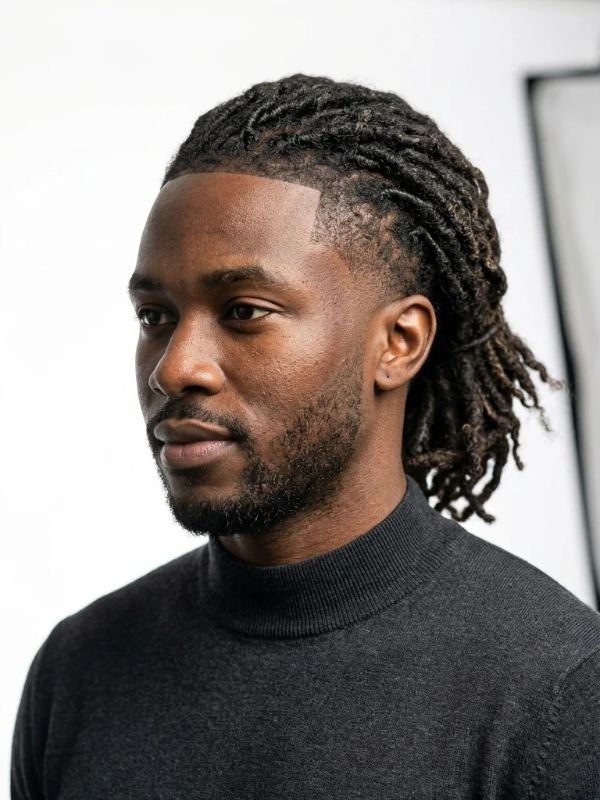
A mid taper with dreads is a haircut where your locs stay long on top while the hair on the sides and back is gradually shortened. The “mid” part tells you where the fade begins. It starts around the temples and the middle of the sides, then blends down toward the neckline and around the ears.
A taper is different from a skin fade or a bald fade. In a taper, the hair gets shorter gradually and usually does not go all the way to bare skin, although you can ask for it to. That softer gradient is why it looks polished on almost everyone.
How It Differs from Low and High Tapers
Where the fade starts changes how bold the cut looks. Here is a quick comparison.
| Fade Type | Where It Starts | Overall Look | Best For |
| Low taper | Just above the ears and nape | Subtle, professional | Thin or short locs, conservative workplaces |
| Mid taper | Around the temples, middle of the sides | Balanced, modern | Most face shapes and loc lengths |
| High taper | Near the crown or parietal ridge | Bold, high contrast | High-top styles, thick locs, strong statements |
The mid taper sits in the sweet spot. It gives you contrast without making the top look disconnected, which can happen when thin dreads are paired with a very high fade.
Why Dreads and Tapers Work So Well Together
Locs have a lot of volume and a defined texture. A taper removes bulk from the sides, so the locs become the focal point. The shape looks intentional instead of heavy.
A few practical reasons people choose it:
- Clean frame. The shorter sides make your locs, jawline, and cheekbones stand out.
- Easier styling. Pulling locs into a ponytail, bun, or top knot is simpler when the sides are short.
- Flexible refreshes. You can touch up the fade without changing your loc length.
- Cooler in summer. Less hair around the ears and neck helps in hot weather.
- Neater regrowth. A fresh taper hides the awkward triangle shapes that sometimes appear at the hairline and nape as hair grows out.
Who Can Wear It
Almost anyone with locs can. Short starter locs, mature medium locs, freeform locs, and long locs can all be paired with a mid taper. The cut works with thick, coarse hair, which locs easily, and it also works with finer hair if you choose the right style on top and keep the fade gentle.
One important caution: if your locs start right at your hairline, a barber who is not careful can clip into them. Tell your barber upfront which hair is loc and which is the area they are allowed to taper.
Is the Mid Taper with Dreads Trending?
Yes. The mid taper with dreads is one of the more steady performers in men’s loc styling, and it keeps showing up in barbershops, salons, and social feeds in 2026. It is less a flash trend and more a settled favorite.
There are a few reasons it has staying power.
A Style That Fits Real Life
Men want hair that looks good at work, at the gym, and on weekends. The mid taper gives locs a neat edge that reads professional without losing personality. It is also forgiving. If you skip a week, the fade still looks decent.
Barbering and Loc Culture Are Meeting in the Middle
Barbers are learning more about loc care, and locticians are working with barbers more often. That has led to better blends around locs and fewer horror stories about clipped dreads. Loc wearers now expect their barber to understand the difference between a fade and a loc retwist.
Variety Keeps It Fresh
The same base cut can be styled many ways. Add a sharp lineup, color the tips, wear the locs up, sweep them to one side, or connect them to a beard. That range keeps the look from feeling repetitive.
What You Will See Most in 2026
| Trend | What It Looks Like |
| Sharp lineups with natural locs | Crisp hairline, locs kept natural and neat |
| Blonde or honey tips | Color applied only on the ends of medium or long locs |
| Top knots and half-up styles | Locs gathered high to show off the taper |
| Thin, uniform locs | Small, evenly sized locs for a refined look |
| Thick freeform locs | Larger, organic locs with a relaxed shape |
| Beard connection | A faded beard blended into the sideburn and taper |
If you like clean lines and a bit of edge, the mid taper is a safe and stylish place to start.
15 Best Mid Taper with Dreads Styles
Each style below works with a mid taper, but the top, lineup, and finishing details change the personality. Think about your loc length, lifestyle, and how much time you want to spend in the chair before you choose.
Short Dread Styles with a Mid Taper Fade
Short locs pair well with a mid taper because there is less length to balance. The fade can be the star of the cut, and the top stays easy to manage.
1. Short Dreads with Mid Taper
This is the classic starting point. Your locs are cropped to about an inch or two on top, and the mid taper blends neatly into the sides and back. It looks sharp, feels light, and needs very little styling.
It suits men who want a clean cut they can wear to the office or the gym. Because the locs are short, the shape of your head matters more, so ask your barber to keep the taper smooth and even. A mild texture cream or light oil adds a bit of shine without weighing the locs down.
Best for: beginners, short hair, low-maintenance routines.

2. Dreads with Sharp Lineup
A crisp lineup across the forehead and temples makes a mid taper look sharper. The lineup outlines the hairline, squares off the edges, and makes the locs look deliberate.
If your locs sit close to your hairline, the barber should place the line carefully so they do not cut into your actual locs. A good lineup lasts about two weeks before it starts to soften. Many men book a quick lineup between full tapers to keep the look fresh.
Best for: men who like a polished, high-detail finish.

3. Thin Neat Dreads
Thin locs, sometimes called pencil-size or micro-sized locs, create a refined texture. With a mid taper, they look uniform and tidy, almost like a pattern across the top.
A mid taper is a safer choice than a very high fade here. When locs are thin, a high fade can make the top look disconnected from the sides. The mid taper keeps the transition smooth. Thin locs need gentle handling, so keep up with retwists and avoid overly tight styles that stress the roots.
Best for: neat, detailed looks and men who enjoy styling versatility.

4. Starter Twist Dreads
Starter twists are the first stage of the loc journey. Short twists across the top show clear parting, and the mid taper keeps the sides sharp while the twists mature.
This pairing helps because early locs can look uneven or messy. The clean taper gives structure while your hair does the hard work of locking. Be patient with washing and manipulation, as starter locs are fragile. Ask your loctician when it is safe to schedule a fade so you do not disturb the early set.
Best for: men starting locs who still want a clean, finished look.

5. Sponge Twist Dreads
Sponge twists are made by twisting the hair with a sponge or coil tool to create small, defined coils on top. Pairing them with a mid taper gives a textured crown and sharp sides.
The style is popular because it is quick, shows off natural curl pattern, and can transition into locs later. It looks especially good with a lineup. Keep the hair moisturized and avoid overdoing product, which can create buildup.
Best for: men with tightly coiled hair who want texture and a stepping stone toward locs.

Medium and Long Dread Styles
Once your locs grow past the ears, you have more ways to wear them. The mid taper keeps the sides tidy while the length does the talking.
6. Medium Dreads with Mid Taper
Medium locs, usually chin to shoulder length, are one of the easiest lengths to wear with a mid taper. They can hang loose, sweep to one side, or be tied back.
The taper shows off the full length of the locs and keeps them from looking heavy. This length is also well balanced for most face shapes. If you like to change your look often, this is the length with the most flexibility.
Best for: everyday wear, versatile styling, most face shapes.
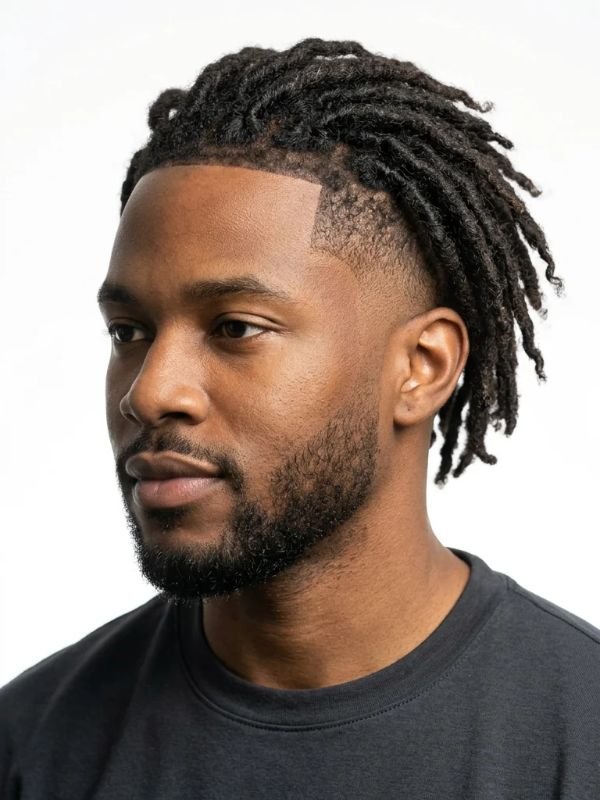
7. Long Dreads with Mid Taper
Long locs create drama, especially when the sides are short and clean. The mid taper keeps the long locs from overwhelming your face and gives the whole look a modern shape.
Long locs add weight, so scalp health matters. Avoid pulling them into tight styles every day, and give your roots a rest. Ask your barber to leave enough hair on the sides so the fade does not look too severe against the extra length.
Best for: men who want a statement look and are willing to maintain the length.
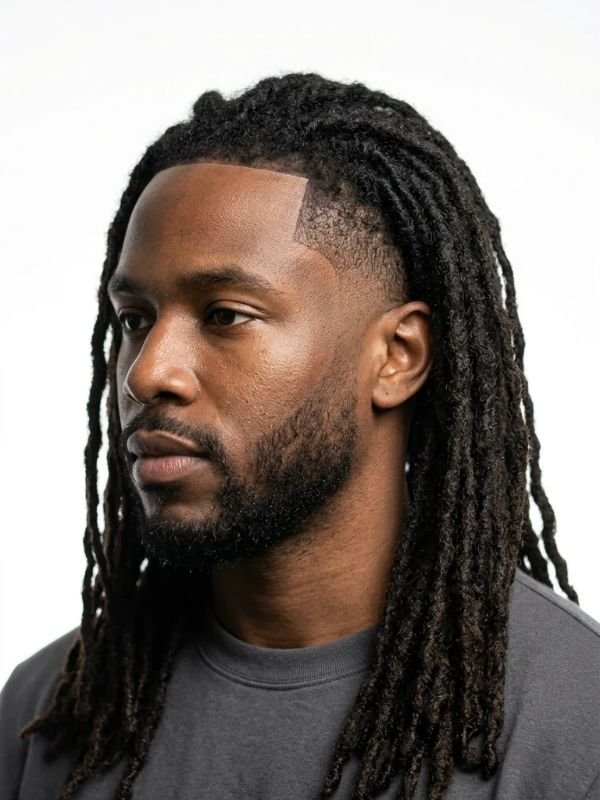
8. Dreads with Tapered Neckline
This style focuses on the back. The mid taper wraps around the ears, and the neckline is shaped into a clean, rounded or squared edge. The locs fall over the top, and the neat nape adds polish.
It works well when you wear your locs down because the back stays tidy even when the hair moves. It also helps when you pull your locs up, since the neckline becomes part of the design. Neckline fades grow out faster, so plan on frequent touch-ups.
Best for: men who like a well-groomed back view.
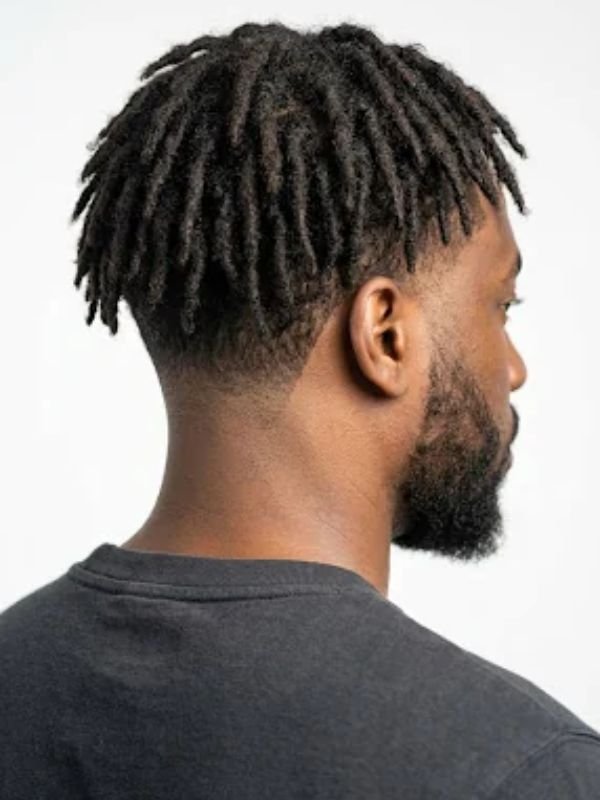
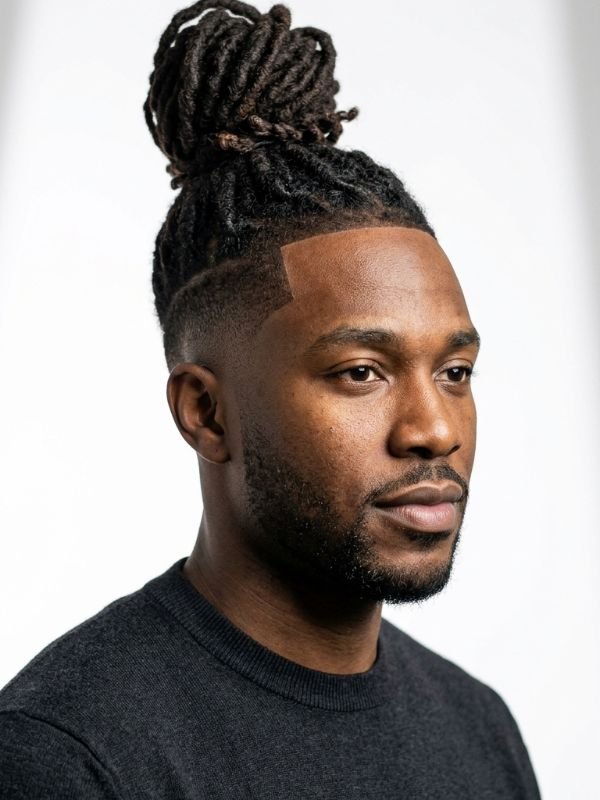
9. Dreads in a Top Knot
Gather your locs at the crown and secure them in a knot. With a mid taper, the sides are fully exposed, which makes the style look sharp and intentional.
The top knot keeps hair off your face and neck, so it is practical for sports, work, or hot weather. Use a soft elastic or scrunchie instead of tight bands, which can break locs over time. Vary the position of the knot now and then to avoid tension in one spot.
Best for: active men and anyone who wants a clean, put-together shape.
Bold Dread Variations
These styles add color, design, or sculpted shapes. They take a little more planning, but they stand out.
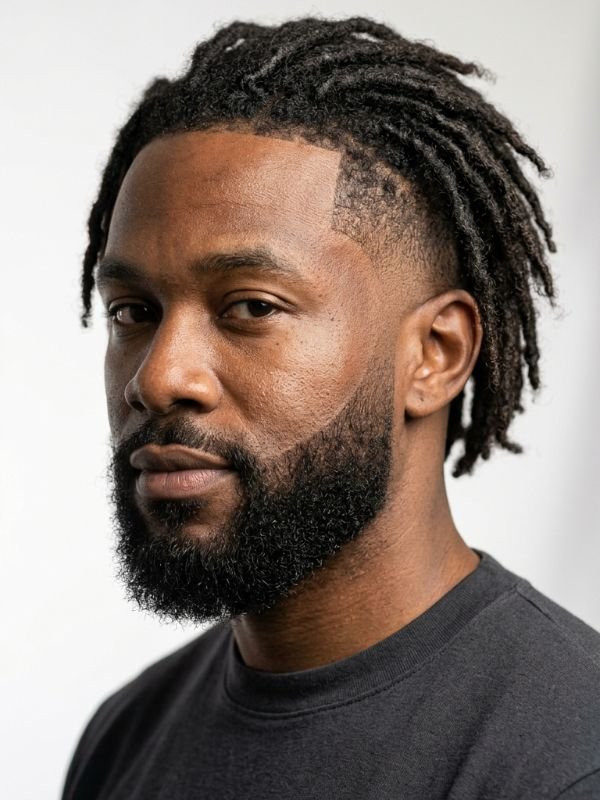
10. Dreads with Connected Beard
A faded beard that connects to the sideburns and mid taper creates a smooth line from head to jaw. The look is balanced and expressive, and it frames the face well.
Ask your barber to blend the beard fade at the same height as your taper so the transition feels seamless. Keep your beard hydrated with oil or balm, since dry beard hair makes the fade look rough. This is one of the most flattering options for men who want to define their jawline.
Best for: men with fuller beards who want a coordinated look.
11. Dreads with Line Design
A small design shaved into the taper, such as a part, a curved line, or a geometric pattern, adds personality. It can be subtle or very visible depending on how deep and long the cut is.
Because designs are detailed, choose a barber with a steady hand and a portfolio of similar work. Simple lines hold up better as hair grows out than complex shapes. Remember that designs need frequent touch-ups to look crisp.
Best for: men who want something unique and are comfortable with regular barber visits.

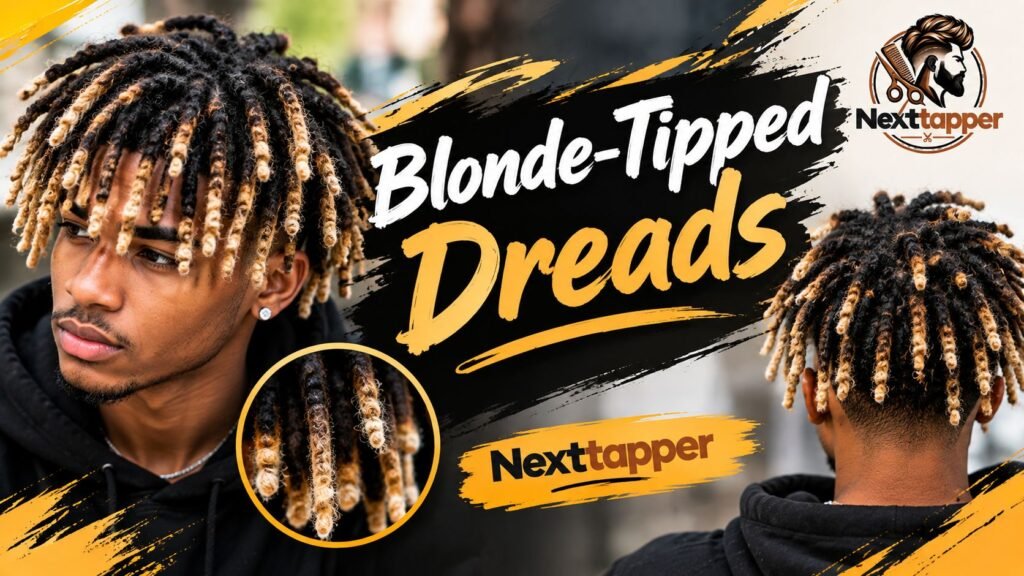
12. Blonde-Tipped Dreads
Lightening only the tips of your locs adds contrast against dark hair and a fade. The look is eye-catching, and the mid taper keeps the focus on the color.
Bleaching can dry out hair, so ask a professional who understands loc care. Use a deep conditioner and avoid over-processing. Color should stay on the ends rather than near the roots to limit damage. Tone with a purple shampoo if the blonde turns brassy.
Best for: medium to long locs and men ready for a confident style statement.
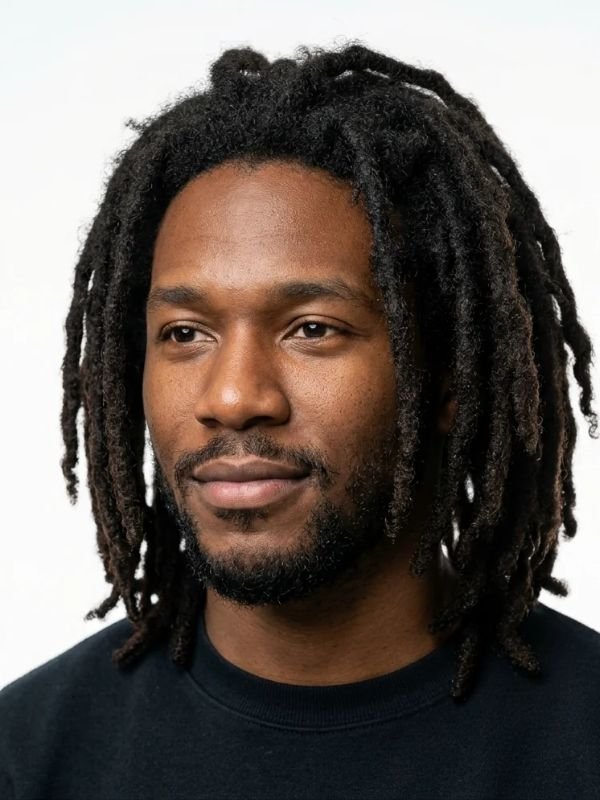
13. Thick Freeform Dreads
Freeform locs form naturally with little manipulation, creating thick, organic shapes. A mid taper keeps the sides neat so the look feels deliberate, not unkempt.
The contrast between loose, natural locs and a sharp taper is one of the most striking combos. It suits men who want a relaxed, expressive style with a polished edge. Wash regularly to prevent buildup, even if you do not retwist.
Best for: men who prefer a natural, low-manipulation loc journey.
14. High-Top Dreads
High-top dreads stand upright on top of the head with a faded or tapered side. With a mid taper, the cut is a softer version of the classic high-top, with a clean step between the sides and the crown.
The style has strong roots in hip-hop culture and remains popular for its height and shape. It works best with locs that are firm and short to medium in length. Use a light product to hold the shape and avoid anything heavy or sticky.
Best for: men who want a retro, bold silhouette.

15. Swept-Back Dreads
Sweeping your locs back and away from the face creates a smooth, streamlined shape. With a mid taper, the profile looks clean and the face is fully open.
It is one of the simplest styles to wear because it requires no tools. Medium-length locs work especially well. If you have a high forehead or a receding hairline, try sweeping to one side instead for balance.
Best for: men who like a sleek, no-fuss style.
How to Choose the Right Mid Taper for Your Face and Locs
The best style depends on your face shape, loc size, and lifestyle. Use the table below as a starting point, and trust your barber’s eye for the final call.
| Factor | What to Consider | Suggested Direction |
| Round face | Add height and structure | Top knot, high-top, or swept-back locs |
| Square face | Soften strong angles | Medium locs with a softer taper |
| Oval face | Works with most styles | Try long locs, lineup, or color |
| Heart-shaped face | Balance a wider forehead | Medium to long locs with some volume at the sides |
| Thin locs | Avoid a disconnected top | Keep the taper mid or low |
| Thick locs | Can handle bold contrast | Try high-top or freeform with a clean taper |
| Busy schedule | Low upkeep | Short locs with a simple taper |
| Style lover | Likes change | Medium locs for easy switching |
Also think about your workplace and daily routine. A neat lineup and a slightly softer taper may suit a conservative office, while color and line designs may suit a creative one.
How to Talk to Your Barber
Good communication is the difference between a great cut and a stressful one. These steps help.
- Bring reference photos. Show images of the exact mid taper and loc style you want. Photos communicate more clearly than words.
- Explain your locs. Tell the barber how old your locs are, how fragile they feel, and which areas must not be cut.
- Name the fade. Say “mid taper” and specify whether you want a skin finish or a bit of length left.
- Agree on the lineup. Decide whether you want a natural hairline, a soft lineup, or a sharp one.
- Ask about the neckline. Choose between a rounded, squared, or tapered nape.
- Check as you go. Ask to see the blend in a mirror before the final detail work.
If your barber has not worked with locs before, it is worth looking for someone with loc experience. A skilled barber will cut around your locs carefully and blend the fade without damaging them.
A quick safety note for sensitive skin: frequent shaving can irritate the scalp, so tell your barber if you are prone to razor bumps or ingrown hairs. They can adjust the technique or recommend a slightly longer finish.

How to Maintain a Mid Taper with Dreads
You are maintaining two things at once: the barbered sides and the locs. Both need attention.
Keep the Fade Sharp
Fades grow out faster than most people expect. Here is a rough guide.
| Maintenance Task | Typical Timing |
| Lineup refresh | Every 1 to 2 weeks |
| Full taper touch-up | Every 2 to 3 weeks |
| Beard fade touch-up | Every 2 to 3 weeks |
| Loc retwist | Every 4 to 8 weeks, depending on loc type and your loctician’s advice |
Timing varies depending on how quickly your hair grows. If you want the sharpest look, go on the shorter end. If you want a relaxed look, you can stretch it a bit.
Care for Your Locs
- Wash regularly. Use a residue-free shampoo to avoid buildup. Clean locs look better and hold shape.
- Moisturize lightly. Use a light oil or spray. Heavy products can leave residue inside locs.
- Protect at night. A satin or silk scarf or bonnet reduces frizz and protects both the locs and the fade.
- Avoid tight styles. Constant tension around the hairline can cause thinning. Alternate your styles.
- Dry thoroughly. Damp locs can develop odor or mildew, so let them dry fully after washing.
- Trim split ends carefully. Do this with a professional if you are not confident.
Protect Your Scalp
A healthy scalp supports healthy locs. Keep it clean, avoid scratching, and moisturize the shaved areas if they feel dry. If you notice persistent itching, flaking, or irritation, a dermatologist can help rule out underlying conditions.
Common Mistakes to Avoid
- Letting the lineup go too long and then trying to correct it all at once
- Asking a barber with no loc experience to cut near the roots
- Over-twisting or over-tightening to keep locs neat
- Using heavy wax that builds up and attracts lint
- Skipping washes because locs seem fine
Final Thoughts
The mid taper with dreads works because it balances two things’ men often want at once: natural texture and a clean finish. It frames the face, keeps the sides under control, and lets your locs take center stage. Whether you go short and sharp, medium and versatile, or long and bold, there is a version of this cut that fits your hair and your routine.
Start by picking two or three styles from the list that match your loc length and lifestyle. Save reference photos, find a barber who respects your locs, and settle into a maintenance rhythm you can actually keep up with. A fresh taper every few weeks and steady loc care will do most of the work. Once you are comfortable, experiment with color, lines, or a top knot to make the look your own.

6 thoughts on “Mid Taper Fade with Dreads: 15 Styles, Tips & Photos (2026)”