
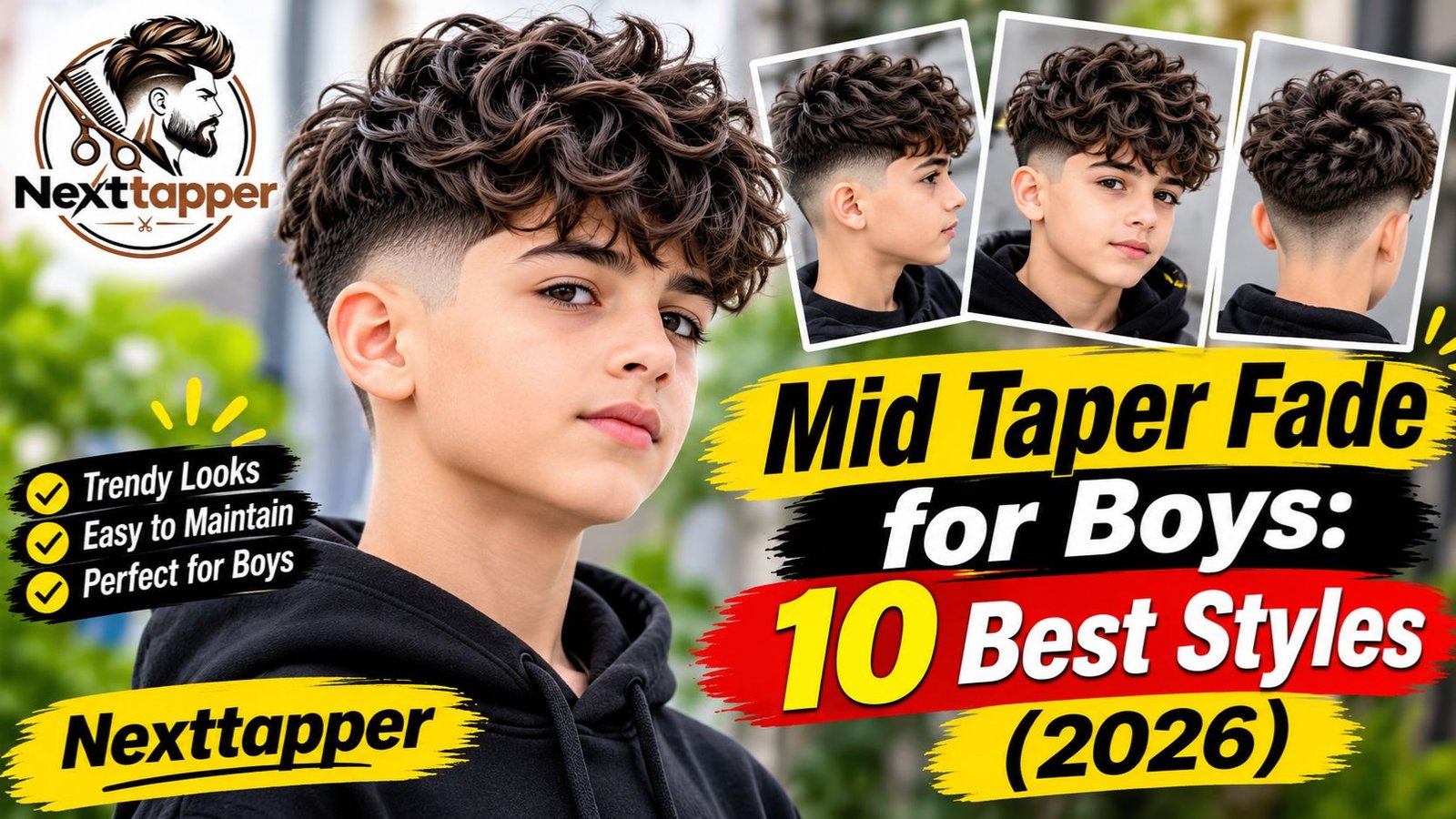

A good boys’ haircut has to do three jobs. It has to look sharp, survive a school day, and not turn into a battle every morning. The mid taper fade does all three, which is why barbers keep suggesting it to parents.
The sides and back shorten gradually, starting around the temple, while the top stays longer and easy to style. There is no harsh line and no big commitment. It grows out well, and it suits straight, wavy, curly, and coily hair.
This guide covers 10 mid taper fade styles for boys sorted by age, how hair type and face shape change the cut, and exactly what to say to the barber. You will also find a maintenance plan and a comparison with the crew cut and the skin fade.
Read Also This: Mid Taper Fade with Dreads: 15 Styles, Tips & Photos (2026)
Mid Taper Fade for Boys: What Makes This Cut Different
A mid taper fade is a haircut where the hair gets shorter in steps from the top toward the ears and neckline. The blend starts about halfway up the sides of the head. In a taper, a small amount of hair stays at the bottom, so the edge looks soft instead of bare.
Boys’ hair changes the rules a little. Compared with adult cuts, a boy’s mid taper usually has:
- A softer blend. Most barbers avoid going down to bare skin on younger children.
- More length left on top. Kids’ hair grows fast and shows cowlicks, so a bit of length hides them.
- A shorter appointment. Good barbers work quickly when a child can’t sit still.
- Easier styling. A boy needs a look he can manage with a comb and a dab of product, or with nothing at all.
Here is the quick version for anyone skimming:
| Feature | Typical mid taper for boys |
| Fade starts | Around the temple |
| Top length | 1 to 4 inches, depending on age and style |
| Sides and back | Blended from short to shorter |
| Styling time | Under 2 minutes |
| Trim interval | Every 3 to 5 weeks |
Mid Taper Fade for Boys in 2026: Why It’s the Default Pick
Most parents want the same thing: neat, cool, and low effort. The mid taper sits in the middle of the fade scale, so it avoids the extremes. A low fade can feel too plain for older boys. A high fade can look too sharp on a seven-year-old. The mid height fits almost everyone.
Three reasons it keeps winning:
- It works for school. Most schools have rules about hair length, color, and extreme shaving. A mid taper with a natural top rarely causes problems, though you should check your own school’s policy.
- It grows out gracefully. After three weeks, the blend softens but still looks planned.
- It adapts as he grows. The same base cut can be a crop at age five and a textured quiff at fifteen.
Mid Taper Fade for Boys: The Trade-Offs Parents Should Know
No cut is perfect. Here is the honest picture.
| Pros | Cons |
| Looks neat with almost no styling | Needs a trim every 3 to 5 weeks |
| Fits all hair types | A rushed barber can leave uneven patches |
| Works with school dress codes | Some boys dislike the sound or feel of clippers |
| Grows out cleanly | Edges and necklines fade quickly |
| Easy to change as hair grows | Cowlicks can show on very short tops |
If your son is sensitive to noise or touch, tell the barber at the start. Many experienced kids’ barbers have tricks for this, such as using a trimmer instead of loud clippers or letting the child hold a toy.
10 Mid Taper Fade Styles for Boys, Sorted by Age
Age matters more than most guides admit. Hair length, patience, and how much a boy cares about his look all change quickly between age three and sixteen. Pick from the group that fits your son.
Toddlers and Young Boys (Ages 3 to 7)
At this age the goal is a short, tidy cut that doesn’t need styling and doesn’t mean a long time in the chair.
1. Simple Textured Crop
The top is cut short and slightly choppy, around one to two inches, and the mid taper cleans up the sides. It looks neat even when his hair is messy.
Best for: straight to wavy hair and busy mornings. Tip: a little water or a light cream is plenty.
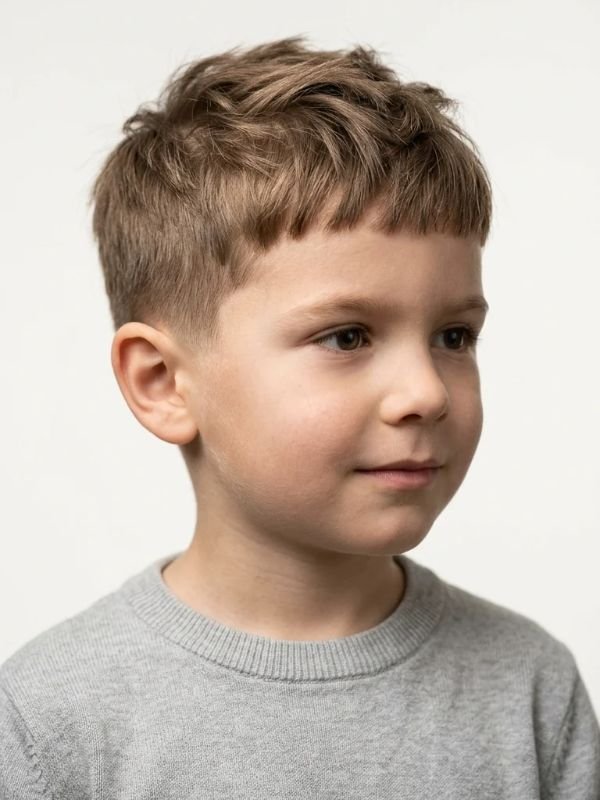
2. Curly Top Mid Fade
Let the curls grow on top and taper the sides. The fade removes bulk, so the curls look defined instead of wide.
Best for: curly and coily hair. Tip: use a leave-in conditioner or a water-based curl cream on damp hair so the curls stay soft.
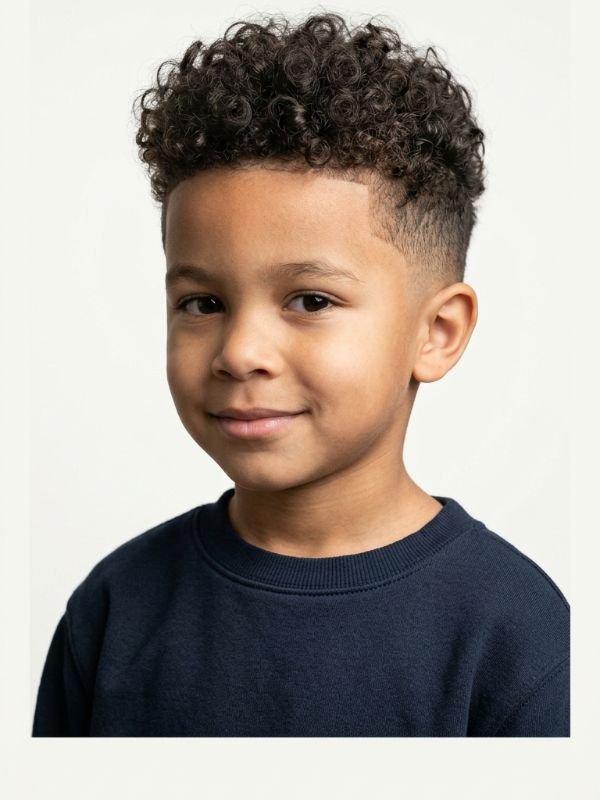
3. Classic Side Part
A neat comb-over with a natural or lightly razored part and a gentle taper. It looks dressed up for photos, parties, and school pictures.
Best for: straight and wavy hair. Tip: comb it while damp and let it dry. Most young boys don’t need pomade.
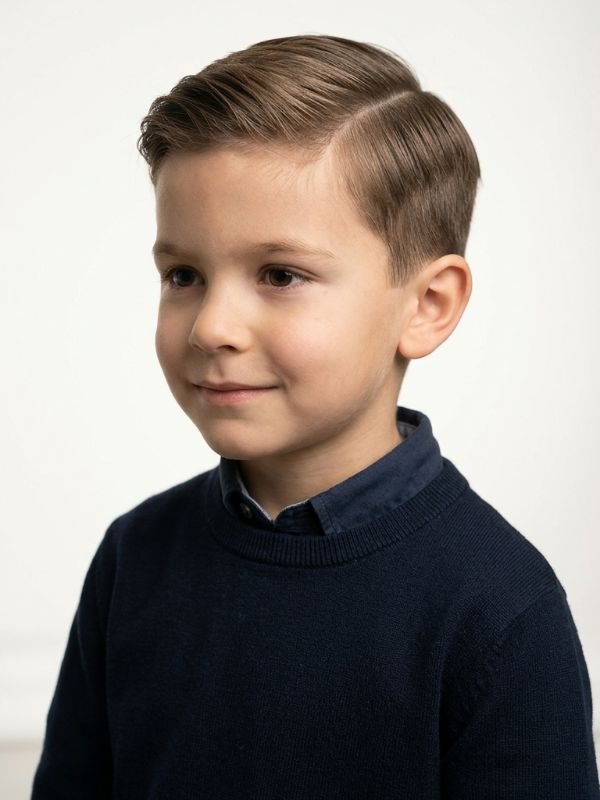
School-Age Boys (Ages 8 to 12)
Around this age boys start to care about how their hair looks. They can also sit still longer, so a cut with a little more detail becomes realistic.
4. Textured Fringe with Mid Fade
The front is left longer and brushed forward, with the taper keeping the sides short. It frames the face and feels relaxed.
Best for: straight and wavy hair, and boys with a high forehead. Tip: keep the fringe short enough to stay out of his eyes during class and sports.
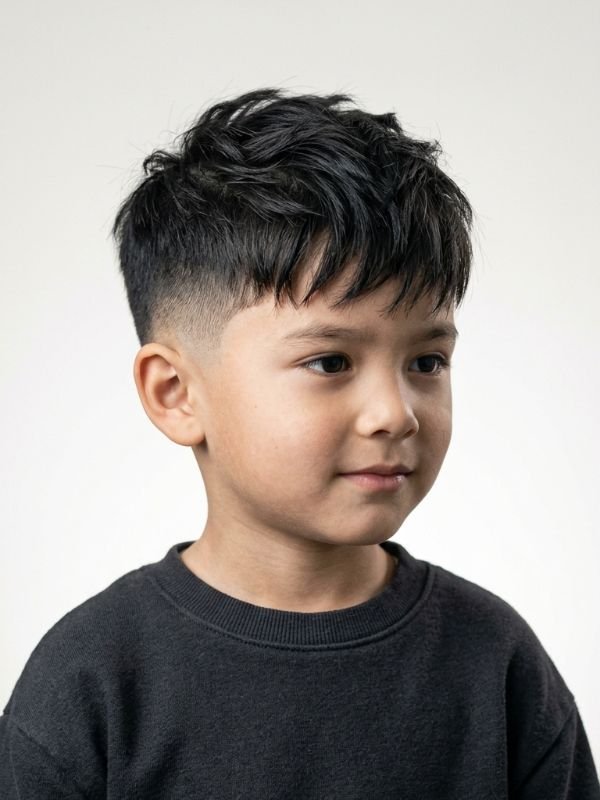
5. Mid Fade with Hard Part
A thin line is shaved or lightly cut into the side to define the part. It adds a sharp detail without changing the rest of the cut.
Best for: boys who like a more polished style. Tip: the line fades in about a week or two, so ask the barber for a softer version if you don’t want constant touch-ups.
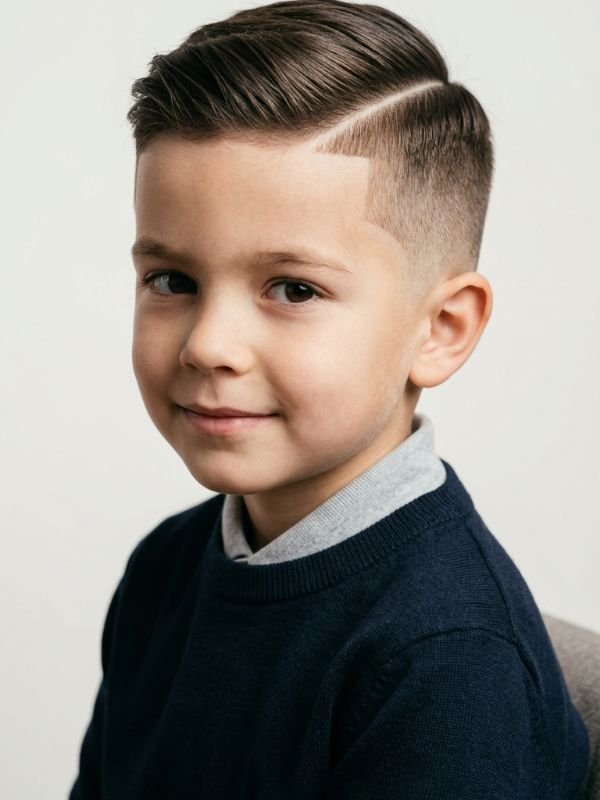
6. Afro Mid Taper Fade
The top keeps its natural shape, and the taper cleans the sides and the neckline. The contrast makes the shape stand out.
Best for: coily and Afro-textured hair. Tip: moisture matters most. Use a leave-in conditioner and a light oil, and ask the barber to cut the hair dry so the shape is accurate.
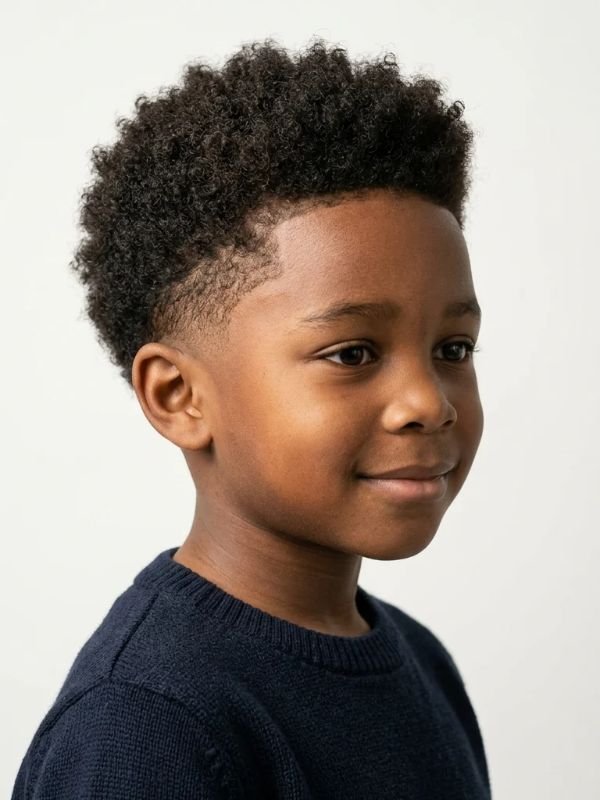
7. Spiky Textured Top
Short layers on top are pushed up with a light paste or clay. The taper keeps the look tidy.
Best for: thick, straight hair and boys who want something a bit bolder. Tip: skip heavy gel. A pea-sized amount of matte paste is enough, and it washes out easily.
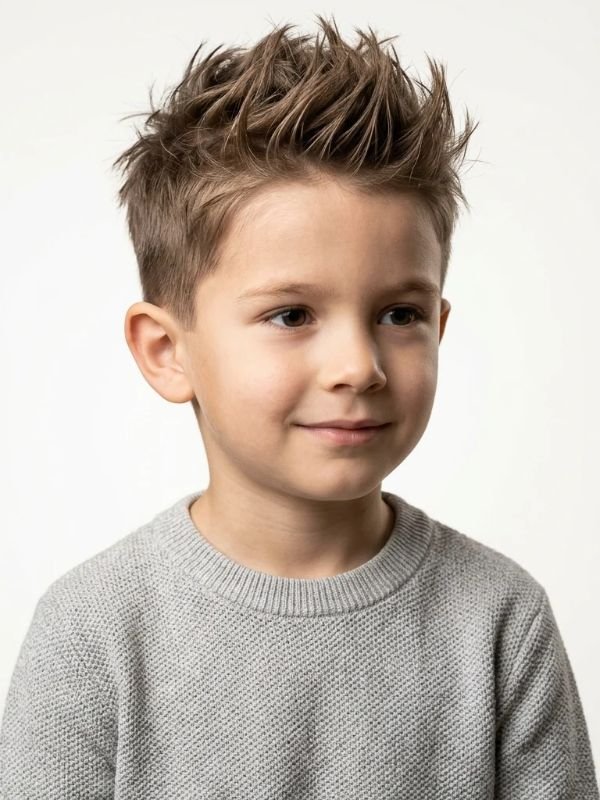
Tweens and Teens (Ages 13 to 16)
Teenagers usually have strong opinions. They also have longer hair, a more defined hairline, and more interest in detail.
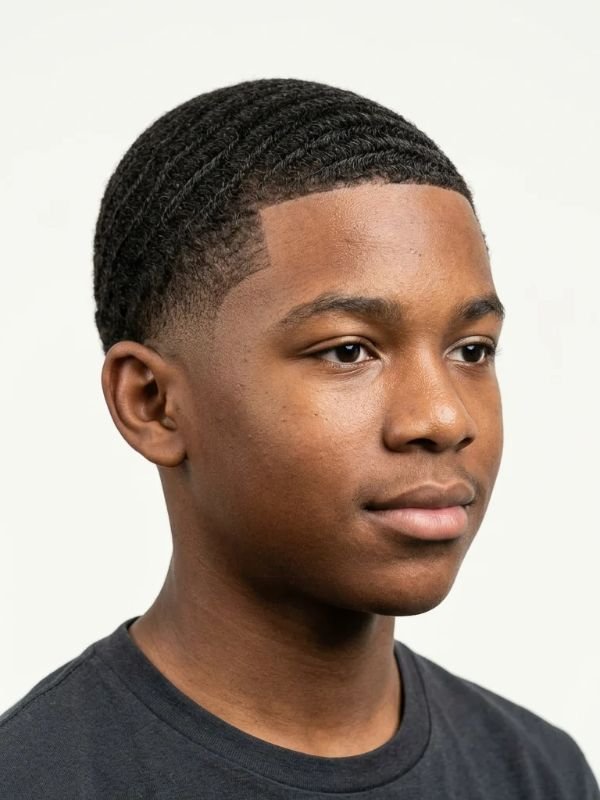
8. Mid Taper Fade with Waves
For boys who brush their hair into waves, the taper gives the sides a clean frame. It needs a regular brushing routine and a durag or wave cap at night for the best results.
Best for: coily hair that can hold a wave pattern. Tip: consistency matters more than product. Brush daily, and keep the scalp moisturized.
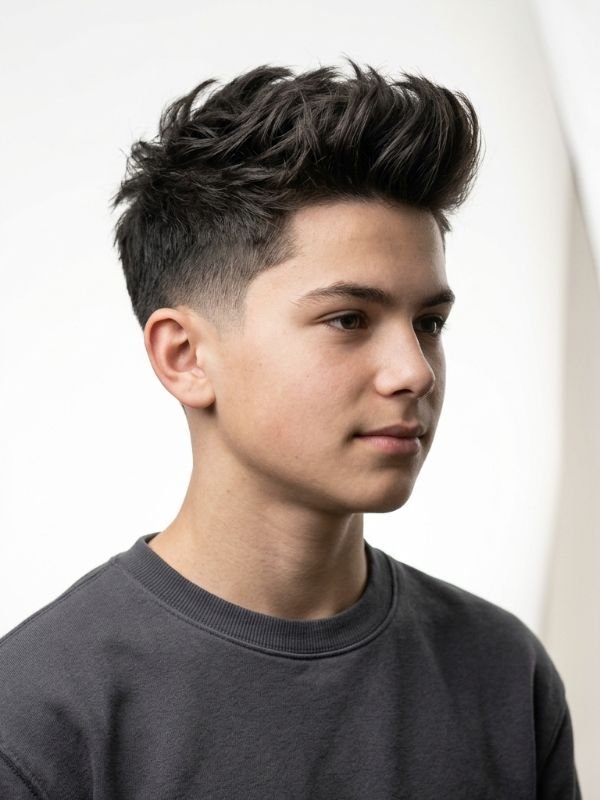
9. Textured Quiff
The top is kept two to four inches long and lifted at the front. A blow dryer and a light-hold product give height and movement.
Best for: straight, wavy, and thick hair. Tip: blow dry the front up and back before applying product. Product alone won’t build lift.
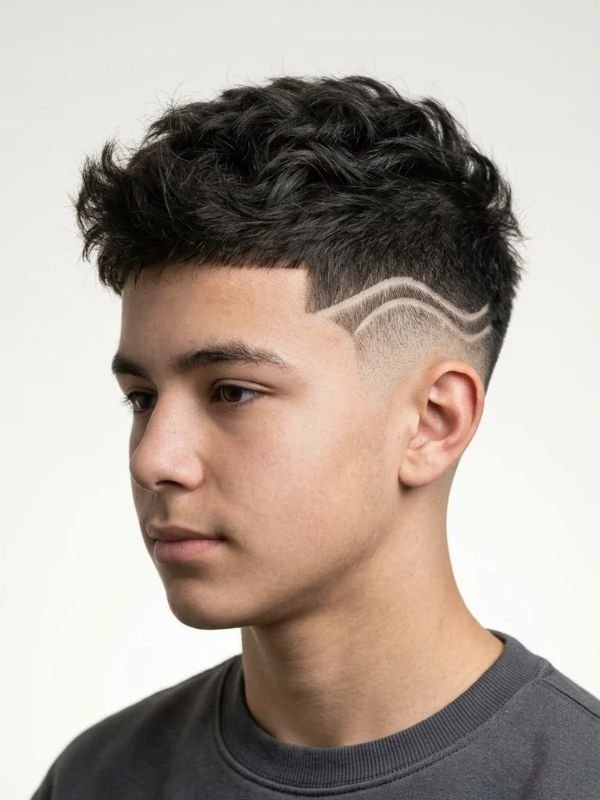
10. Mid Fade with Design
A small shaved line or pattern in the fade adds a personal touch. Simple shapes last longer than complicated ones.
Best for: teens who want a signature look. Tip: check the school rules first, and agree on the design before the clippers come out.
Making the Barber Visit Easier for Young Boys
A lot of haircut trouble has nothing to do with the style. It comes from a child who is tired, hungry, or scared of the clippers. A few habits help.
- Choose the time carefully. Book a slot after a meal and a rest, never during nap time.
- Show him first. Look at photos of the cut together, or let him watch an older sibling get one.
- Bring something to hold. A small toy, a snack, or a short video keeps hands and eyes busy.
- Keep the first visit short. If he gets upset, a quick trim is better than a long fight.
- Praise the sitting, not the style. Boys remember how the visit felt more than how the hair looked.
Barbers who see kids all day usually have their own methods. Tell them what works for your son and let them lead.
Mid Taper Fade for Boys: Products That Work
Most boys need very little. If you do use something, match it to the hair and the style.
| Product | Best for | Notes |
| Water and a comb | Young boys, short tops | Often all you need |
| Leave-in conditioner | Curly and coily hair | Apply to damp hair for softness |
| Curl cream | Curly tops | Choose water-based formulas |
| Matte paste or clay | Textured crops and spikes | Pea-sized amount, washes out easily |
| Light pomade | Side parts | Avoid heavy shine on young boys |
| Moisturizer or light oil | Coily hair and dry scalp | Prevents flaking along the fade |
Check the label for a child-safe formula, and test a small amount on the skin first if he has sensitive skin. If a product causes redness or itching, stop using it and ask a pediatrician or dermatologist for advice.
Mid Taper Fade for Boys by Hair Type: What Actually Changes
The same cut behaves very differently on different textures. This table shows what to expect and what to ask for.
| Hair type | What to ask for | Styling | What to avoid |
| Straight | Short layers on top, soft blend | Water, light cream, or paste | Over-thinning, which makes fine hair look flat |
| Wavy | A bit more length on top | Sea salt spray or light cream | Combing it flat when wet |
| Curly | Dry cut, curls kept on top | Leave-in conditioner and curl cream | Brushing dry curls, which causes frizz |
| Coily | Dry cut, shape the crown | Moisturizer and a light oil | Cutting too short on top |
| Thick | Layers and texture on top | Matte clay | Boxy, heavy tops |
Two general rules apply to every type. First, short hair on kids dries out and gets dirty quickly, so a gentle shampoo and regular conditioning matter. Second, the scalp is more exposed with a fade, so use sunscreen on hot days if his scalp is visible.
Mid Taper Fade for Boys by Face Shape: Quick Matches
Face shape is a guide, not a rule. Use it to adjust the length on top, not to rule out styles he likes.
Round Face
Add height on top with a textured quiff or spiky top, and keep the sides close. This makes the face look longer.
Oval Face
Almost any style works. This is the easiest face shape to match, so choose based on hair type and personality.
Square Face
A softer top, such as a textured fringe or a curly top, balances a strong jaw. The taper keeps the sides clean without making the face look harsher.
Mid Taper Fade for Boys: What to Actually Tell the Barber
Barbers can only work with the words and photos you give them. A clear request saves time and prevents a cut you will have to live with for weeks.
Before You Go
- Pick a photo. Choose one with a similar hair type and head shape.
- Check the school rules. Some schools limit shaved lines, bold designs, or very short fades.
- Time it well. Book a slot when he is rested and fed, not before a nap or after a long day.
- Warn him. Explain what will happen, and tell him the clippers will be loud.
What to Say
Here is a simple script you can adapt:
- “Mid taper fade, starting at the temple.”
- “About two inches on top, keep it textured.”
- “Please blend it softly. He’s young, so no skin fade.”
- “Natural neckline, and clean up around the ears.”
- “He gets restless, so we may need to work quickly.”
Guard Numbers in Plain Language
Guard numbers differ between clippers, so treat this as a rough guide.
| Goal | Typical guard range |
| Soft taper at the base | #2 to #3 |
| Mid-blend | #3 to #4 |
| Top length | Scissor cut to 1 to 3 inches |
Ask the barber what they recommend. They know how his hair grows.
Speak Up Early
If something feels wrong, say so before the cut is finished. Ask to see the back with a mirror. Most barbers will happily fix a small detail while he is still in the chair.
Mid Taper Fade for Boys: Mistakes Parents Keep Making
Most bad haircuts come from the same few mistakes. Watch out for these.
- Going too short on top. Very short hair looks flat, and cowlicks show more.
- Choosing a high fade for a young child. It looks dramatic and grows out unevenly.
- Skipping the photo. “Short on the sides” means different things to different barbers.
- Forcing a style he hates. If he dislikes it, he will mess it up daily and ask for a different cut next time.
- Using too much product. Heavy gel weighs down short hair and can irritate a child’s scalp.
- Waiting too long between cuts. After four to five weeks, the fade loses its shape.
- Cutting the fade at home. Trim the neckline if you must, but leave the blend to a professional.
- Ignoring the scalp. Dry skin and flakes show more with short sides, so moisturize if needed.
Sports, Swimming, and Active Boys
Active kids sweat, swim, and wear helmets. A mid taper handles all of that well because the short sides dry fast and don’t tangle. Still, a few details matter.
- Rinse chlorine and salt water out soon after swimming, since both dry the hair and scalp.
- A helmet or cap can flatten the top, so a short comb-through fixes it in seconds.
- Match the trim schedule to the season. Many parents book a fresh fade before school starts, before sports season, and before big family events.
If your son plays a sport with strict team rules about hair, check with the coach before choosing a design or a very short top.
A Note on Wet Cuts
Cutting wet hair can mislead. Hair looks longer when wet and springs back shorter when dry, especially with curls. Ask the barber to check the length once the hair is dry, or ask for a dry cut on the top.
Maintenance Reality Check: Keeping the Fade Sharp
A fade is a short-term look. The sharpest day is usually the first week, and the cut starts to soften after that. That is fine for most families. Just plan for it.
How Often to Visit
| Style | Suggested interval |
| Simple textured crop | 4 to 5 weeks |
| Curly or Afro top | 3 to 4 weeks |
| Side part or hard part | 2 to 3 weeks |
| Waves | 2 to 3 weeks |
| Design or shaved line | 2 to 3 weeks |
| Textured quiff or fringe | 3 to 5 weeks |
Fast-growing hair needs more frequent trims. Ask the barber for a quick neckline and edge clean-up between full cuts. It often costs less and takes only a few minutes.
Daily Care
- Wet the hair lightly each morning.
- Warm a small amount of product in your hands, or his.
- Work it through from front to back.
- Shape the top with fingers or a comb.
Keep it short. Most boys under ten need little more than water and a comb.
Washing Routine
- Straight and wavy hair: wash two to four times a week.
- Curly and coily hair: wash once or twice a week, and condition well.
- After sports or swimming: rinse right away, especially after chlorine or salt water.
Use a gentle, child-friendly shampoo. Avoid products that sting or leave residue near the fade line.
Between Haircuts
- Brush or comb daily so the top stays in shape.
- Use a satin pillowcase for coily or wavy hair.
- Keep the neckline tidy with a small trimmer if you are confident.
- Moisturize the scalp if it looks dry.
Mid Taper Fade vs Crew Cut vs Skin Fade for Boys
Parents often compare these three. Here is how they differ.
| Feature | Mid taper fade | Crew cut | Skin fade |
| Sides | Gradual blend, some hair at the bottom | Short, tapered | Blends down to bare skin |
| Top length | 1 to 4 inches | Short, 1 to 2 inches | Any length |
| Contrast | Medium | Low | High |
| Styling | Easy | Very easy | Easy to moderate |
| Upkeep | Every 3 to 5 weeks | Every 4 to 6 weeks | Every 2 to 3 weeks |
| Best age | All ages | All ages | Older boys |
Mid Taper Fade vs Crew Cut
A crew cut is the classic military-style cut. It keeps the sides short and the top slightly longer. It is the simplest option and needs little upkeep. A mid taper looks a little more modern, with a visible blend and more flexible top.
If your son wants zero fuss, the crew cut works. If he wants a bit more style, go for the taper.
Mid Taper Fade vs Skin Fade
A skin fade goes all the way down to the skin, so it looks sharper and shows more contrast. It also grows out faster and needs more frequent visits. For most boys, particularly younger ones, a taper is the safer choice.
If your son is a teenager and asks for a skin fade, a mid skin fade is a reasonable step. Talk to the barber about how often he’ll need to return.
Conclusion
The mid taper fade is a reliable choice for boys of almost any age. It is neat, easy to style, and flexible enough to change as he grows.
Start with his age and hair type. For young boys, keep the blend soft and the top simple. For school-age boys, add a fringe, a hard part, or a textured top. For teenagers, try waves, a quiff, or a small design.
Bring a photo, tell the barber where the fade should start, and give a clear top length. Plan a trim every three to five weeks, keep products light, and let your son have a say. A cut he likes is a cut he will actually look after.
