
The mullet came back, but not in its old form. The stiff, stepped version from the 1980s has been replaced by something much cleaner: short, blended sides with a longer back and a top that actually looks styled.
The mid taper fade is the reason it works. It shortens the sides gradually, keeps the neck length, and gives the whole cut a tidy frame. You get the attitude of a mullet without looking unfinished.
This guide covers eight mid taper fade mullet styles, how to match one to your hair type, face shape, and age, and what to tell your barber, including guard numbers. You will also find a maintenance plan and clear comparisons with the wolf cut and the flow cut.
Read Also This: 8 Best Mid Taper Fade Edgar Cut Styles for Men (2026)
Mid Taper Fade Mullet Explained: What Makes This Combo Work
A mid taper fade mullet keeps the hair short on the sides and top and longer at the back, while the sides blend down from about the temple. The taper does the cleanup work. The mullet gives the back its length and shape.
Here is the quick version:
| Part of the cut | What it looks like |
| Sides | Tapered, blending from the temple down to the ears |
| Top and front | Short to medium, often textured or with a fringe |
| Back | Longer, usually reaching the nape or collar |
| Transition | Soft and layered, not a hard step |
| Finish | Taper (some hair left) or skin at the base |
The modern version differs from the 1980s original in one key way. The shift from short to long is blended with layers, tapers, or fades. There is no thin, stringy tail. That is also why it can look sharp in daily life rather than costume-like.
A taper usually leaves a small amount of hair at the bottom, so the sides look soft. A fade goes down to skin. Both work with a mullet, so decide which finish you want before you sit down.
Why It’s Everywhere in 2026
Three things keep the mid taper mullet popular.
- It looks intentional. The tidy sides make the length at the back look chosen, not forgotten.
- It suits many textures. Straight, wavy, and curly hair can all wear it.
- It feeds social media. Side and back views photograph well, which is why barbers get shown reference photos of it every day.
It also suits the way many men want their hair now: some personality, but nothing that looks overdone at work.
Pros and Cons: What You’re Signing Up For
| Pros | Cons |
| Looks modern and distinctive | Needs regular taper touch-ups |
| Works with most hair types | The back needs care and shaping |
| Easy to style with a few products | Growing out the length takes patience |
| Can be toned down for work | A poor blend looks messy fast |
| Flexible: short, medium, or long back | Fewer barbers do it well |
Be honest about the commitment. The cut is easy to wear, but the sides need frequent attention, and the back needs time to grow.
8 Best Mid Taper Fade Mullet Styles
Each style below has a short description, who it suits, and one tip.
Classic Cuts: The Everyday Options
Start here if this is your first mullet. These three are the easiest to wear and to explain to a barber.
1. Classic Mid Taper Mullet
The top and front stay short and neat, the sides taper from the temple, and the back is left a few inches longer. The blend between the top and back is smooth and layered.
Best for: first-timers and anyone who wants a modern look without much risk. Tip: ask the barber to keep the back soft and slightly tapered at the ends, not blunt.

2. Wavy Mid Taper Mullet
Natural waves add movement to the top and back, so the cut looks relaxed. The taper keeps the sides clean so the waves don’t get too wide.
Best for: wavy hair that already has some body. Tip: use a sea salt spray on damp hair and let it air dry or diffuse it. Brushing waves out when dry makes them frizz.
3. Curly Mid Taper Mullet
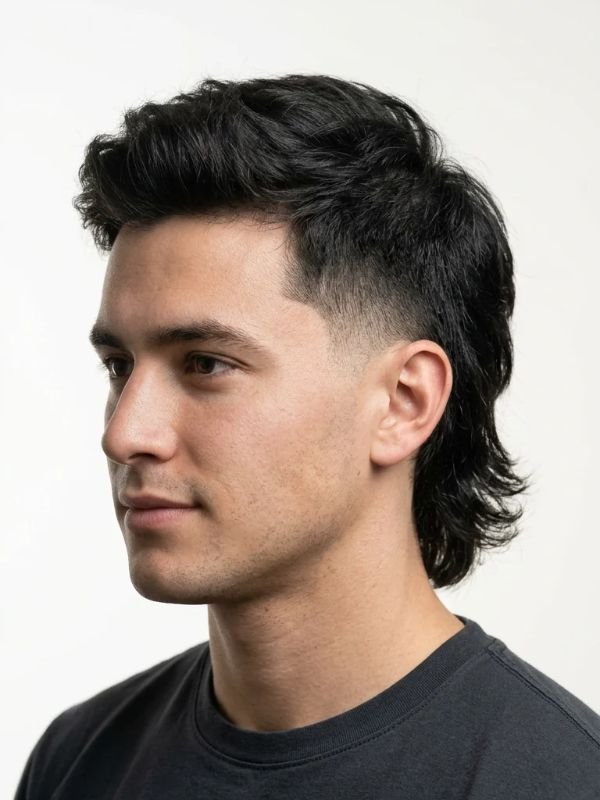
Curls on top and at the back create a lot of shape, and the taper removes bulk from the sides. The result is defined and balanced rather than wide.
Best for: curly and coily hair. Tip: cut curls dry so the barber can see how they sit, and use a curl cream to keep them soft and defined.

Textured Cuts: More Movement, More Attitude
These versions use layers and texture to give the mullet a rougher, more lived-in look.
4. Textured Mid Taper Mullet
The top is cut choppy and uneven, with point cutting or razor work, and the back is layered. Together they give the whole cut a piecey look.
Best for: straight to wavy hair of medium thickness. Tip: work a matte clay or paste through dry hair, and avoid heavy gel, which flattens the texture.
5. Shaggy Mid Taper Mullet
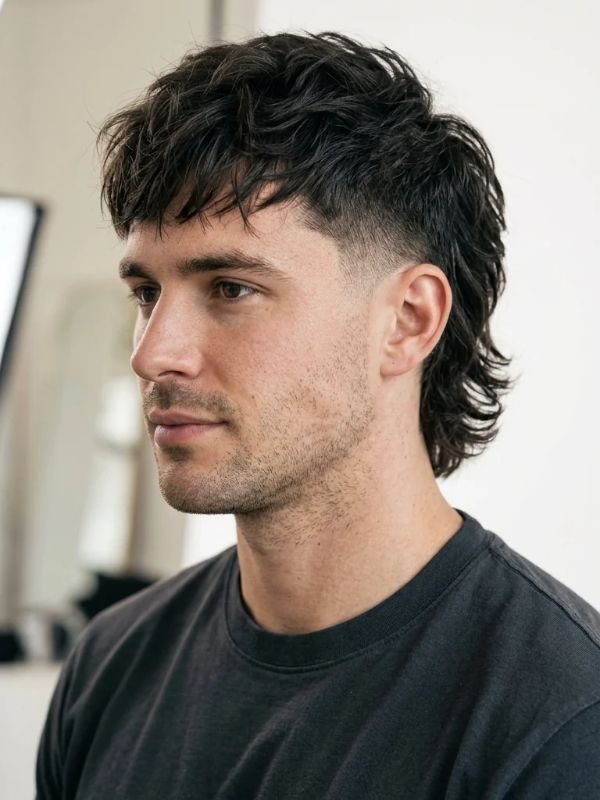
This one borrows from the shag. The layers are longer and more generous, and the fringe is soft and face-framing. The taper keeps the sides in check so the shape doesn’t get too big.
Best for: men who want volume and don’t mind a bit of mess. Tip: tell your barber you want shag-style layers with a controlled taper, and bring photos from the front and the back.
Detail Work: Built for Barbers Who Cut
These two need a skilled barber because the finish depends on small details.
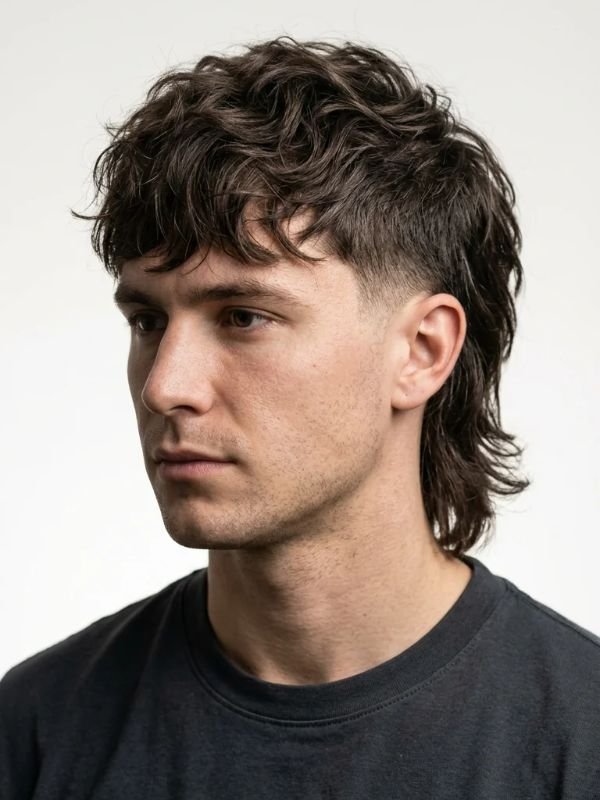
6. Mid Taper Mullet with Scissorwork
The sides are tapered with clippers, but the top and back are shaped by scissors. The scissorwork gives the cut a smooth, natural flow that clippers can’t match.
Best for: men who want a refined, polished version. Tip: ask for a scissor-over-comb blend at the back so the layers connect cleanly.
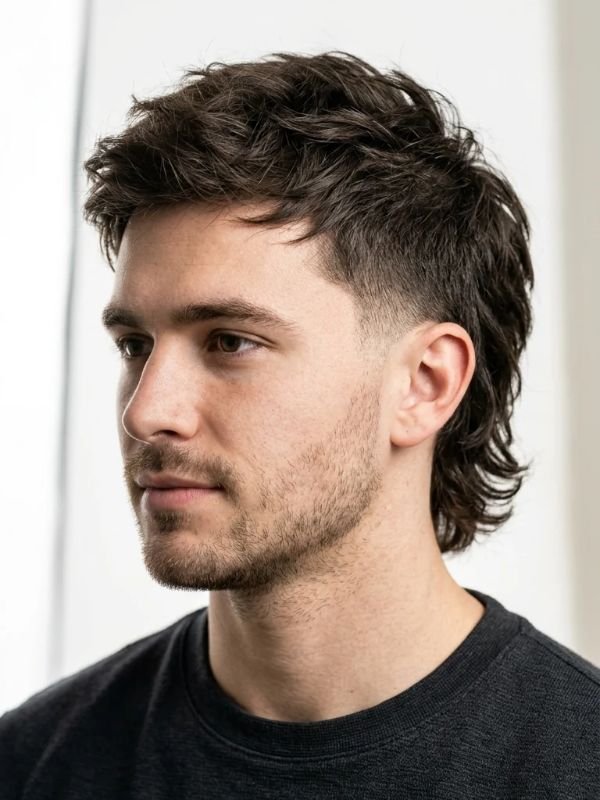
7. Mid Taper Mullet with Fringe
A fringe falls across the forehead, short or long, and the taper keeps the sides clean. It adds softness at the front and helps frame the face.
Best for: men with a high hairline or a longer forehead. Tip: decide the fringe length first. Too long and it irritates; too short and it looks blunt.
Business-Friendly Versions
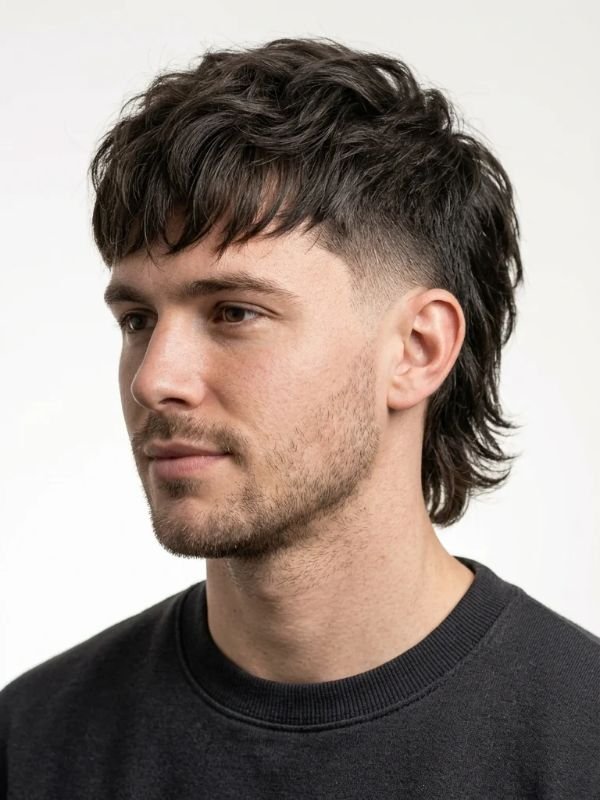
8. Business Mid Taper Mullet
A toned-down version. The back is kept short, usually just touching the collar, and the top is neat with a side part or light texture. The taper is soft and the neckline clean.
Best for: offices and client-facing jobs. Tip: use a light matte product and keep the back trimmed regularly, so it stays tidy rather than long.
Who Suits a Mid Taper Mullet Best
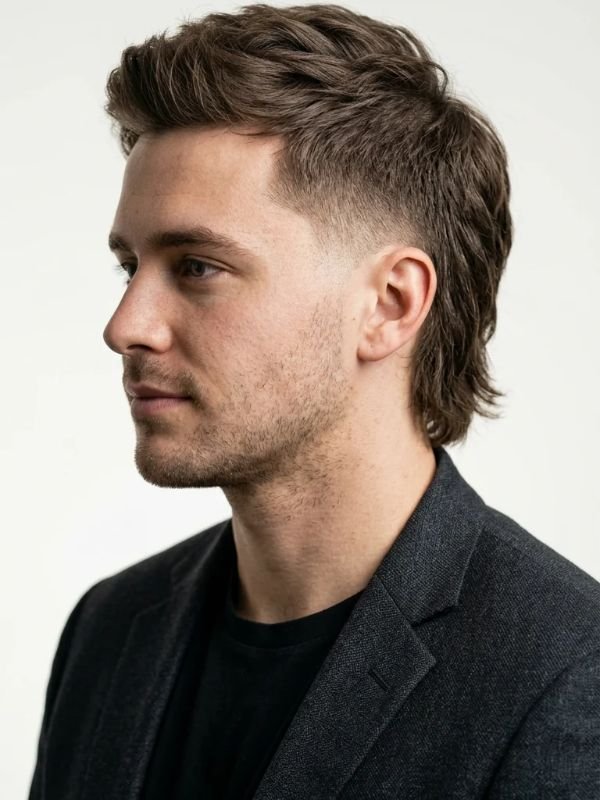
Almost anyone can wear one, but a few traits make it easier.
- Hair with some body. Wavy, curly, and thick hair fill out the back naturally.
- A willingness to style. Two minutes with a product is all it takes, but it does take those two minutes.
- A barber you trust. The blend between the top and the back is where most mistakes happen.
- Patience. If you are starting with short hair, expect several months before the back looks right.
If your hair is very fine or thinning at the crown, the mullet still works, but choose a shorter back and keep the top textured so the shape looks full.
How to Grow Out a Mullet Without the Awkward Stage
The in-between stage is the hardest part. The back is too short to look like a mullet and too long to look like a normal cut. A few steps help.
- Keep the sides on a regular taper schedule, so the cut always looks neat.
- Let the back grow, but have it shaped every six to eight weeks.
- Use a texture product on top so the length looks styled.
- Keep the neckline clean with a small trim.
- Ask the barber to leave the layers soft, so the back doesn’t grow into a block.
Choosing by Hair Type: What Actually Holds the Shape
Hair texture decides how the back falls and how much styling the top needs.
| Hair type | Why it works | What to watch |
| Straight | Shows clean lines and sharp blends | Fine hair can look flat; ask for volume on top |
| Wavy | Natural movement fills the back | Don’t comb waves wet |
| Curly | Shape forms by itself | Cut dry; moisturize the back |
| Thick | Layers remove weight | Ask for internal layering to avoid a heavy shape |
Straight Hair
Straight hair needs texture to avoid looking flat. Ask the barber to cut volume into the crown and use a texturizing product at the roots.
Wavy Hair
Wavy hair does most of the work. Keep the layers long enough for the waves to form, and avoid too many short layers that spring up.
Curly Hair
Curls give the mullet a full shape, and the taper keeps the sides tidy. Moisture matters most here, because the longer back tends to dry out.
Thick Hair
Thick hair can look boxy at the back. Internal layering or thinning at the nape removes weight without shortening the length.
Face Shape Matchups
Face shape is a guide, not a rule. Use it to adjust top height and fringe, not to avoid a style you like.
Oval Face
Most variations work. Choose by hair type and personality.
Round Face
Add height on top and keep the sides tight. A textured top makes the face look longer.
Square Face
A soft, textured top and a loose fringe balance a strong jaw.
Heart-Shaped Face
A side-swept fringe softens a wide forehead, and a fuller back balances a narrow chin.
Long Face
Avoid extra height. A fringe and softer sides help add width.
Diamond Face
A textured fringe softens prominent cheekbones, and a medium-length back keeps the shape balanced.
Rectangular Face
Keep the top short to medium and add a light fringe to reduce the length of the face.
Age Group Breakdown
Teenagers
Teens usually enjoy textured and shaggy versions. Check school rules on length and fades first. A soft taper is safer than a skin finish.
Young Men
This is the age to try bolder versions, such as a longer back, a fringe, or color. If it doesn’t work, it grows out.
Professional Men
Choose the business version with a short back and neat top. A clean neckline matters more than any detail.
Quick Pick by Age and Setting
| Group | Best styles from the list | Back length |
| Teenagers | Textured (4), Shaggy (5), Classic (1) | Short to medium |
| Young men | Curly (3), Scissorwork (6), Fringe (7) | Medium to long |
| Professional men | Business (8), Classic (1) | Short, at the collar |
Remember that the cut should match your daily life as much as your age. A teacher, a barista, and a designer can all wear a mullet, but each will choose a different back length and level of texture.
Talking to Your Barber: The Exact Guard Numbers
A vague request like “mullet with a fade” can produce very different results. Be specific.
What to Tell Them
- The sides. Say where the fade starts (mid, around the temple) and how close it goes: taper or skin.
- The top. Give a length in inches, or show it with your fingers.
- The back. Say how long you want it, to the nape, collar, or longer.
- The transition. Ask for a soft blend between the top and back.
- The fringe. Say short, long, or none.
- The neckline. Choose natural, rounded, or squared.
Guard Numbers
Guard numbers vary between clippers, so use this as a rough guide and confirm with your barber.
| Part of the head | Typical guard range |
| Base of the taper (soft finish) | #1 to #2 |
| Base of the taper (skin finish) | No guard, then blend up |
| Mid-blend on the sides | #3 to #4 |
| Top of the taper line | #4 to #5 |
| Top | Scissor cut to your length |
| Back | Scissor cut, usually 3 to 6 inches |
Photos Matter
Bring photos from the front, the side, and the back. The back is easy to forget, but it is the most important part of a mullet.
What a Good Barber Does Differently
You can often tell within a few minutes whether a barber is comfortable with mullets. A good one will ask how long you want the back, check where your hair grows in different directions, and look at your cowlicks before cutting. They will also ask how you style your hair, since a mullet that needs twenty minutes every morning is the wrong cut for most people.
Near the end, a good barber checks the cut from the side and the back, not only from the front. If yours skips this step, ask for a hand mirror and look for yourself.
Video Guide: Watch the Blend in Action
Watching a barber work helps you recognize good technique. If you look up a tutorial, check for these steps:
- The barber maps the fade line before cutting.
- The sides are blended in small steps with lighter guards.
- The back is cut with scissors, not just clippers.
- The transition between the top and back is layered.
- The cut is checked from every angle at the end.
If the video skips the blend or rushes the back, treat it as a poor example.
Common Mistakes That Ruin a Mid Taper Mullet
- Taking the fade too high. A high fade changes the look and makes the back look heavier.
- Cutting the back too blunt. A hard line looks dated. Ask for soft, layered ends.
- Leaving no layers. The back falls flat and the shape looks heavy.
- Skipping the photo. The word “mullet” means different things to different barbers.
- Using heavy products. They weigh the top down and make the back greasy.
- Waiting too long between cuts. The taper loses its shape in about three weeks.
- Ignoring the neckline. A messy neck ruins an otherwise clean cut.
Maintenance Reality Check
A mullet is easy to style but needs steady upkeep. The sides lose their shape faster than the back, so plan around the taper.
Taper Touch-Up Frequency
| Finish | Suggested interval |
| Soft taper | 3 to 4 weeks |
| Mid fade | 3 to 4 weeks |
| Skin fade | 2 to 3 weeks |
| Back trim and shaping | 6 to 8 weeks |
If you are growing out the back, keep the sides trimmed during that time. Growing a mullet from short hair usually takes several months, so regular side trims make the in-between stage look intentional.
Back Section Care
The back is longer, so it needs more attention.
- Condition the ends, since they are the oldest hair on your head.
- Detangle gently with a wide-tooth comb.
- Trim split ends every couple of months.
- Use a satin pillowcase if the hair tangles at night.
Daily Styling
- Start with damp hair.
- Apply a sea salt spray or light mousse.
- Blow dry the top up and back, and let the back dry naturally.
- Finish with a texture clay or matte paste.
- Shape the back with your fingers.
Products That Work Best
| Product | Best for | Notes |
| Sea salt spray | Straight and wavy hair | Adds grip and texture; use lightly to avoid dryness |
| Mousse | Fine hair | Adds volume at the crown |
| Matte clay or paste | Textured and shaggy styles | Gives a dry, natural finish |
| Texture powder | Fine hair | Lifts the roots without weight |
| Curl cream | Curly hair | Defines curls without crunch |
| Leave-in conditioner | Longer backs | Keeps the ends soft |
Use less than you think you need. A pea-sized amount is enough for most heads, and you can always add more.
Washing Routine
Wash two to four times a week, depending on how oily your scalp gets. Curly and coily hair does better with fewer washes and more conditioner. Rinse well so product doesn’t build up on the fade line.
Mullet vs Standard Mid Taper
A standard mid taper keeps the hair short all around, with the top the longest part. A mullet adds length at the back.
| Feature | Standard mid taper | Mid taper mullet |
| Back | Short, tapered | Longer, layered |
| Styling | Very easy | Easy to moderate |
| Look | Clean, neutral | Distinctive, modern |
| Upkeep | Every 3 to 4 weeks | Sides every 3 to 4 weeks, back every 6 to 8 weeks |
| Best for | Conservative settings | Men who want personality |
If you are unsure, start with a standard mid taper and let the back grow for a few months. Many barbers will shape the mullet as it grows.
Mullet vs Wolf Cut
A mullet has a clear contrast: short sides and top, longer back. A wolf cut blends the two with layers across the whole head, so there is no hard line between short and long. The crown is short and choppy, and the back stays long.
Choose the mullet if you want a defined shape with clean sides. Choose the wolf cut if you want a shaggy, layered look all over. A wolf cut usually needs a trim every six to eight weeks to keep the layers defined.
Mullet vs Flow Cut
A flow cut keeps the hair long and swept back, with length on top, at the sides, and at the back. A mullet keeps the sides short. A flow cut is softer and more classic. A mullet is bolder and shows more of the ears and neck.
If you like length but not the contrast, the flow cut is the safer choice. If you want a clear shape with a clean frame, the mid taper mullet is a better fit.
Conclusion
The mid taper fade mullet works because the taper keeps the cut tidy while the back adds personality. It suits most hair types and face shapes, and it can be dressed up for work or roughed up for the weekend.
Start by choosing your hair type and the top you like. Bring photos from the front, side, and back, tell your barber where the fade should start, and agree on the back length. Plan on side trims every three to four weeks, and look after the longer back with conditioner and regular shaping.
With a clear request and a barber who cuts mullets regularly, you will leave with a shape that looks deliberate, modern, and easy to live with.
