
Walk into almost any barbershop this year and you’ll hear the same request again and again: “Low taper, please.” There’s a reason. The low taper fade looks sharp in a boardroom, relaxed at a barbecue, and it grows out without drama.
This guide covers everything you need before your next appointment. You’ll learn what a low taper fade actually is, which of 20 top styles suits your hair, how to match it to your face shape, and exactly what to say in the chair. You’ll also get a simple maintenance routine so your cut still looks fresh on day ten.
Low Taper Fade Explained: What It Is and Who It Suits
A low taper fade is a haircut where the hair on the sides and back gradually gets shorter as it moves down toward the sideburns and neckline. The blend starts low, just above the ear, and stops at the nape. The top stays longer and untouched.
That’s the short answer. The longer one is about contrast. A low taper leaves most of the side hair intact, so the change from long to short is gentle. A high fade, by comparison, removes hair far up the head and shows a lot more scalp.
Here’s how the three heights compare:
| Fade Height | Where the Blend Starts | Contrast Level | Best For |
| Low taper | Just above the ear and nape | Subtle | Office jobs, first-time fades, growing-out stages |
| Mid taper | Around the temple | Moderate | Short hair, clean modern looks |
| High taper | Near the crown or upper temple | Strong | Bold styles, dark hair, high-contrast tops |
Taper vs Fade: Is There a Difference?
Yes, though many barbers use the words loosely. A taper usually refers to a clean, subtle shortening around the sideburns and neckline. A fade can run much higher and often goes down to bare skin. A low taper fade sits between the two: it keeps the gentle feel of a taper but uses fade-style blending clippers.
How to Spot a Well-Cut Low Taper
Before you leave the shop, check three things in the mirror:
- A smooth gradient. You shouldn’t see stripes or sudden steps between lengths.
- A matching neckline. If the sideburns are tapered, the nape should be too.
- Clean edges. The line around the ears and temples should look sharp but not harsh.
If any of these feel off, say so politely. Good barbers would rather fix a blend than send you home unhappy.
Who Looks Best in a Low Taper Fade?
Almost everyone. Straight, wavy, curly and coily hair all work with it. It suits thin hair, thick hair, and receding hairlines when the top is styled well. If you’re nervous about going too short, this is the safest fade to start with.
Why the Low Taper Fade Is Everywhere in 2026
Three things keep it at the top of barbershop request lists.
- It’s versatile. You can pair it with a side part, a textured crop, a quiff, curls, or even locs.
- It’s professional. Few workplaces will blink at a low taper.
- It grows out well. Because the sides aren’t cut to skin, the shape stays tidy for weeks.
Barbers also report that clients walk in better prepared than ever. Many bring photos from several angles and ask for a specific top length. The current trend leans toward a clean, subtle base with extra texture and length on top, rather than a severe skin fade.
Social media has helped, too. Short videos of clean fades spread quickly, and men now arrive at the shop with a clear picture in mind. That makes it easier for barbers to deliver, and it has pushed the low taper from “safe choice” to “deliberate style choice.”
Low Taper Fade: Honest Pros and Cons
No haircut is perfect. Here’s a fair look at both sides.
| Pros | Cons |
| Works with every hair type | Needs a trim every 2 to 4 weeks to stay crisp |
| Subtle enough for conservative workplaces | Poor execution looks like a basic trim |
| Easy to grow out | Less dramatic than a skin fade |
| Pairs with nearly any top style | Takes a skilled barber to blend cleanly |
| Hides cowlicks and uneven growth at the nape | Neckline can look rough once it grows in |
The biggest drawback is the blend itself. Because the fade is soft, a rushed barber can leave visible lines. Choose someone who takes time with the clippers and checks the cut from the side and back.
20 Best Low Taper Fade Styles: The Gallery
Each style below includes what makes it work and who it suits. Bring a photo of your favorite when you book.
Classic and Clean
1. Classic Low Taper Fade The baseline. Sides and back taper neatly, and the top stays about two to four inches, brushed naturally. It’s the one to pick if you want polished but don’t want to think about styling.
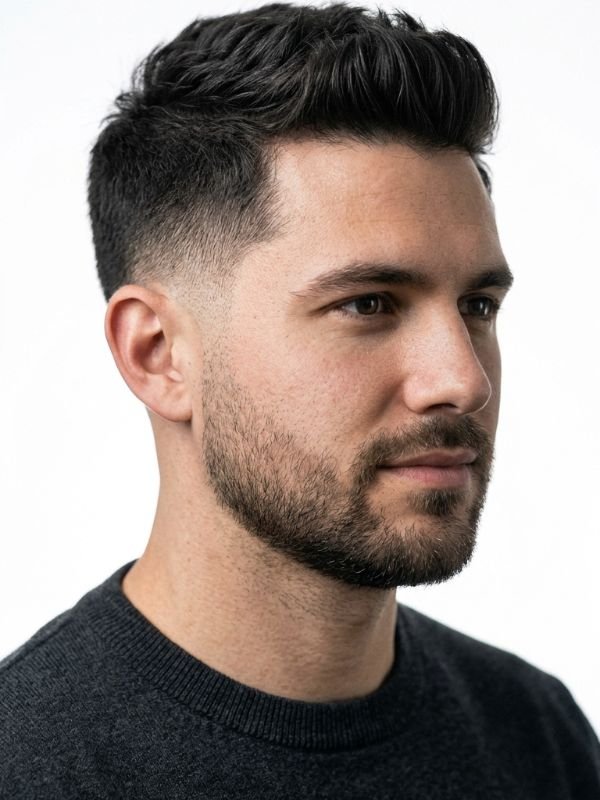
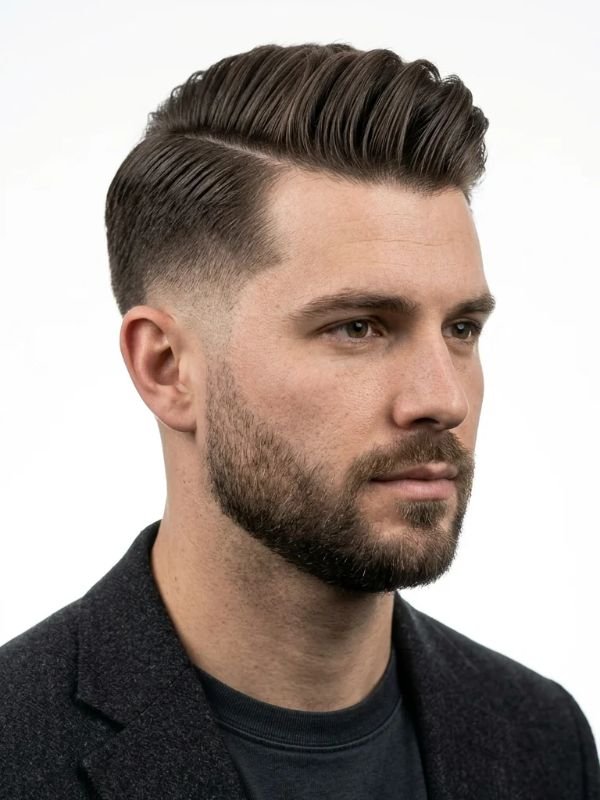
2. Low Taper Fade with Side Part A defined part, a little shine, and a faded base. This is the sharpest option for interviews and formal events. Use a light pomade and a fine comb.
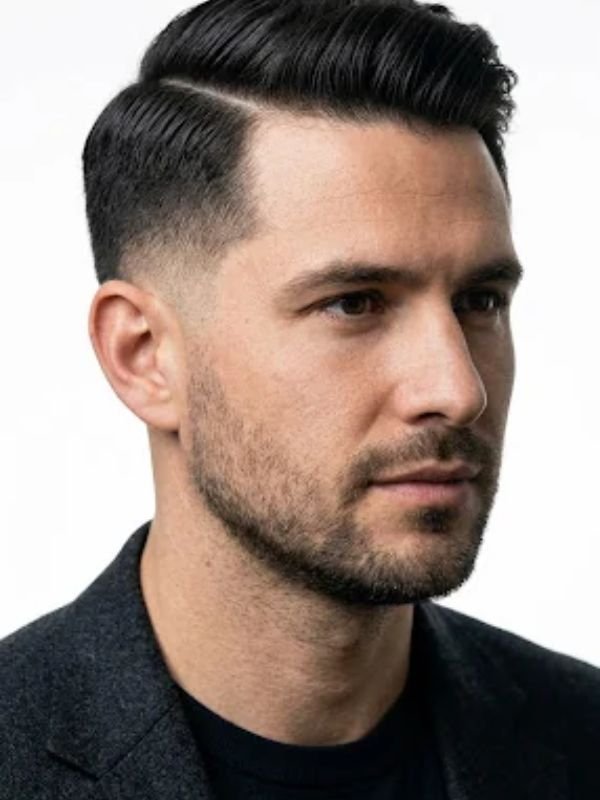
3. Low Taper Fade with Comb Over The comb over has made a strong return. Hair sweeps to one side with a hard or soft part. It flatters round and square faces, and it works well for men with a receding hairline.
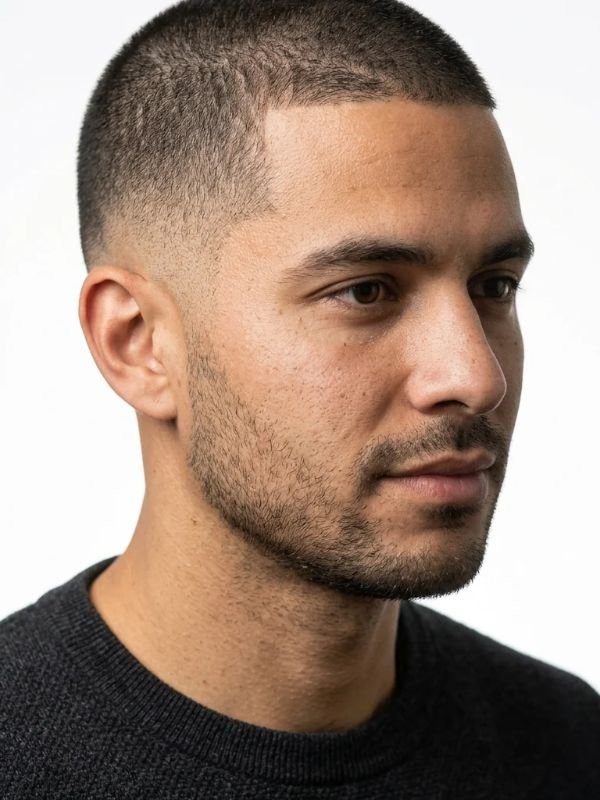
4. Low Taper Fade with Buzz Cut The easiest cut on this list. A short buzz on top with a low taper at the edges gives structure to an otherwise simple style. Ask for a guard length that suits your head shape.
Textured and Modern
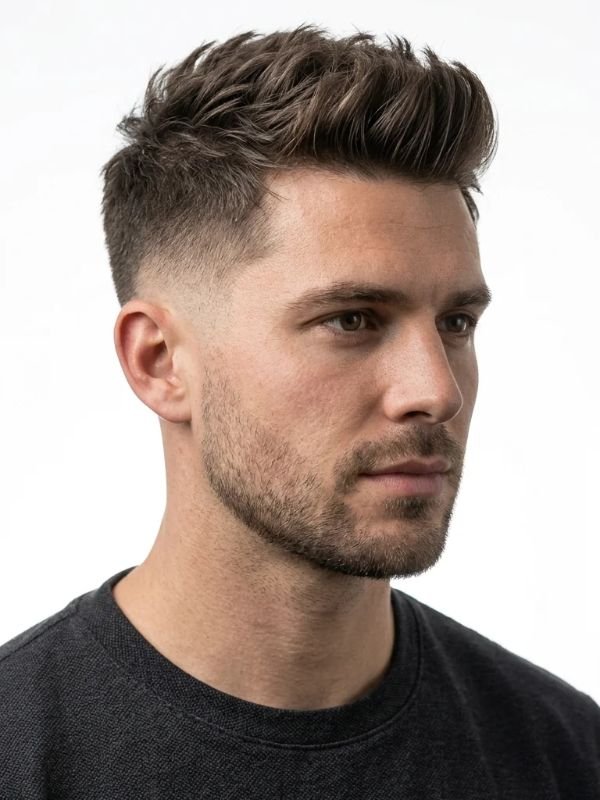
5. Low Taper Fade with Textured Top Point-cut layers and a matte finish give movement without effort. A pinch of clay is all you need. This is arguably the most requested version in barbershops right now.
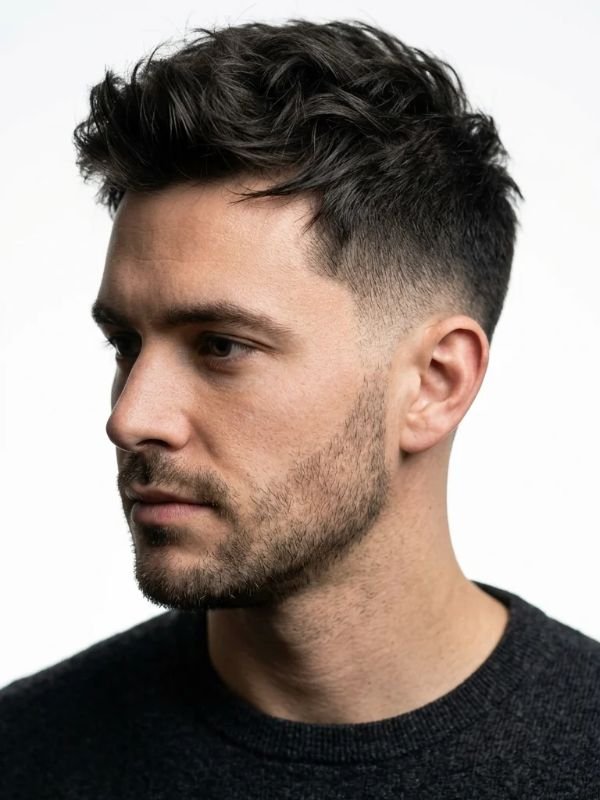
6. Low Taper Fade with Messy Top A deliberately piecey, undone look. Ask for choppy layers and style with sea salt spray. It’s great for guys who hate fussing with their hair.
7. Low Taper Fade with French Crop A short, blunt fringe over a tidy faded base. It’s low maintenance and hides a high forehead. Work a little paste forward and you’re done.
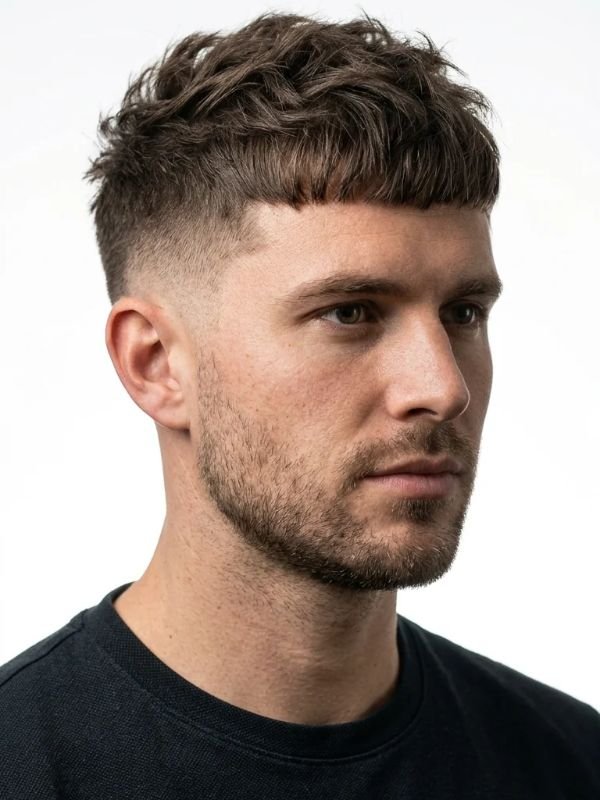
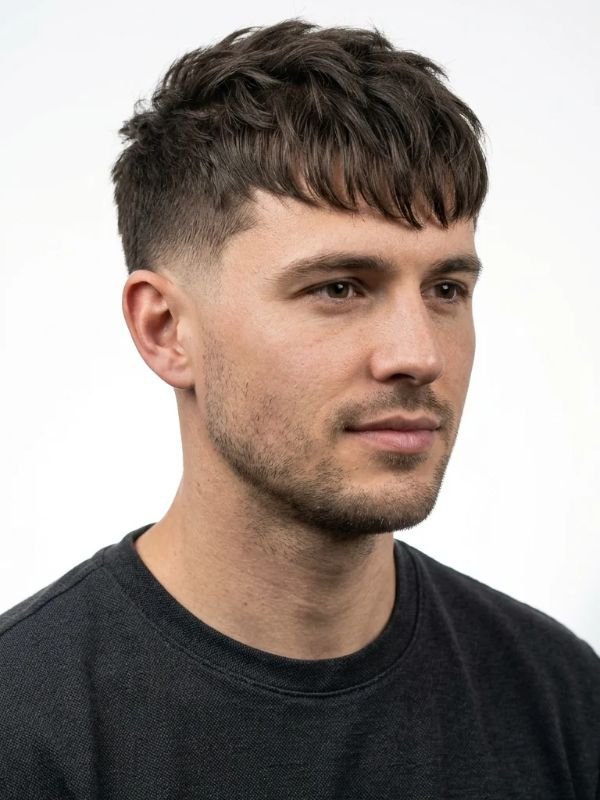
8. Low Taper Fade with Fringe Longer front hair falls onto the forehead while the sides stay clean. It softens a strong jawline and suits straight or wavy hair best.
Volume and Length
9. Low Taper Fade with Quiff Hair swept up and back at the front, with the sides kept tight. A blow dryer and a strong-hold product do the heavy lifting here. It adds height, which helps round faces.
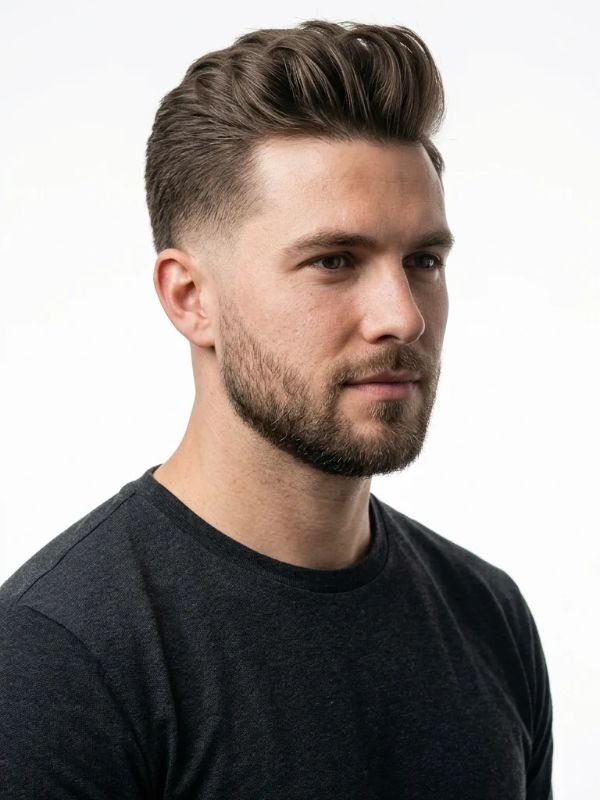
10. Low Taper Fade with Pompadour The bolder cousin of the quiff. You need at least four inches on top. The low taper keeps the sides calm so the volume takes center stage.
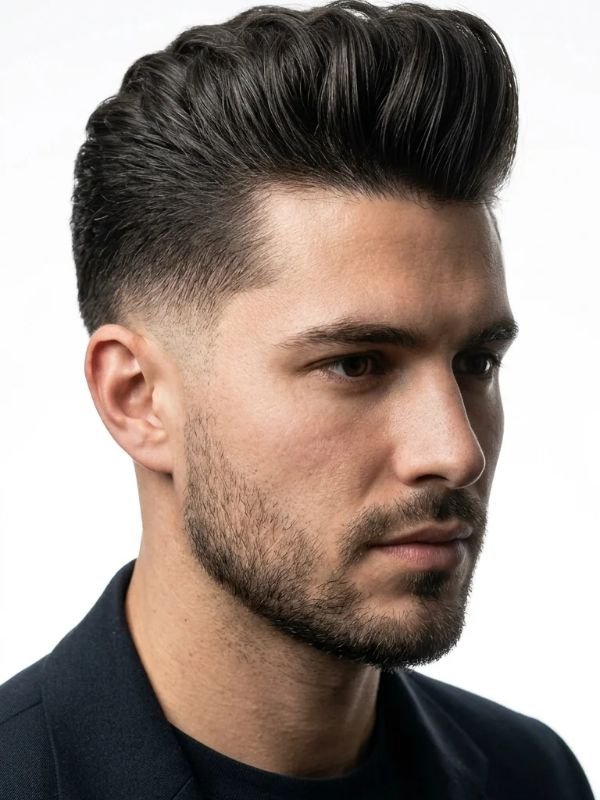
11. Low Taper Fade with Blowout Thick, lifted hair dried upward and slightly forward. It looks full and youthful, and it’s ideal for fine hair that needs help standing up.
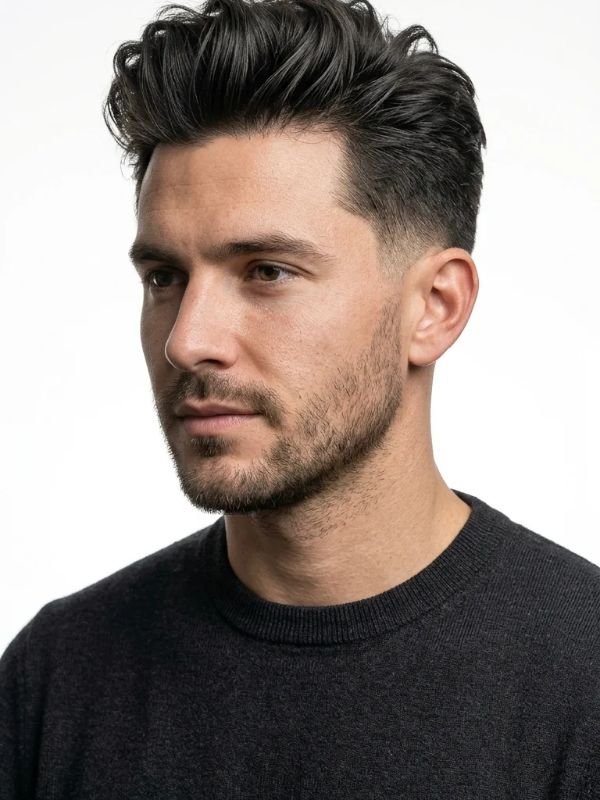
12. Low Taper Fade with Slick Back Hair combed straight back with pomade or gel. The low taper gives it a sleek, groomed finish. It works best on medium to thick straight hair.
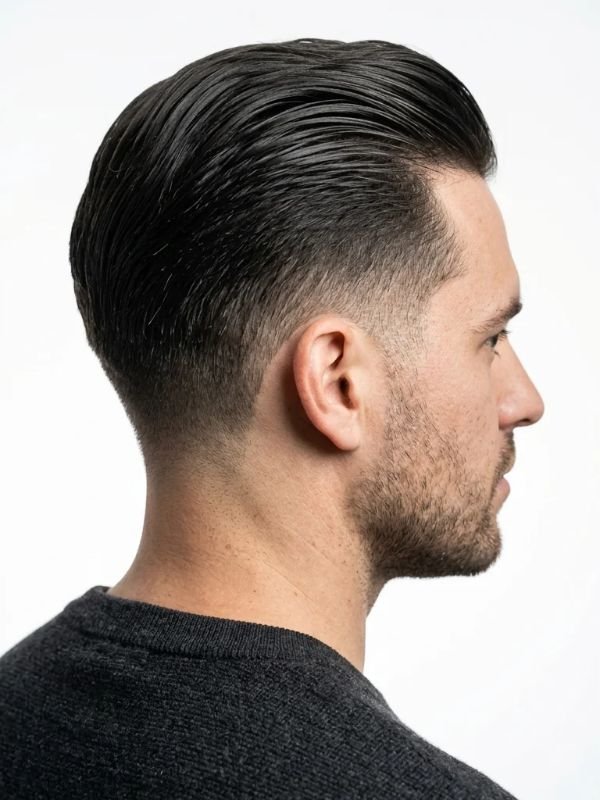
13. Low Taper Fade with Long Top Shoulder-grazing or chin-length hair with tidy sides. It’s a relaxed, creative look. Use a light cream to control frizz and keep the length healthy.
Curls, Coils and Natural Texture
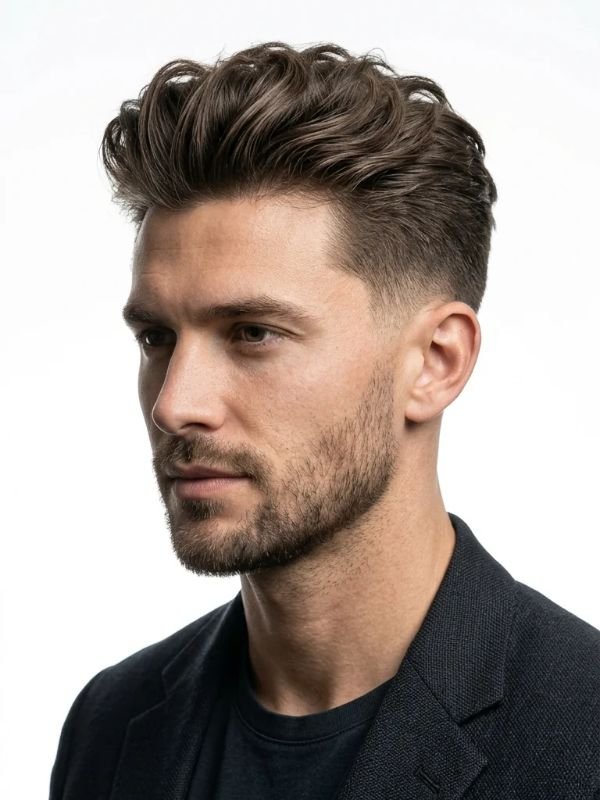
14. Low Taper Fade with Curly Top Natural curls on top with a clean taper below. Because curls are forgiving, the style looks intentional even as it grows. Curl cream keeps definition.
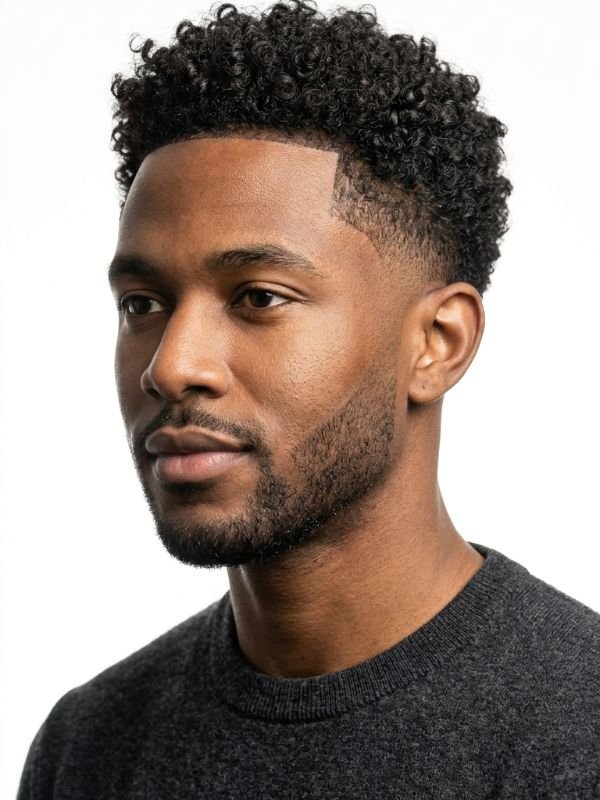
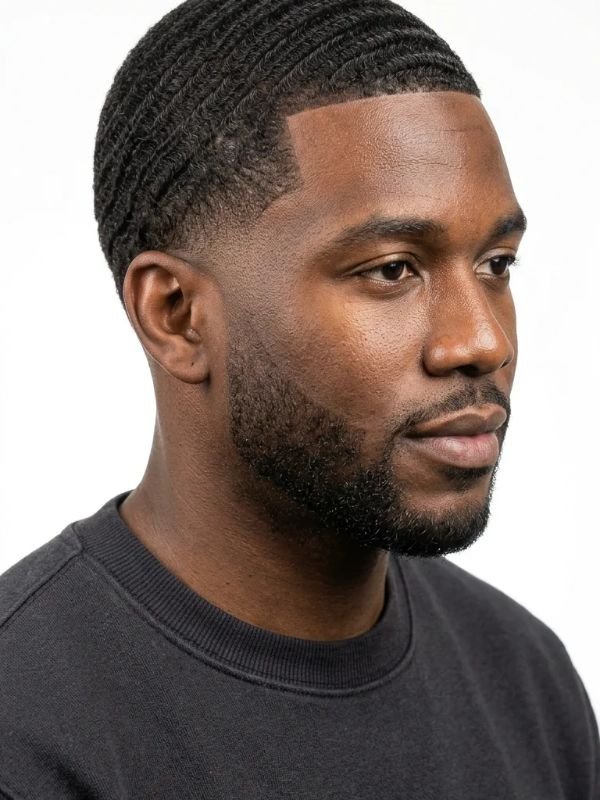
15. Low Taper Fade with 360 Waves Brushed waves ripple around the head, framed by a tight taper at the edges. It needs a nightly brush and a durag, but the payoff is a deep, polished texture.
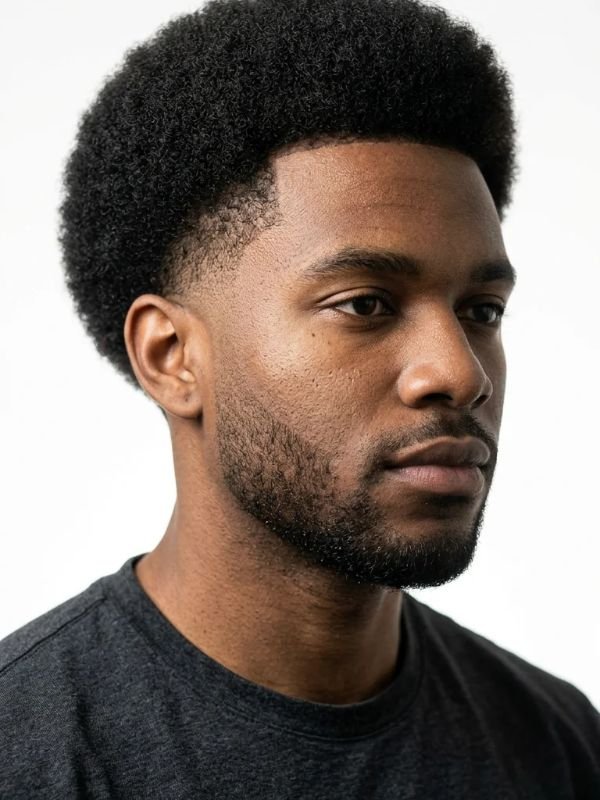
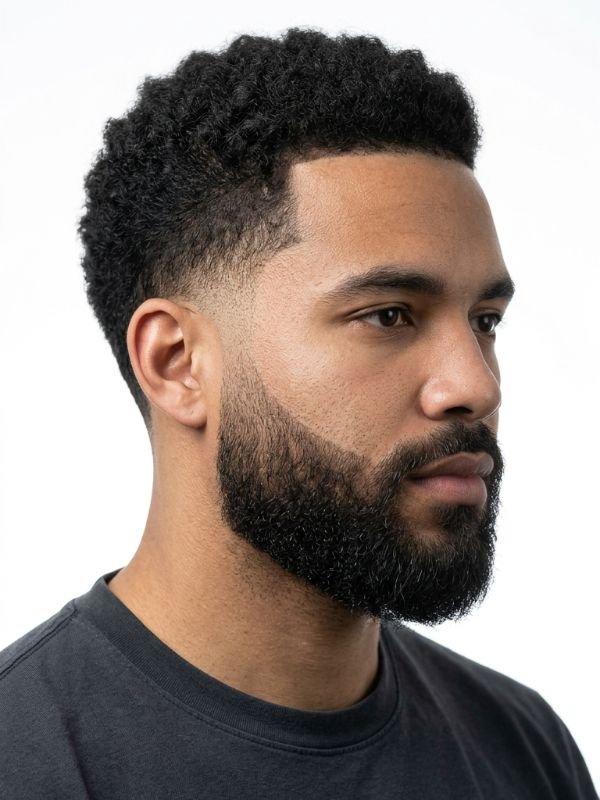
16. Low Taper Fade with Afro A rounded, shaped afro with a crisp taper at the temples and nape. The contrast between full volume and clean edges is striking. A wide pick helps keep it even.
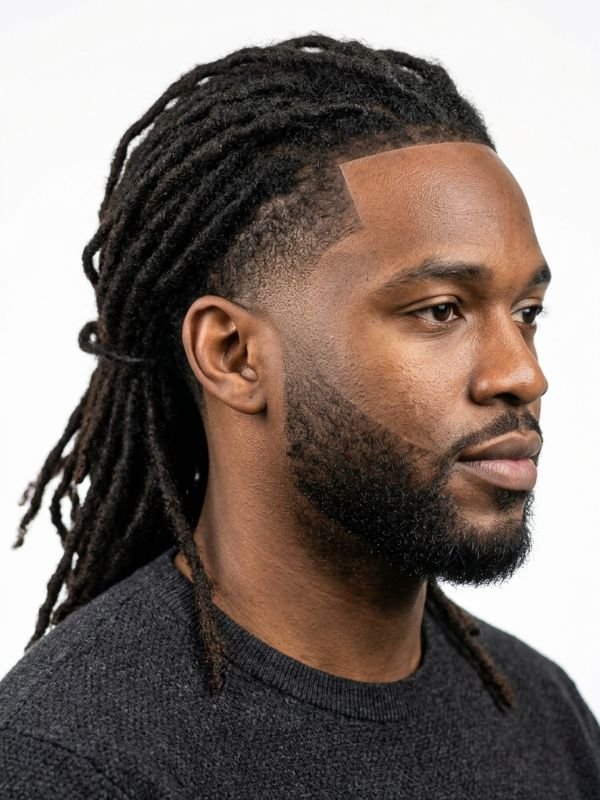
17. Low Taper Fade with Locs Locs left long or pulled up, with tapered sides and a clean neckline. It keeps the style neat while letting the locs be the focus.
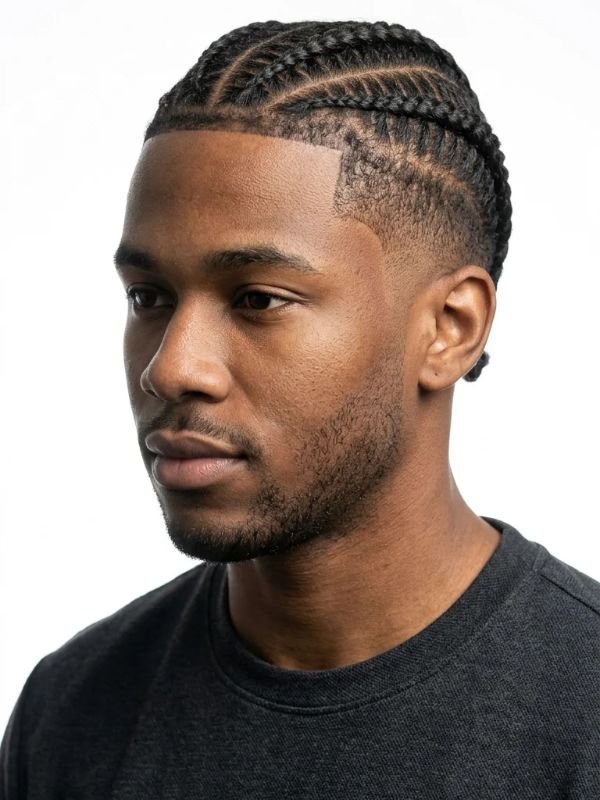
18. Low Taper Fade with Braids Cornrows or box braids on top with tapered sides. The taper sharpens the edges, so the braided pattern looks cleaner and last longer.
Bold Statements
19. Low Taper Fade with Faux Hawk Longer hair gathered up the center, with tight tapered sides. It adds edge without going full mohawk. Use strong paste and shape it with your fingers.
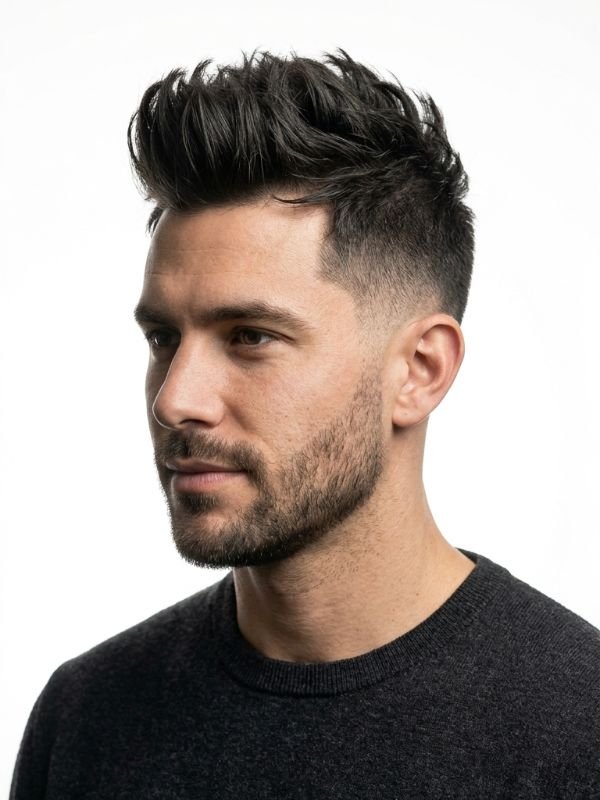
20. Low Taper Fade with Beard Fade the beard into the sideburns and the taper blends the whole face together. This works well for guys who want a rugged yet clean look. Keep the beard trimmed to match the fade.
More Low Taper Variations
A few extra versions deserve a mention, especially if your hair or lifestyle is a little different.
Low Taper Fade for Straight Hair
Straight hair shows every line, so the blend matters. A longer top with a side sweep looks great. Add a touch of texture spray to avoid a flat, helmet-like finish.
Short Low Taper Fade Crop
If you want minimal effort, keep the top around an inch to an inch and a half. It dries in seconds and needs almost no product.
Medium-Length Low Taper Fade
Leave three to five inches on top. This gives you enough length to style several ways, including a quiff, side part or swept-back look.
Low Taper Fade for Thin Hair
Thin hair benefits from a low taper because it keeps the sides from looking sparse. Ask for a textured top and use volumizing powder to create the look of thickness.
Choosing Your Low Taper Fade: Hair Type Breakdown
Your hair texture changes how the cut sits. Here’s what to know.
Curly Hair
Keep the top long enough for the curls to form. A low taper stops the sides from puffing out while the top stays defined. Use curl cream on damp hair and avoid brushing when dry.
Straight Hair
Go for structured styles such as the side part, slick back or French crop. Straight hair can look flat, so ask your barber for point cutting to add texture.
Wavy Hair
Wavy hair is the easiest to work with. It gives natural volume for a textured top, and a low taper keeps the shape neat. Sea salt spray enhances the waves.
Coily and 4C Hair
A low taper complements coily hair beautifully. It gives you precise edges and a clean neckline. Pair it with waves, a twist-out, a shaped afro or locs. Moisturize regularly to avoid dryness.
Thin or Fine Hair
Keep the top mid-length and textured. Avoid heavy products that weigh hair down. A matte clay or powder gives grip without making strands look greasy.
Low Taper Fade by Face Shape: What Works
Use these as starting points. Your barber can fine-tune the details.
Oval Faces
You can wear almost anything. Try a classic or textured top and let the taper stay subtle.
Round Faces
Add height on top with a quiff or pompadour. A slightly tighter taper at the temples adds structure.
Square Faces
Soft styles like a fringe or textured crop balance a strong jaw. A comb over also works well.
Heart Faces
A fringe softens a wider forehead. Keep the sides slightly fuller near the ears to balance a narrower chin.
Oblong Faces
Avoid too much height. Choose a lower-volume style, such as a French crop or side part, so the face doesn’t look longer.
Diamond Faces
A fringe or side-swept top evens out strong cheekbones. Don’t take the sides too tight around the ears.
Low Taper Fade by Age: Teens to Professionals
Teenagers
Teens usually prefer trend-forward looks. A textured top, a curly style or a French crop all work. A low taper is a smart first fade because it’s easy to adjust if you change your mind.
Men in Their 20s and 30s
This is where you can experiment. Try a quiff, a blowout or a faux hawk. Add a faded beard if you want a sharper look.
Professional Men Over 35
A classic taper with a side part or comb over is a safe, confident choice. Keep the top well groomed. If your hair is thinning, a shorter textured crop can look sharper than trying to hide it.
How to Ask Your Barber for a Low Taper Fade: Exact Scripts
“Give me a low taper fade” sounds clear, but barbers interpret it differently. Be specific. Mention four things: fade height, how short the base goes, the neckline shape, and the top length.
Here are scripts you can copy.
- Safe everyday cut: “A low taper fade around the sideburns and neckline, blended naturally, with about three inches left on top.”
- Cleaner, tighter version: “A low taper fade down to a number one at the base, with a rounded neckline and a textured top.”
- Skin-bare finish: “A low skin fade starting just above the ear, with the top left long enough for a side part.”
- Curly hair: “A low taper fade with the curls left long on top, and a soft blend at the nape.”
Extra tips:
- Bring photos showing the front, side and back.
- Tell your barber how you usually style your hair.
- If you’re unsure, say “start low and we can go higher if needed.” It’s easier to take more off than to put it back.
- Ask the barber to check the blend in the mirror before finishing.
Low Taper Fade Tutorial: Video Walkthrough
Watching a barber work is the quickest way to understand a taper. When you search for a tutorial, pick one that shows the cut from several angles and explains guard changes clearly. Look for these steps in the video:
- Section the hair. The barber separates the top from the sides and back.
- Set the guide lines. A longer guard marks where the taper starts, usually just above the ear.
- Work upward in stages. Each lower guard is used in a flicking motion to blend the transition.
- Clean the neckline. The nape is tapered, not squared off, so it grows out smoothly.
- Detail the edges. A trimmer cleans around the ears and sideburns.
- Blend the top. Scissors or clippers over comb connect the faded sides to the longer top.
A quick note on guards: lower numbers cut shorter. A number one leaves about 3mm, while a number four leaves roughly 13mm. Barbers combine several sizes to create the gradient, which is why one clipper with a full guard set matters so much.
If you’re trying this at home, practice on a partner or friend first. Fades are hard to self-cut, especially at the back. Even a skilled home cutter often relies on a second mirror and lots of patience.
Low Taper Fade Mistakes: 6 Ways Men Get It Wrong
- Asking vaguely. “Just a fade” can mean anything. Always name the height.
- Skipping reference photos. A picture removes guesswork.
- Going too high. If you want a subtle look, make sure it starts low.
- Ignoring the neckline. A squared-off nape grows out looking messy. A tapered neckline ages better.
- Leaving the top too short. A low fade needs balance. Without enough length on top, the cut looks flat.
- Overdoing product. Heavy waxes make the faded areas look dull and greasy. Use a matte formula and keep it light.
Most of these errors come down to communication. A two-minute chat before the clippers start prevents weeks of regret.
Read Also This: 8 Best Mid Taper Fade Afro Styles for Men (2026)
Maintaining a Low Taper Fade: The Real Routine
A low taper fade is easy, but it isn’t no-maintenance. Plan on a barber visit every two to four weeks. Because the taper is subtle, it grows out more gently than a skin fade, so you can stretch to four weeks if you don’t mind a softer edge. Men who like a razor-sharp look usually go every two or three.
Between visits, a few simple tools help.
Detail Hair Trimmer
A small trimmer keeps your neckline and sideburns tidy between cuts. Pick one with a fine blade that can make close, precise passes. Use it lightly around the ears and nape.
Cordless Hair Clipper with Guards
If you want to maintain the sides yourself, a cordless clipper with several guard sizes is the practical choice. It lets you touch up the lower taper without cord limits. Only use it for light cleaning, and leave the blend to your barber.
Matte Styling Clay / Pomade
Matte clay gives a natural, textured finish for most top styles. Pomade suits side parts and slick backs. Rub a small amount between your palms, work it through dry or damp hair, and avoid the faded areas.
Curl Cream
For curly and wavy hair, curl cream hydrates, defines and reduces frizz. Apply it to damp hair and scrunch gently. Let it air dry or use a diffuser.
Vent Brush
A vent brush helps with blow-drying, especially for quiffs, blowouts and pompadours. The open design speeds up drying and adds lift at the roots.
Simple Weekly Routine
- Wash with a mild shampoo two to three times a week. Harsh sulfates can dry out your scalp and make oil production worse.
- Condition if your hair is dry or curly.
- Style with a small amount of product.
- Clean up the neckline every week or so with a trimmer.
- Book your next cut before you leave the chair.
Conclusion
The low taper fade stays popular because it works. It’s subtle, flexible and flattering across hair types, ages and face shapes. Whether you want a classic side part, a textured crop, curls, waves or a faux hawk, the low taper gives you a clean base to build on.
Pick one of the 20 styles above, bring photos, and use the barber scripts to explain exactly what you want. Remember that the best cut is the one that fits your hair, your face and your routine, not just the one trending online. Then keep it fresh with regular trims, a light touch of product and a few simple tools. Do that, and your low taper fade will look sharp from the first day to the last.

1 thought on “Low Taper Fade: 20 Styles, Tips & Photos (2026)”