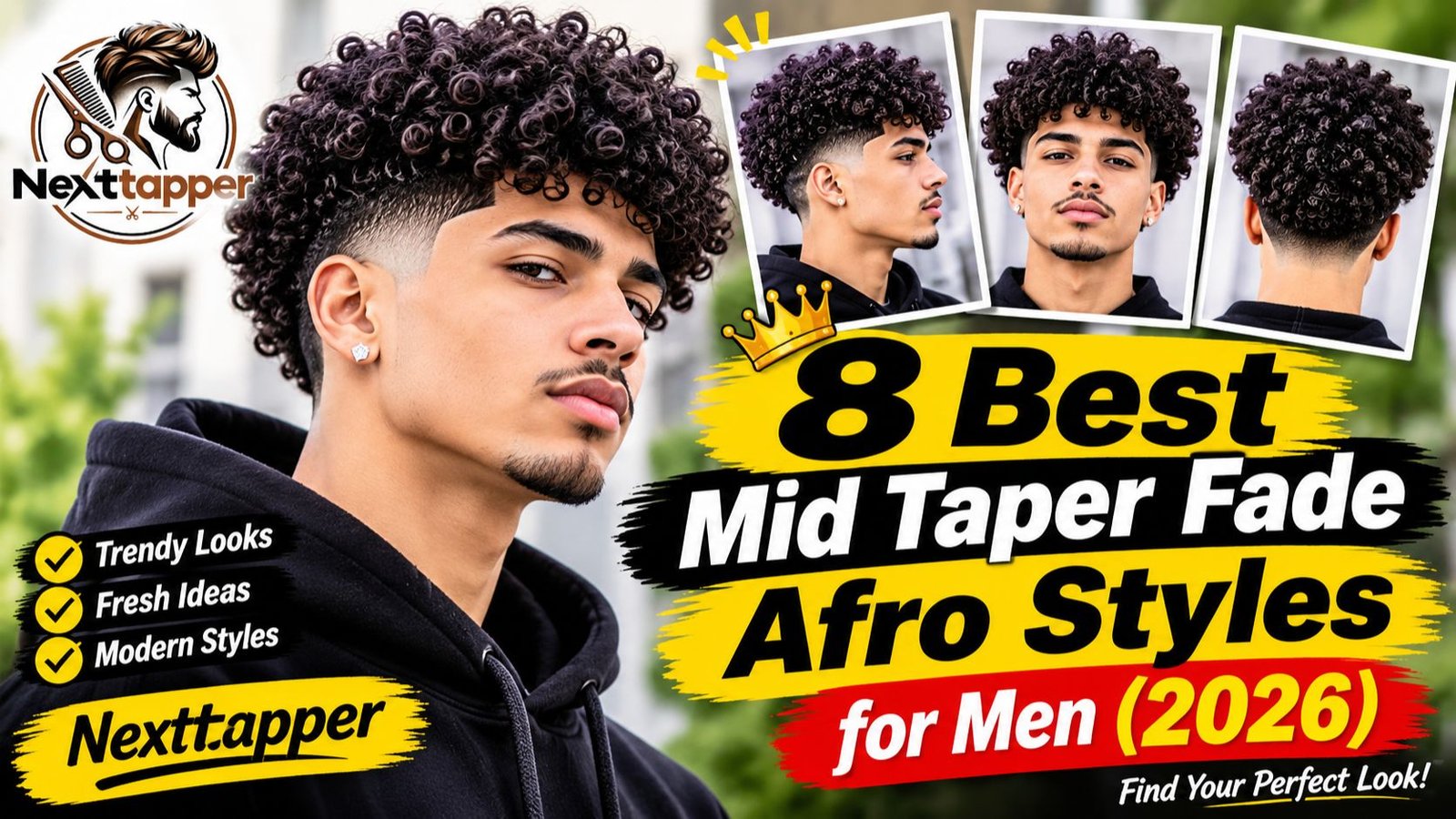

The mid taper fade afro is one of the cleanest ways to wear natural texture right now. You keep the volume and shape of your curls on top. The sides and back get a neat, gradual fade that starts around the temples and works its way down to the neckline.
It looks sharp in an office. It also looks relaxed on a weekend. That range is the main reason barbers keep seeing it requested chair after chair.
This guide covers the eight best mid taper fade afro styles, how to match one to your curl pattern and face shape, what to say to your barber, and how to keep the cut fresh between visits. Let’s get into it.
What Is a Mid Taper Fade Afro? [4C Hair Basics]
A mid taper fade afro pairs a full, shaped afro on top with sides and back that fade gradually from longer hair to very short. The fade begins around the midpoint of the head, roughly level with the temple and the top of the ear. That is the “mid” part.
A taper is different from a bold fade. A taper keeps a little more hair at the bottom and blends softly. A fade can drop all the way to bare skin and creates sharper contrast. Many barbers mix the two, which is why you will hear “mid taper fade” used as one phrase.
On 4C hair, this matters more than people think. 4C strands are tightly coiled, dense, and prone to shrinkage. Your hair can look half its real length when dry. A good barber cuts with that in mind and leaves enough length on top so the afro still holds its shape after it springs back.
Here is a quick snapshot of the cut:
| Feature | Mid Taper Fade Afro |
| Fade starting point | Around the temples and top of the ears |
| Top length | Short crop to tall afro or high-top |
| Best hair types | 4C, 4B, 3C, coily, and dense curls |
| Typical sides guard | #1 to #3, or skin at the bottom |
| Upkeep | Barber visit every 2 to 4 weeks |
| Styling time | 5 to 10 minutes |
Think of it as a frame. The fade is the frame, and the afro is the picture. When both are balanced, the whole head looks intentional.
8 Best Mid Taper Fade Afro Styles: Top Visual Guide
Every style below uses the same mid-height fade. What changes is the top, the detail work, and how much effort you want to put in each morning. Show your barber a reference photo of the one you like. It helps more than any description.
Classic Afro Styles
These three are the foundation. If you are new to the cut, start here.
1. Full Afro Mid Taper
This is the signature version. The top is grown out several inches, picked upward, and shaped into a rounded silhouette. The sides fade in cleanly below it.
Best for: Men with 4C or dense 4B hair who want maximum volume.
Why it works: The contrast between a big top and tight sides makes the afro look even fuller. It also keeps the shape from getting wide and heavy around the ears.
Keep in mind: You need patience. Growing a full afro takes months, and the shape needs regular trims to avoid looking uneven.
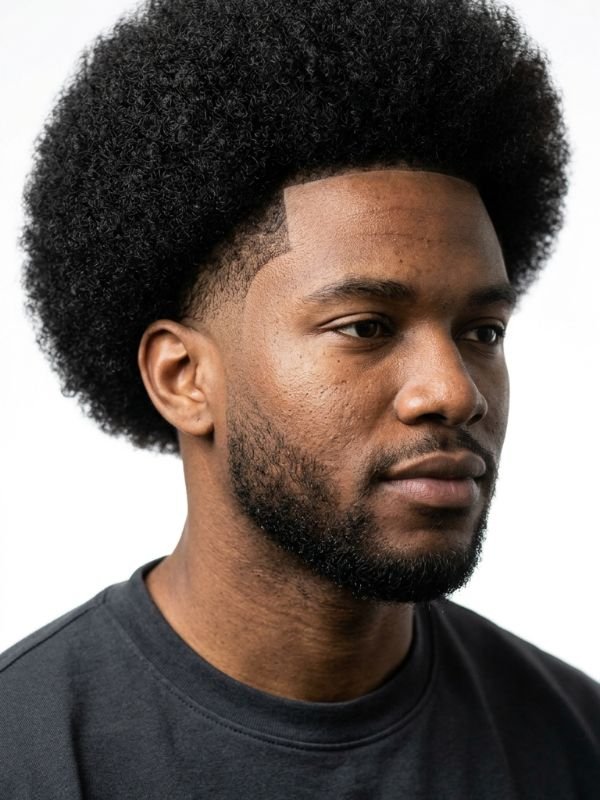
2. Mini Afro Mid Taper
The mini afro is a shorter, tighter version. The top sits around one to two inches, giving a soft, rounded cap of coils instead of a big crown.
Best for: Men who want a neat look without the wait, or anyone moving from a buzz cut to natural length.
Why it works: It grows out gracefully. Even three weeks in, the shape still reads as deliberate. It is also the easiest version to style, since a quick pick and a bit of moisture is often enough.
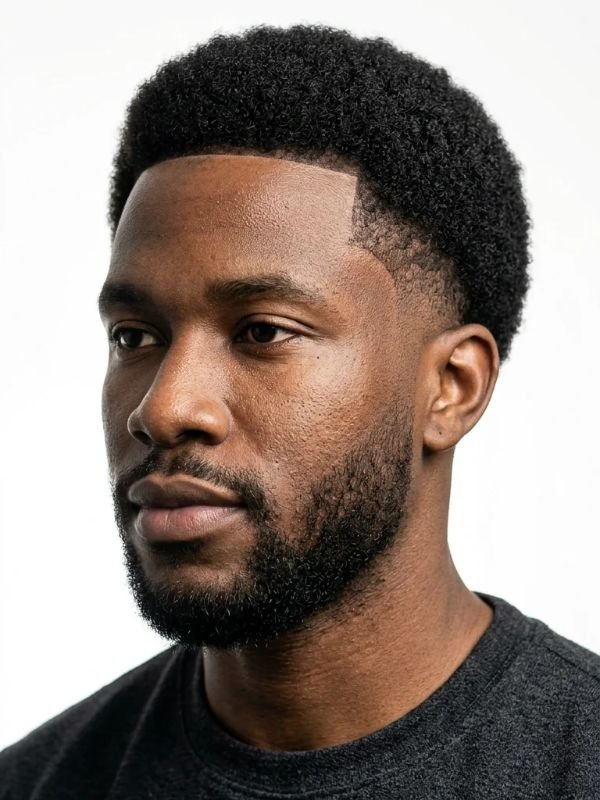
3. High-Top Afro Mid Taper
The high-top is flat, boxy, and tall. The top is shaped into a clean level plane, and the mid taper underneath makes the geometry stand out.
Best for: Men who like a retro, 90s-inspired silhouette with a modern finish.
Why it works: The flat top and sharp fade create strong lines. It is a confident cut, and it photographs well.
Keep in mind: The top needs steady shaping to stay level. Expect more frequent barber visits.
Detail and Combination Styles
If you like a more crafted finish, these add sharp details to the base cut.
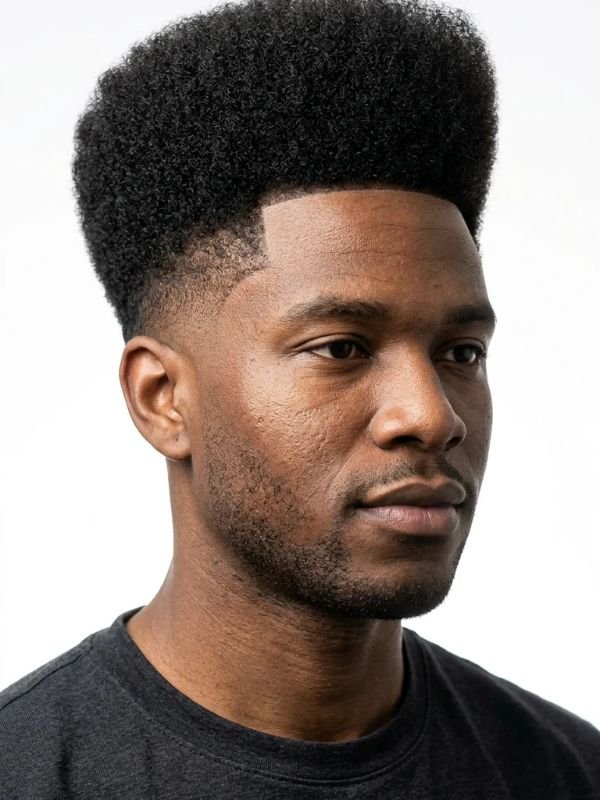
4. Afro Mid Taper with Line-Up
A line-up, also called an edge-up, is a crisp outline along the hairline and temples. Paired with a mid taper, it turns a soft afro into a precision cut.
Your barber can use a trimmer with the guard off or a straight razor for the final lines. The result is a clear border between hair and skin.
Best for: Anyone who wants a polished, “just left the barbershop” look.
Tip: Ask for a natural line-up if you have a receding hairline or sensitive skin. It keeps the outline softer and lowers the risk of razor bumps.
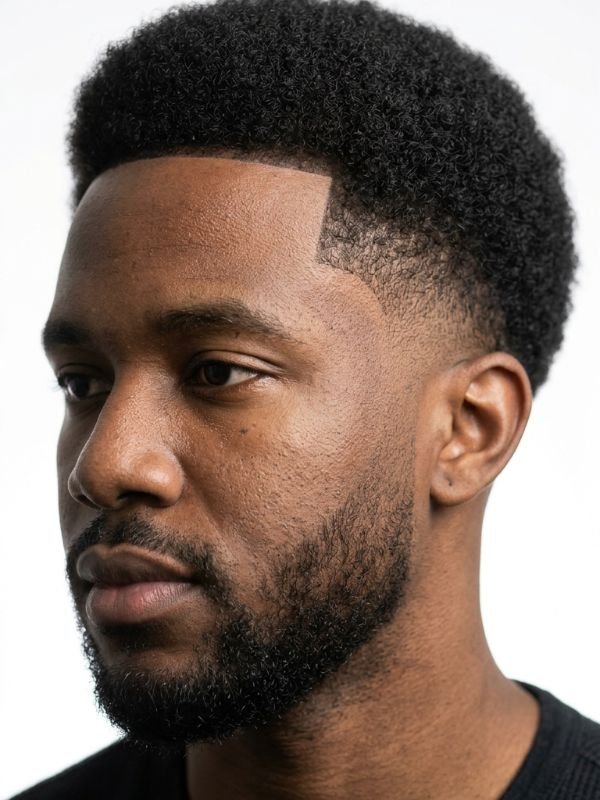
5. Afro Mid Taper with Beard Connect
Here the fade on the sides flows straight into the beard. The sideburns blend into the facial hair, so the head and face read as one shape.
Best for: Men with full or medium beards, and anyone with a rounder face who wants more definition along the jaw.
Why it works: The gradual blend avoids the harsh gap you get when sides and beard are cut separately. A softly shaped beard under a fuller afro also balances the head proportions.
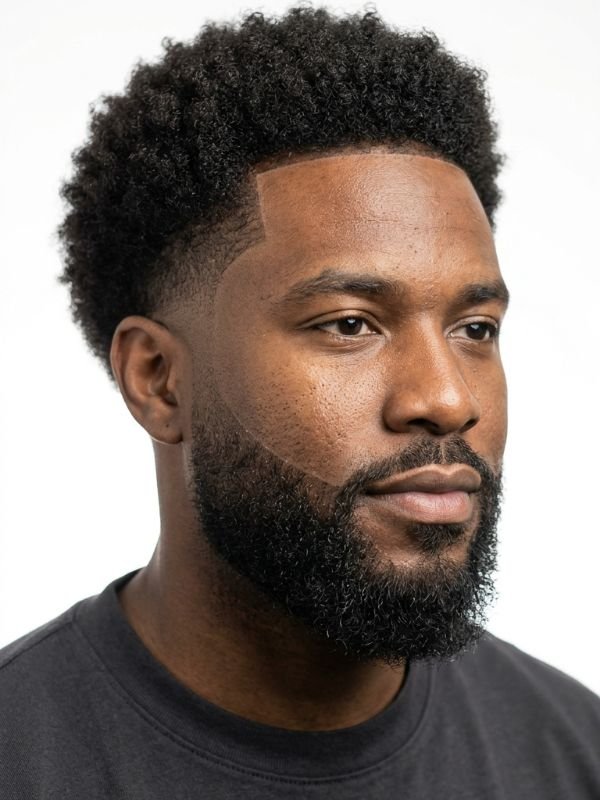
6. Afro Mid Taper with Design
This one adds a shaved part, a razor line, or a small pattern into the fade. Simple lines are the safest start. More detailed designs need a barber with a steady hand and good clipper control.
Best for: Creative personalities, events, and anyone who wants the haircut to say something.
Keep in mind: Designs fade out as hair grows. Plan on a refresh every two weeks if you want them to stay sharp.
Low-Maintenance Afro Styles
Not everyone wants a daily routine. These two keep things easy.
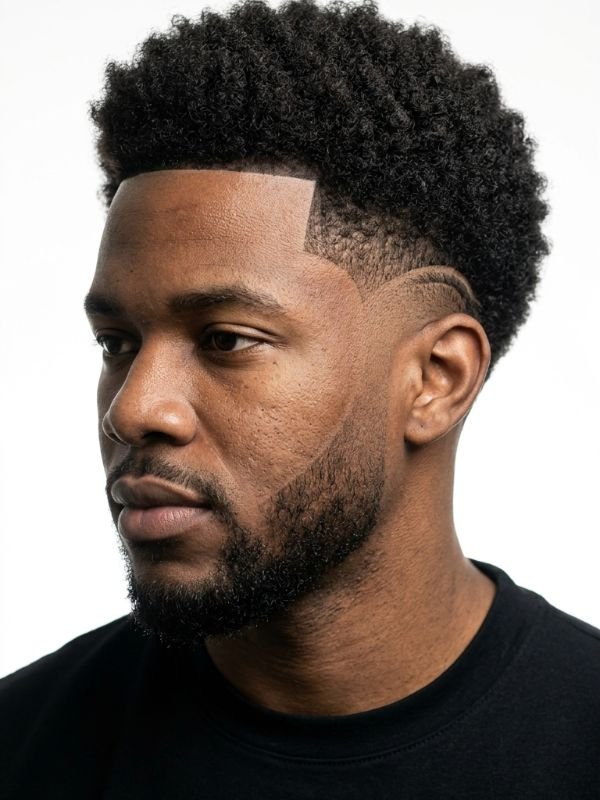
7. Textured Afro Mid Taper
Instead of a perfectly sculpted shape, this version leans into natural texture. The top is cut a little shorter and layered, then left to coil naturally. A light twist sponge or finger coils can add definition.
Best for: Men who want a modern, lived-in look and minimal styling time.
Why it works: Imperfection is part of the charm. A slightly uneven top still looks good because the fade does the heavy lifting.
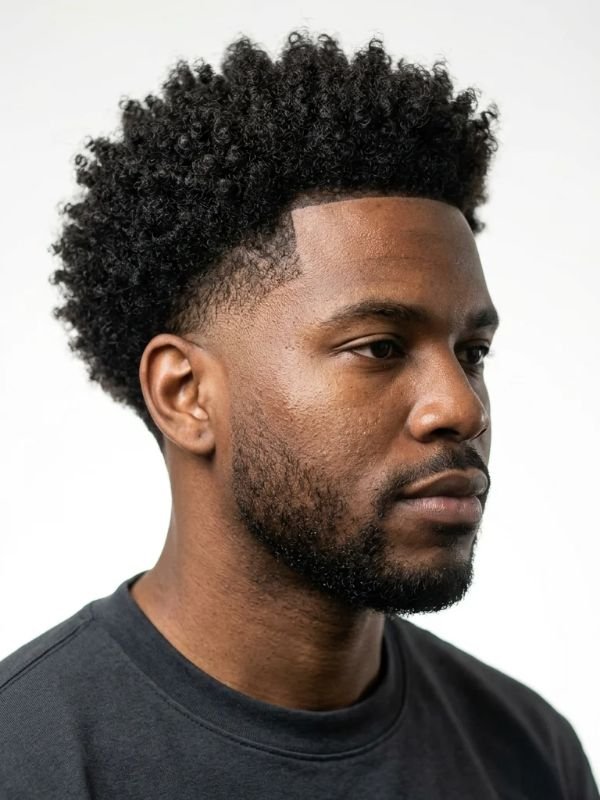
8. Afro Puff Mid Taper
Take longer hair on top, gather it, and style it into a puff, with the mid taper keeping the sides clean. It is a practical option for gym days or hot weather.
Best for: Men with medium to long top length who want an easy way to manage it.
Tip: Use a soft scrunchie or fabric band so your hair does not snap. Avoid pulling too tight around the hairline.
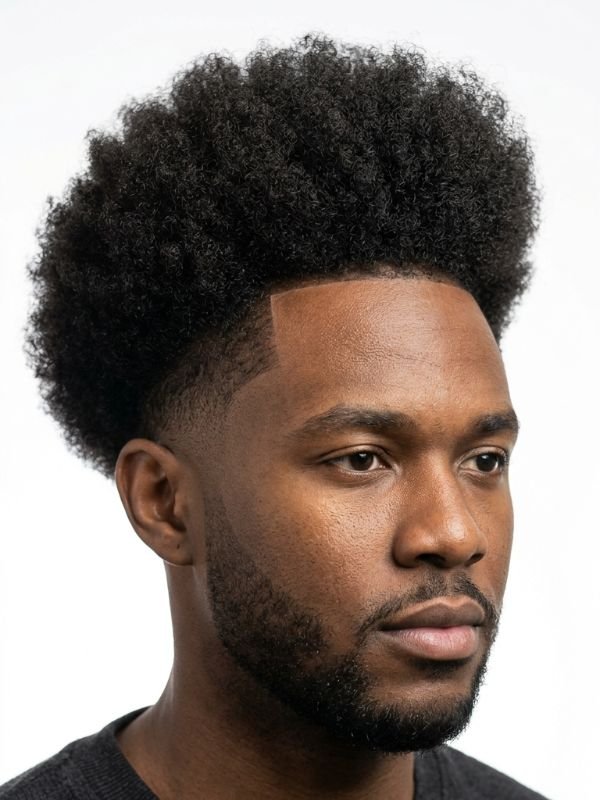
Why the Mid Taper Fade Afro Is Popular [2026 Trend]
Men’s grooming in 2026 leans toward clean, intentional cuts with a strong fade underneath. Barbers talk about clients who arrive with clear ideas and reference photos, and the mid taper afro fits that mindset perfectly.
A few reasons it keeps winning:
- It celebrates natural texture. You do not need to straighten, relax, or flatten anything.
- It is flexible. You can change the top without touching the fade, or the other way around.
- It suits many settings. The same cut works for a job interview, a wedding, and a Saturday run.
- It grows out well. Because the taper is gradual, the shape does not collapse after a few weeks.
Mid Taper Fade Afro Pros & Cons [Quick Breakdown]
No haircut is perfect. Here is an honest look at both sides.
| Pros | Cons |
| Keeps natural volume and curl pattern | Needs a barber visit every 2 to 4 weeks |
| Clean, professional look | Requires a skilled barber for a smooth blend |
| Works with beards and designs | Dry 4C hair can look uneven if not moisturized |
| Easy daily styling | Fade lines show growth quickly |
| Suits most face shapes | Growing a full top takes time |
| Versatile for work and casual wear | Line-ups can irritate sensitive skin |
The biggest trade-off is upkeep. You get a sharp look, but you pay for it with regular trims. If that sounds like too much, a slightly lower taper or a textured top will give you a bit more breathing room.
How to Choose Based on Afro Type & Density [Match Your Curls]
Your curl pattern and density decide how the cut behaves. Match the style to your hair and you will spend less time fighting it.
4C Hair
4C hair has tight, zigzag coils and shrinks a lot. It holds shape beautifully, so it is ideal for the full afro, the high-top, and sculpted designs.
Go slightly longer on top than you think you need. Shrinkage can eat up half the visible length. Moisture is non-negotiable here, because dry coils tangle and break.
Coily or 3C Hair
3C hair has looser, springy curls that catch more light. The mini afro and textured afro look great because the curls show up clearly.
Use a curl cream and a gentle finger-comb. A brush can pull the pattern apart and cause frizz.
Thick, Dense Hair
Very dense hair needs a barber who knows how to thin and blend without leaving gaps. A heavy top can make the fade look abrupt.
Ask for a longer blend zone between the sides and the top. This helps the transition look smooth rather than blocky.
Other Natural Textures
Wavy or loosely curly hair can still work, though the result is softer and closer to a textured top. If your hair is fine, avoid anything too tall and go for a mini afro instead.
Best Mid Taper Fade Afro Styles by Face Shape [Visual Guide]
Face shape changes how a haircut sits on your head. The goal is balance. Add height or width where you need it, and keep the rest tidy.
Oval Face
Oval faces are the most flexible. Almost any version works, from a full afro to a mini afro. Pick based on lifestyle rather than shape.
Round Face
Add height and keep the sides tight. The high-top or a taller afro with a clean mid taper makes the face look longer. Avoid a wide, rounded afro that adds width at the cheeks.
Square Face
A square jaw is already strong. A rounded afro softens the angles nicely. The full afro or a puff with a mid taper balances sharp lines well.
Heart-Shaped Face
A wide forehead and narrow chin call for balance. A medium-height afro with a beard connect fills out the lower face and evens the proportions.
Long Face
Keep the top shorter so you do not add more length. The mini afro or a textured afro works well. A fuller beard also adds width.
Diamond Face
Cheekbones are the widest point here. A rounded afro with some fullness at the forehead helps balance the cheeks. A mid taper keeps the sides slim so the width does not stack up.
Rectangular Face
Similar to the long face. Avoid extreme height. A mini or medium afro with clean sides keeps the shape balanced, and a line-up can frame the forehead.
Best Mid Taper Fade Afro Styles for Every Age [Teens to 40s+]
This cut grows with you. The right version just changes with your stage of life.
Teenagers
Teens often want something bold and low effort. A mini afro with a mid taper, or a high-top with a simple design, fits well. Keep the design simple and the top easy to wash and style. For younger teens, talk with a parent and a barber about what is practical for school.
Young Men
In the 20s and 30s, you have the widest range. Full afros, designs, and line-ups all look good. This is the age to experiment. If you like a sharper style, add a beard connect and book regular visits.
Professional Men
For office settings, go for neat and controlled. A mini afro or a medium afro with a natural line-up looks polished without feeling stiff. Keep the sides tight and the top evenly shaped. In your 40s and beyond, a tidy beard and a shorter top often look the most refined.
How to Ask Your Barber for a Mid Taper Fade Afro [Guard Numbers]
Clear communication gets you the cut you want. Barbers say the same thing again and again: be specific, bring photos, and use numbers.
Guard numbers refer to the clipper attachment. The higher the number, the longer the hair left behind. These are the common mainstream sizes:
| Guard | Approximate Length |
| #0 | 1/16 inch |
| #1 | 1/8 inch |
| #2 | 1/4 inch |
| #3 | 3/8 inch |
| #4 | 1/2 inch |
Brands differ slightly, and a bare blade can cut closer on one clipper than another. A quick check-in with your barber helps.
Here is a simple script you can adapt:
- Name the fade height: “I want a mid taper fade.”
- Give the guard numbers: “Start at skin or a #0.5 at the bottom, blend up to a #2, then into the afro.”
- Describe the top: “Leave about three inches on top and shape it round.”
- Mention the details: “Natural line-up, no hard edge,” or “Blend into my beard.”
- Show a photo: Bring one or two reference images.
A full example might sound like this: “I’d like a mid taper fade, skin at the bottom blending to a #2, with about three inches left on top, shaped into a rounded afro and a natural line-up.”
Ask the barber to check in with you after the sides and before they finish the top. That is the easiest point to adjust.
How to Cut a Mid Taper Fade Afro [Video Breakdown]
This section is for understanding the process, not a replacement for a trained barber. A mid taper on 4C hair is detail work, and most people get a better result in a professional chair.
If you watch a barber at work, here is the general flow:
- Prep the hair. It is detangled and picked out so clippers move evenly.
- Mark the fade line. The barber decides where the taper starts, around the temple and ear.
- Set the base. Working from the neck upward, they use a higher guard to set the base length.
- Step down the guards. Each section blends into the one above it.
- Shape the afro. The top is picked out, trimmed, and rounded with scissors or clippers over a comb.
- Finish the details. Line-up, beard blend, and neckline are cleaned up.
When you watch tutorials, pay attention to the blending. The skill is in how softly each guard transition disappears. A rushed blend leaves visible lines.
Common Mid Taper Fade Afro Mistakes [Fix These First]
Most bad results come from a handful of avoidable issues.
- Cutting the top too short. Shrinkage makes hair look much shorter once it dries. Ask for extra length.
- Starting the fade too high. A mid fade that sneaks up into a high fade can make the head look narrow and the afro look disconnected.
- Skipping moisture. Dry coils look dull and break easily. Hydrate before and after the cut.
- Using the wrong comb. Fine-tooth combs can rip tight curls. Use a wide-tooth comb or an afro pick.
- Vague instructions. “Short on the sides” means something different to every barber. Use guard numbers and photos.
- Over-washing. Too much shampoo strips natural oils and leaves 4C hair brittle.
- Waiting too long between visits. After four weeks the blend looks fuzzy.
If your last cut missed the mark, bring a photo and these notes to your next appointment.
How to Maintain a Mid Taper Fade Afro
Good maintenance is what keeps the cut looking expensive.
Daily Care
- Pick or finger-comb the top gently to restore shape.
- Mist with water or a leave-in spray if the hair feels dry.
- Sleep on a satin pillowcase or wear a satin bonnet. Cotton pulls moisture out of coils.
- Keep the fade clean with a soft brush if you have waves in the sides.
Products That Work Best
You do not need a huge shelf. A short list covers most needs:
| Product | What It Does |
| Leave-in conditioner | Keeps coils soft and hydrated |
| Curl cream or butter | Defines texture and reduces frizz |
| Light oil (jojoba, argan) | Seals moisture and adds shine |
| Wide-tooth comb or afro pick | Shapes without breaking hair |
| Satin bonnet or pillowcase | Reduces friction overnight |
| Twist sponge (optional) | Adds definition for textured styles |
Avoid heavy gels with alcohol. They dry out the hair and can leave flakes.
Washing Routine
- Wash once a week, or every two weeks if your hair is very dry.
- Use a sulfate-free shampoo and focus on the scalp.
- Follow with a deep conditioner and let it sit for a few minutes.
- Detangle while the conditioner is still in your hair, from ends to roots.
- Pat dry with a soft towel or old t-shirt rather than rubbing.
Touch-Up Frequency
Most barbers suggest a refresh every two to four weeks. The fade shows growth first, so if you like it crisp, aim for the shorter end. Designs and line-ups usually need a visit every two weeks. A full afro can stretch a little longer, since the top benefits from added length.
Read Also This: 17 Best Mid Taper Fade Curly Hair Styles (2026)
Mid Taper Fade Afro vs Other Styles
Still deciding? Here is how the mid taper afro compares to similar cuts.
Mid Taper Afro vs Low Taper Afro
A low taper starts closer to the ear and neckline. It is subtler and keeps more hair on the sides. A mid taper starts higher, so the fade is more visible and the cut feels more defined.
Choose the low taper for a conservative, easy-to-grow-out look. Choose the mid taper for more contrast and a sharper shape.
Mid Taper Afro vs High-Top Afro
The high-top is a specific top shape, not a fade level. The two can be combined, and the high-top afro mid taper is on our list above. If you want the flat, boxy shape, go high-top. If you prefer a rounded silhouette, go with a standard afro.
Mid Taper Afro vs Twist-Out
A twist-out is a styling method. You twist the hair, let it set, and unravel it for defined curls. It can be worn on top of a mid taper. The twist-out gives more definition and texture, but it takes time to set. A plain afro is faster.
Conclusion
The mid taper fade afro works because it respects your natural texture and still looks sharp. Whether you want a full afro, a mini cut, a high-top, or something with a line-up or design, there is a version that fits your hair, face shape, and routine.
Remember the basics. Bring a reference photo. Use guard numbers. Leave extra length on top for shrinkage. Keep your hair moisturized, protect it at night, and book your next visit within two to four weeks.
Pick the style that makes sense for your lifestyle, show it to a barber you trust, and enjoy a cut that looks as good on day twenty as it does on day one.

2 thoughts on “8 Best Mid Taper Fade Afro Styles for Men (2026)”