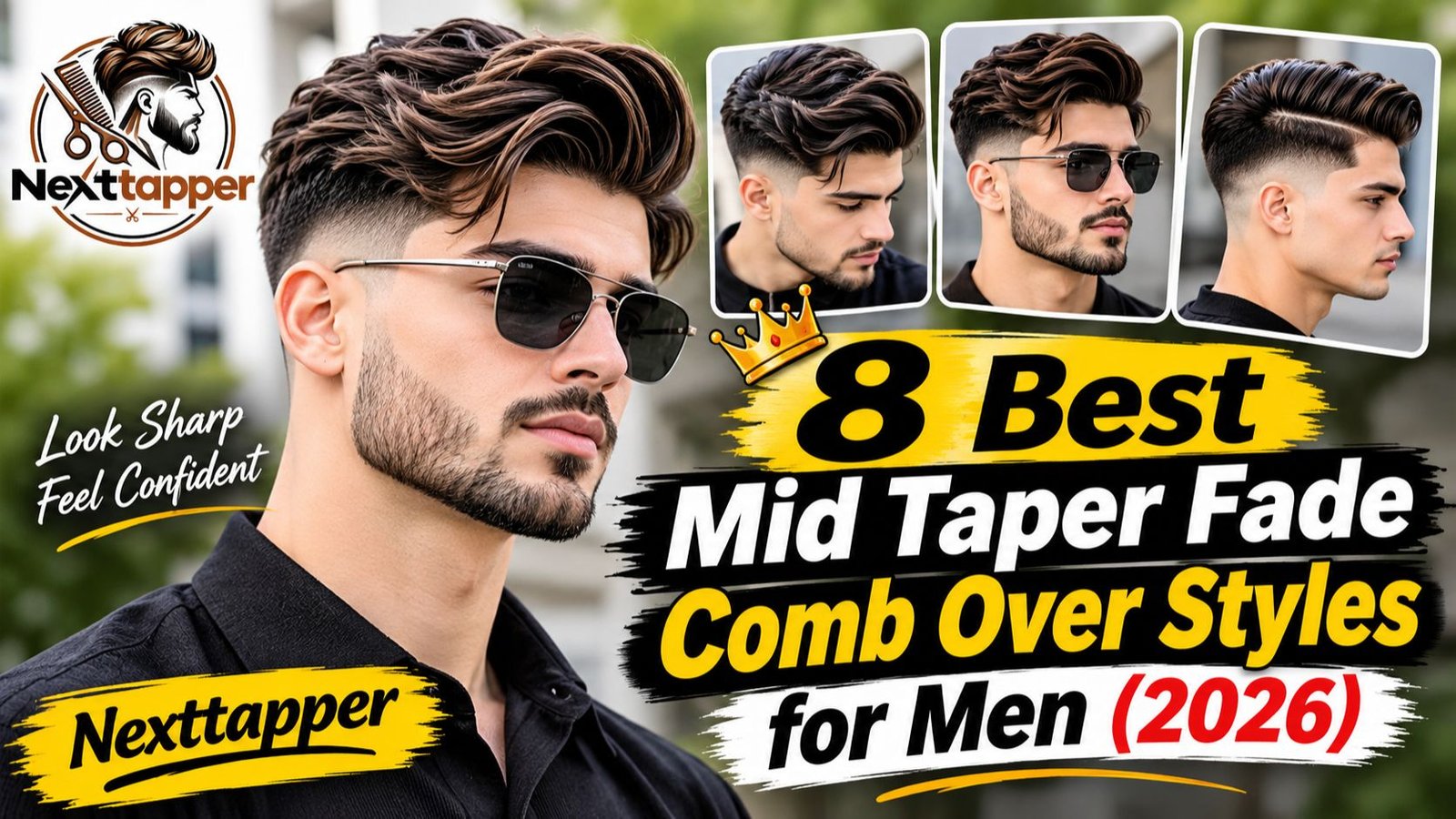

The comb over is one of those haircuts that never really leaves. Pair it with a mid taper fade and it feels current, sharp, and easy to wear. The sides stay short and clean. The top gets enough length to sweep across in a neat, defined shape.
That mix is why barbers keep getting asked for it. It works in a boardroom. It works on a Friday night. And it works on most hair types if the cut is done right.
This guide walks through the eight best mid taper fade comb over styles, how to match one to your hair and face, what to tell your barber, and how to keep the part sharp between visits. You will also see the mistakes that quietly ruin this cut.
8 Best Mid Taper Fade Comb Over Styles
All eight styles share the same mid-height taper. The difference is in the top length, the texture, the part, and the finish. Bring a reference photo to your appointment. It saves a lot of guesswork.
Classic Structured Styles
These two are the foundation. If you want a clean, grown-up look, start here.
1. Classic Mid Taper Comb Over
This is the original formula. The top is cut a few inches long, parted to one side, and combed across. The mid taper underneath keeps the sides tight and tidy.
Best for: Straight to slightly wavy hair, office settings, and anyone who wants a timeless cut.
Why it works: The contrast between a tidy fade and a smooth top looks deliberate. It reads as polished without trying hard.
Styling: A light pomade or cream gives a natural finish. Comb from the part outward in a clean sweep.
2. Slick Comb Over
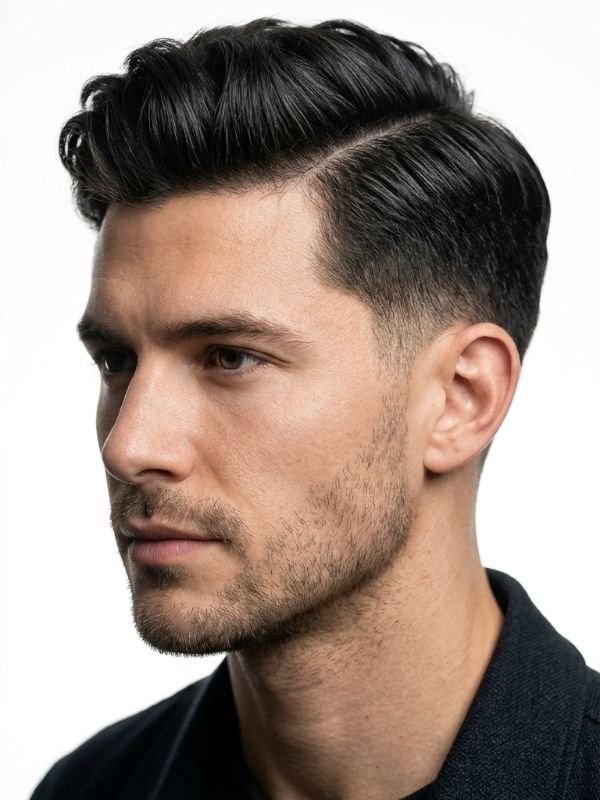
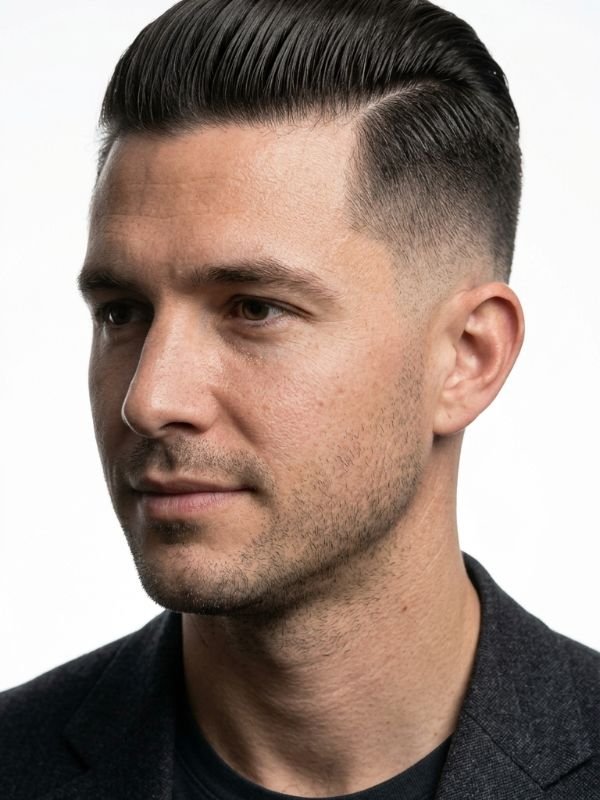
The slick version leans into shine and hold. The hair is combed flat and set firmly, often with a defined hard part cut into the side.
Best for: Formal events, interviews, and men who like a sharp, groomed look.
Why it works: A glossy top against a faded side creates strong contrast. It looks expensive.
Keep in mind: This style asks for a strong-hold product and a steady hand with the comb. It also shows flyaways more than a textured version does.
Textured Variations
If a flat, glossy finish feels too stiff, these add movement.
3. Textured Comb Over
Here the top is cut with layers or point-cut ends, then styled with matte clay or paste. The result is a softer, slightly tousled sweep.
Best for: Thick or medium-density hair, casual workplaces, and a modern feel.
Why it works: Texture hides small imperfections. If a strand falls out of place, it still looks intentional.
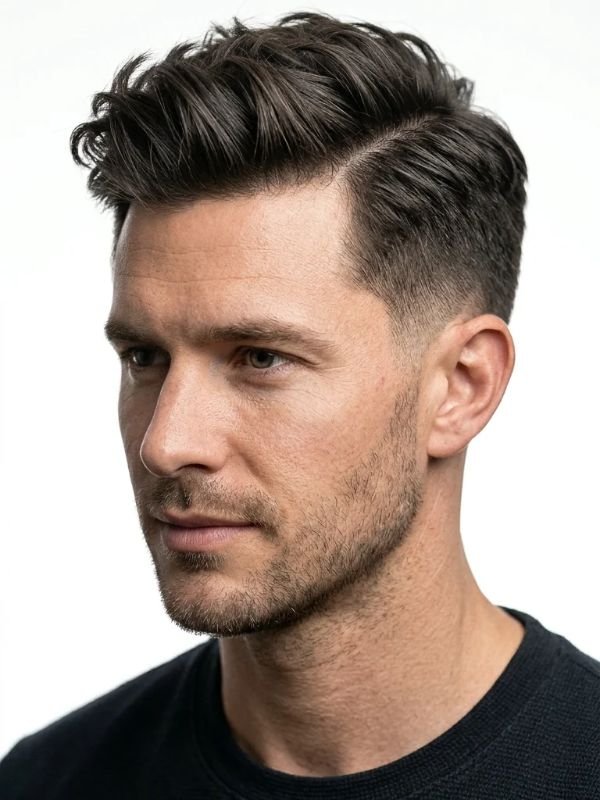
4. Wavy Comb Over
Natural waves do half the work. The top is left a little longer, so the waves can sweep across with real shape and volume.
Best for: Wavy hair that already moves well, and guys who want a relaxed, effortless look.
Why it works: The waves add body without heavy product. A mid taper keeps the sides slim so the top does not look bulky.
Styling: Use a sea salt spray or light cream on damp hair, then let it air dry or use a diffuser.
Detail and Combination Styles
These add extra features to the base cut.
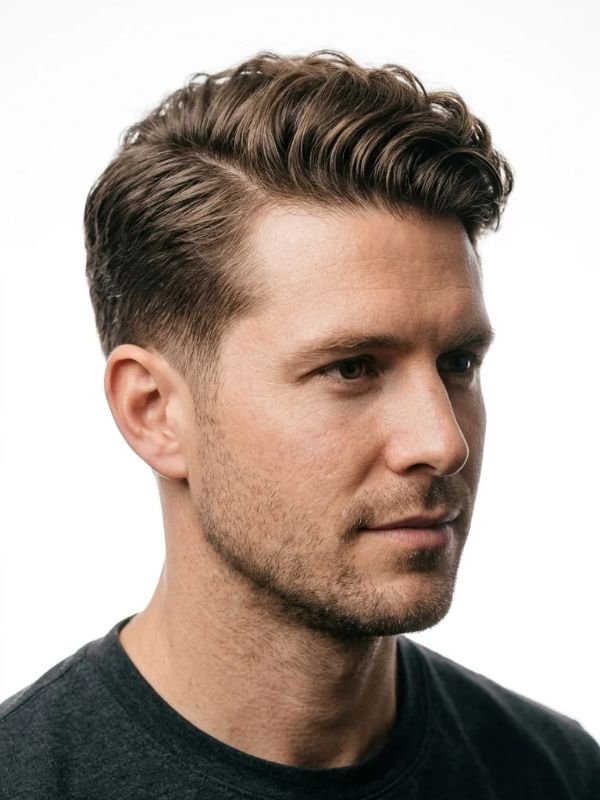
5. Comb Over with Beard
A comb over and a well-kept beard are a natural pair. The mid taper blends into the sideburns, then into the beard, so the head and face read as one shape.
Best for: Men with medium to full beards, and anyone who wants a stronger jawline.
Why it works: The gradual fade avoids a harsh gap between hair and beard. A tidy beard also balances the length on top.
Tip: Ask your barber to blend the beard line into the fade rather than cutting each separately.
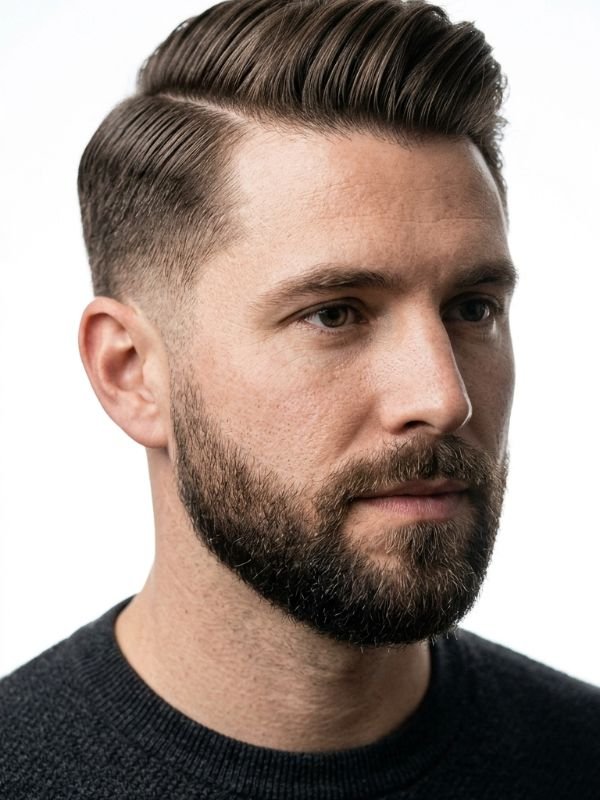
6. Comb Over with Design
A razor-cut part, a thin shaved line, or a small pattern in the fade adds a personal touch. A hard part is the most popular starting point because it also gives the comb over a clear direction.
Best for: Guys who like detail and visit the barber often.
Keep in mind: Lines and designs fade fast as hair grows. Plan for a refresh every two weeks if you want them crisp.
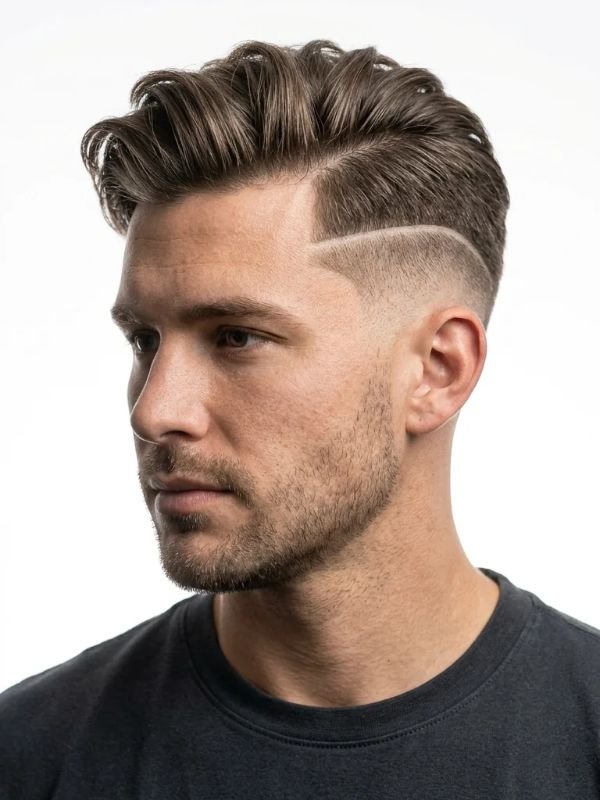
7. Undercut Comb Over
An undercut makes the sides and back much shorter than the top, with little or no blending between the lengths. When combined with a mid taper, you get a bold disconnected look.
Best for: Men who want strong contrast and a more fashion-forward shape.
Why it works: The sharp break between top and sides makes the sweep stand out. It is also easy to restyle into a slick back or a side part.
Keep in mind: The contrast is stark, so the top needs enough length and body to carry it.
Low-Maintenance Version
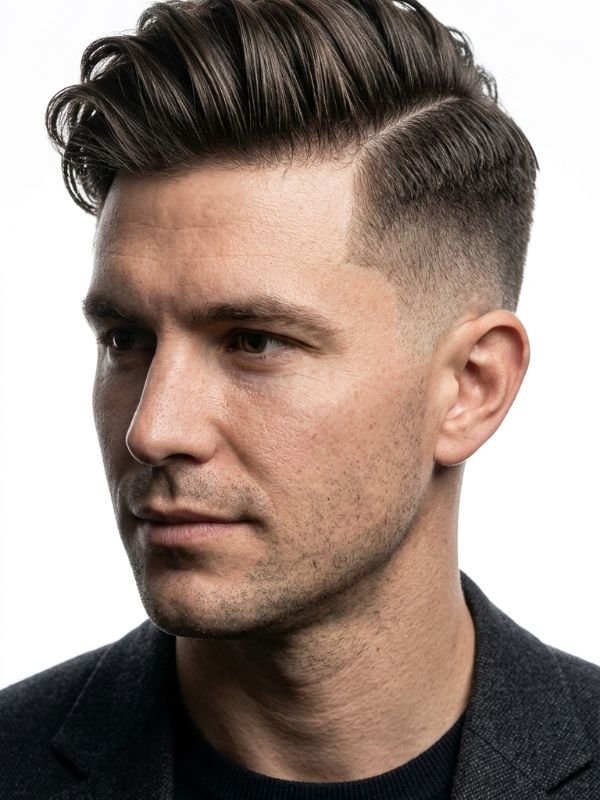
8. Soft Comb Over
This version keeps the top shorter and softer, with a loose part that does not need a precise finish. A bit of cream or a quick blow-dry is enough.
Best for: Busy mornings, fine hair, and anyone new to the style.
Why it works: There is no hard line to defend. It grows out gracefully and still looks neat after three weeks.
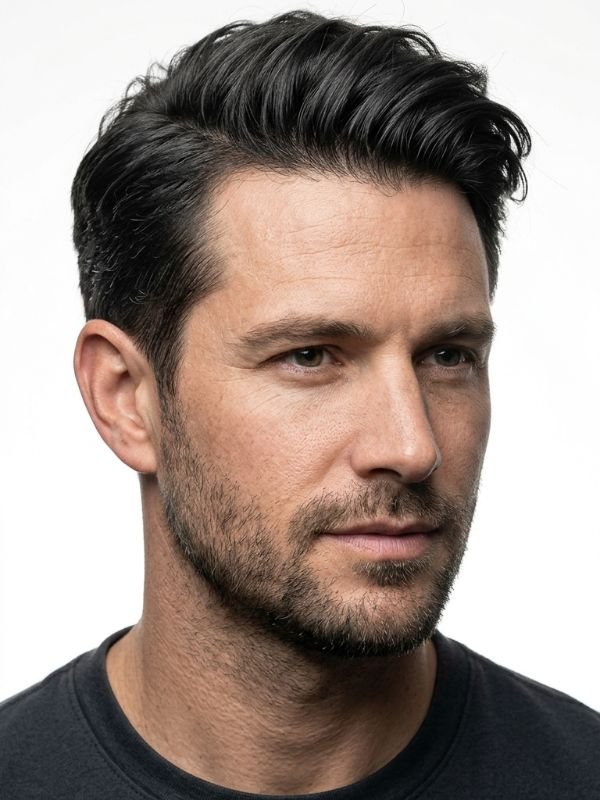
Mid Taper Fade Comb Over Explained: What Actually Holds the Part
A mid taper fade comb over has two parts: the sides and the top. Understanding both makes it easier to ask for and style.
The sides. A mid taper starts around the temples and the top of the ears. It gradually shortens toward the neckline. Unlike a bold fade, a taper often leaves a little more length at the bottom, so it blends softly. Many barbers mix taper and fade techniques, so you will hear the two words used together.
The top. The comb over is the longer section on top, parted to one side and swept across. The part can be natural, soft, or cut in with a razor. The longer you leave the top, the more sweep and the more styling time it needs.
What holds the part? Three things matter most:
- Length. Most comb overs need at least two to three inches on top to sweep properly.
- Cut direction. The barber cuts the hair to follow the way it falls, so the sweep looks natural rather than forced.
- Product and finish. Pomade, clay, wax, or gel holds the shape. Your product choice decides whether the look is glossy or matte.
Here is a quick snapshot:
| Feature | Mid Taper Fade Comb Over |
| Fade starting point | Around the temples and top of the ears |
| Top length | About 2 to 4 inches, depending on style |
| Sides guard | Usually #1 to #3, or skin at the bottom |
| Part | Natural, soft, or hard part |
| Styling time | 3 to 10 minutes |
| Barber visits | Every 2 to 4 weeks |
Why the Comb Over Keeps Coming Back in 2026
Men’s grooming in 2026 favors clean, intentional haircuts with a strong fade underneath. The comb over fits that mood. It is structured without being stiff.
A few reasons it keeps returning:
- It looks professional. The clean sides and tidy part suit most workplaces.
- It is flexible. You can go slick for a formal night or textured for a casual weekend.
- It works with other features. Beards, line-ups, and designs all pair well with it.
- It balances classic and modern. It feels familiar but updated, which helps it appeal to many age groups.
- A mid taper is forgiving. It grows out more gently than a high or skin fade, so the look stays decent for longer.
Another reason is clarity. More men now walk into a barbershop with a reference photo and specific guard numbers. The comb over is easy to describe, easy to adjust, and easy to repeat.
Pros and Cons: What You’re Signing Up For
No haircut is perfect. Here is a fair breakdown.
| Pros | Cons |
| Sharp, professional look | Needs a barber visit every 2 to 4 weeks |
| Works for many ages and settings | Requires daily styling |
| Easy to switch between slick and textured | Needs enough top length to sweep properly |
| Pairs well with beards and designs | A poor blend shows more clearly on short sides |
| Mid taper grows out gently | Product build-up can look greasy or flaky |
| Hides a high forehead or thinning edges | Wind and humidity can mess with the part |
The trade-off is simple. You get a polished cut, but you need regular upkeep and a few minutes each morning. If that sounds like too much, the soft comb over is the best compromise.
Choosing by Hair Type: What the Part Needs From Your Hair
Your hair type decides how easily the top sweeps and holds. Pick the style to match what your hair already wants to do.
Straight Hair
Straight hair is the easiest to comb over. It lies flat and shows a clean part. The downside is that it can look limp without product.
Use a pre-styler or a volumizing spray at the roots. A light pomade or cream finishes the look. For fine straight hair, keep the top a little shorter so it does not flop.
Wavy Hair
Waves give natural body and movement, so a comb over looks softer and fuller. Let the waves do the work.
Apply a sea salt spray or light cream to damp hair. Avoid heavy gels, which flatten the pattern. The wavy comb over on our list is the best match here.
Thick Hair
Thick hair holds the shape well but can look bulky. A mid taper helps by slimming the sides.
Ask your barber to thin or texturize the top so it sweeps instead of puffing out. Use a clay or paste with strong hold to keep the top from spreading.
Curly Hair
Curly hair can carry a comb over, but it needs the right approach. The sides are tapered, and the top is left longer so curls can sweep across with definition.
Use a curl cream or mousse on damp hair. Scrunch and let it dry naturally, or diffuse on low heat. Avoid brushing dry curls, which causes frizz. A textured comb over or soft comb over suits curly hair best.
Face Shape Matchups
Face shape changes how a haircut sits on your head. The goal is balance. Add height or width where it helps, and keep the rest tidy.
Oval Face
Oval faces are the most flexible. Almost any comb over works, from slick to soft. Choose based on your hair and lifestyle.
Round Face
Add height and keep the sides tight. A classic or slick comb over with a bit of volume at the front lengthens the face. A hard part also adds sharper lines.
Square Face
A square jaw already has strong angles. A textured or soft comb over softens it. Avoid anything too flat and severe unless you want a very strong look.
Heart-Shaped Face
A wider forehead and narrower chin need balance. A side-swept comb over with some texture at the front reduces the width at the top. A short beard can fill out the lower face.
Long Face
Skip extra height. Keep the top shorter and slightly wider, like the soft or textured comb over. A fuller beard adds width to the jaw.
Diamond Face
Cheekbones are the widest point. A comb over with a little fullness at the forehead helps balance them. The mid taper keeps the sides slim, so the width does not stack up.
Rectangular Face
Similar to the long face. Avoid extreme height, and use a soft or textured sweep with clean sides. A line-up can frame the forehead.
Age Group Breakdown
The comb over suits many ages. What changes is how you wear it.
Teenagers
Teens usually want something modern and easy. A textured comb over with a natural part works well and does not demand a long routine. Keep the fade moderate and avoid extreme designs, especially if school has rules about hair.
Young Men
In the 20s and 30s, you can try almost anything. Slick, textured, undercut, or a design all work. This is the time to experiment with product and parts, and to find a barber you trust.
Professional Men
For office life, a classic or soft comb over is the safest bet. Keep the sides tidy, the part clean, and the finish natural. For men in their 40s and beyond, a slightly shorter top with a neat beard looks refined and also manages thinning areas well.
Talking to Your Barber: The Exact Guard Numbers
Clear communication gets you the cut you want. Specific guard numbers, a clear description of the top, and a reference photo make the biggest difference.
Guard numbers refer to the clipper attachment. Higher numbers leave more hair. These are the common sizes:
| Guard | Approximate Length |
| #0 | 1/16 inch |
| #1 | 1/8 inch |
| #2 | 1/4 inch |
| #3 | 3/8 inch |
| #4 | 1/2 inch |
Brands differ slightly, so confirm with your barber.
Use this simple script:
- Name the fade: “I’d like a mid taper fade.”
- Give the numbers: “Start at skin or a #0.5 at the bottom and blend up to a #2.”
- Describe the top: “Leave about three inches on top for a comb over.”
- Specify the part: “A natural part on the left,” or “a hard part cut in.”
- Mention the details: “Blend into my beard,” or “a natural line-up.”
- Show a photo: Bring one or two images.
Here is a full example: “I’d like a mid taper fade, skin at the bottom blending to a #2, with about three inches on top, parted on the left and swept across with some texture.”
Ask your barber to check in with you after the sides are done and before the top is finished. That is the easiest moment to adjust.
Video Guide: Watch the Part and Blend
Watching a barber work is a great way to understand the cut. This section helps you know what to look for. It is not a replacement for a trained professional.
When you watch a tutorial, notice the following:
- The prep. Hair is usually damp and combed in the direction it will be styled.
- The fade line. The barber marks where the taper starts, around the temple and ear.
- The guard changes. Each step down is blended into the one above it, often with a flicking motion.
- The shear work. The top is cut with scissors over the comb, following the direction of the sweep.
- The part. A natural part follows the hair’s own growth. A hard part is cut in with a trimmer or razor.
- The finish. Neckline, sideburns, and any line-up are tidied last.
Pay special attention to the blending. The skill lies in how softly the sections melt into one another. A rushed blend leaves visible lines.
Common Mistakes That Break the Part
A few simple errors cause most bad comb overs.
- Cutting the top too short. Without enough length, the sweep will not hold.
- Starting the fade too high. A mid taper that creeps toward a high fade makes the top look heavy and disconnected.
- Parting against the grain. Forcing a part where the hair resists leads to a stiff, flat result. Work with your natural cowlick or growth pattern.
- Using too much product. A heavy hand leaves hair greasy and clumpy.
- Using the wrong product. Gel on fine hair or light cream on thick hair will not hold. Match the product to your hair type.
- Getting product on the faded sides. It makes the transition look messy.
- Skipping the blow-dry. A few seconds of heat sets the direction before product goes on.
- Waiting too long between cuts. After four weeks, the taper looks fuzzy and the part loses shape.
- Vague instructions. “A bit shorter on the sides” means something different to every barber.
If your last cut missed the mark, bring a photo and use the script above next time.
Maintenance Reality Check
A comb over is not a wash-and-go cut. But it does not need a big routine either. A few minutes and the right products are enough.
Daily Styling
- Start with damp hair after a shower and towel dry gently.
- Apply a pre-styler or sea salt spray if you want volume or grip.
- Blow-dry the top in the direction of the part, using a round brush for lift.
- Warm a pea-sized amount of product between your palms and work it through from the roots.
- Comb the hair across with a fine-tooth comb to set the part.
- Finish with a light hairspray if you need all-day hold.
Keep product off the faded sides so the blend stays clean.
Products That Work Best
| Product | Finish | Best For |
| Pomade | Sleek, shiny | Slick and classic comb overs |
| Matte clay | Textured, low shine | Thick or medium hair |
| Wax | Flexible, medium hold | Wavy hair and restyling |
| Light gel | Wet look, firm hold | Hard part styles |
| Sea salt spray | Grit and body | Wavy and fine hair |
| Curl cream | Definition, softness | Curly hair |
Choose by finish first, then by hold. A water-based pomade is easier to wash out than an oil-based one.
Washing Routine
- Wash with a lightweight shampoo two to four times a week, depending on how oily your scalp is.
- Condition the lengths, not the scalp.
- Rinse thoroughly so product does not build up.
- Use a clarifying shampoo every couple of weeks if you use heavy products.
Read Also This: 25 Best Mid Taper Fade Blowout Haircuts for Men (2026)
Touch-Up Frequency
Most barbers suggest a visit every two to four weeks. The fade shows growth first, so shorter gaps keep it crisp. If you wear a hard part or a design, plan on every two weeks. A soft comb over can stretch a little longer.
Comb Over vs Other Styles
Still unsure? Here is how the comb over compares with similar cuts.
Comb Over vs Middle Part
A comb over sweeps hair to one side from a side part. A middle part divides the hair evenly down the center. The middle part is more relaxed and suits wavy or curly hair. The comb over is sharper and more structured.
Comb Over vs Slick Back
A slick back combs all the hair backward, away from the face. A comb over sweeps across the head. A slick back shows more forehead and feels bolder. A comb over is more traditional and easier to adapt to different hair lengths.
Comb Over vs Regular Mid Taper
A regular mid taper describes only the sides and back. The top can be anything, from a crop to a quiff. A comb over is a specific top style that can sit on a mid taper. In other words, one is the base, and the other is the finish.
| Style | Look | Upkeep | Best For |
| Mid taper comb over | Neat, structured | Moderate | Most men, office and casual |
| Middle part | Relaxed, soft | Lower | Wavy and curly hair |
| Slick back | Bold, polished | Moderate to high | Formal and fashion looks |
| Regular mid taper | Flexible | Moderate | Men who want to change the top |
Conclusion
The mid taper fade comb over stays popular for good reason. It looks professional, adapts to different hair types, and works for nearly every age and face shape. Whether you choose a classic sweep, a slick finish, a textured version, or a soft low-maintenance cut, there is a style that fits.
Remember the essentials. Bring a reference photo and give your barber clear guard numbers. Leave enough length on top for the sweep. Choose a product that matches your hair and finish. Keep the product off the sides, and book your next visit within two to four weeks.
Pick the style that suits your routine, show it to a barber you trust, and enjoy a cut that looks sharp from the first morning to the last.

2 thoughts on “8 Mid Taper Comb Overs That Look Clean in 2026”