
Walk into any barbershop this year and you will hear the same request again and again: “Can I get a burst fade?”
It is easy to see why. The cut wraps a clean, rounded fade around the ear and leaves real length on top and at the back. You get sharp edges and a full shape in the same haircut. It works with curls, waves, straight hair, mohawks and even mullets.
This guide covers what a burst fade actually is, the pros and cons, 15 styles worth saving to your phone, and how to match the cut to your hair type and face shape. You will also find word-for-word scripts for your barber, the mistakes that ruin the cut, and a clear comparison with the drop fade.
What Is a Burst Fade?: The Rounded Fade Explained
A burst fade is a haircut where the hair fades out in a semicircle around the ear. Instead of the fade running straight across the back of the head, it curves from the temple, around the ear and down toward the nape. The shape looks like a small sunburst, which is where the name comes from.
The key idea is contrast. The hair directly around the ear is cut very short, often down to the skin. The hair behind that curve, at the back and crown, stays longer. The top can be any length you like.
The three main burst fade heights
Barbers describe fades by where the shortest part starts. The same logic applies here.
- Low burst fade: The arc stays close to the ear and sits just above the sideburn. It is subtle and office-friendly.
- Mid burst fade: The curve starts around the temple. This is the most requested version because it balances edge and neatness.
- High burst fade: The fade rises high on the head, creating strong contrast. It is bold and best for people who want the cut to stand out.
Burst fade vs burst taper
A burst taper is the softer cousin. The hair around the ear is shortened gradually rather than faded down to skin. If you want a polished look with less contrast, ask for a burst taper. If you want a dramatic, high-contrast finish, ask for a burst skin fade.
Why the Burst Fade Is So Popular in 2026
Fades have been mainstream for years, but the burst fade gives people something the standard fade does not: shape. Here is what keeps it climbing.
It pairs with longer hair. The mullet revival, textured fringes and curly tops all look better when the sides are sharply cut. The burst fade frames the length instead of fighting it.
It adds volume at the back. Because the fade stops in a curve rather than running straight across, there is more hair left at the nape. For men with a flat back of the head, that extra length builds a fuller outline.
It photographs well. Social media rewards haircuts with clear lines and visible contrast. The arc around the ear shows up in photos from the side, the back and even a slight angle.
It is flexible. You can go quiet with a low burst taper or loud with a high skin burst and a mohawk. Same technique, very different results.
Daily styling is simple. The curve holds its shape on its own. Your morning routine only involves the top section.
Burst Fade Pros and Cons: An Honest Look
No haircut is perfect for everyone. Here is a balanced view before you book.
✅ Pros
- Works on straight, wavy, curly and coily hair
- Suits many styles on top, from crops to long curls
- Adds fullness at the back without extra styling
- Looks clean in both casual and smart settings
- Easy to dial up or down with height and contrast
- Daily styling takes only a couple of minutes
❌ Cons
- Needs regular touch-ups to keep the curve crisp
- Depends heavily on the barber’s skill with clippers and blending
- Can look harsh if the fade is too high for your head shape
- Grows out in an uneven, fuzzy way if you skip appointments
- Some workplaces and schools may see a high skin fade as too bold
If you can commit to a trim every three to four weeks, the pros outweigh the cons for most people.
15 Best Burst Fade Styles: The Photo Gallery
Use these as reference ideas. When you show a barber a photo, pick one that matches your hair color and texture, because the same cut looks different on different hair. Each style below includes a short note on who it suits and what to ask for.
<!– Image placement note: add one photo per style below with the alt text shown in the “Photo” line. Use original or properly licensed images only. –>
1. Classic Burst Fade
The standard version. A rounded fade circles the ear, the sides are short, and the top stays a comfortable two to three inches. It is the safest starting point if you are new to the cut.
Best for: Almost everyone, especially first-timers. Ask for: “A mid burst fade, short on the sides, with a natural blend into the top.”
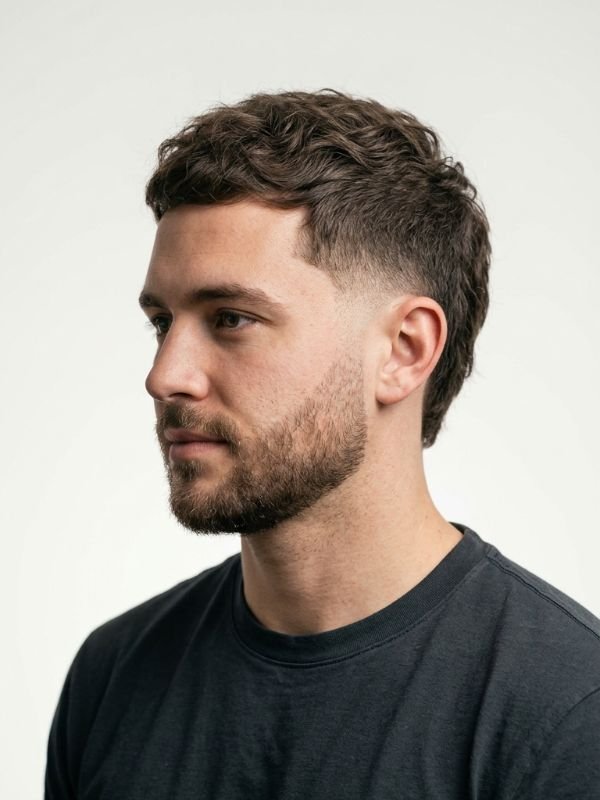
2. Low Burst Fade
The fade hugs the ear and stays below the temple. The effect is quiet and tidy. It works well in conservative workplaces where you still want a modern shape.
Best for: Professional settings, thinner hair, subtle changes. Ask for: “A low burst fade, keep it tight around the ear and leave the sideburn.”

3. Mid Burst Fade
The curve starts at the temple and moves around the ear. It is noticeable without being extreme, which is why barbers recommend it so often.
Best for: Balanced contrast, most face shapes. Ask for: “A mid burst, faded to skin around the ear, blended into the length at the back.”
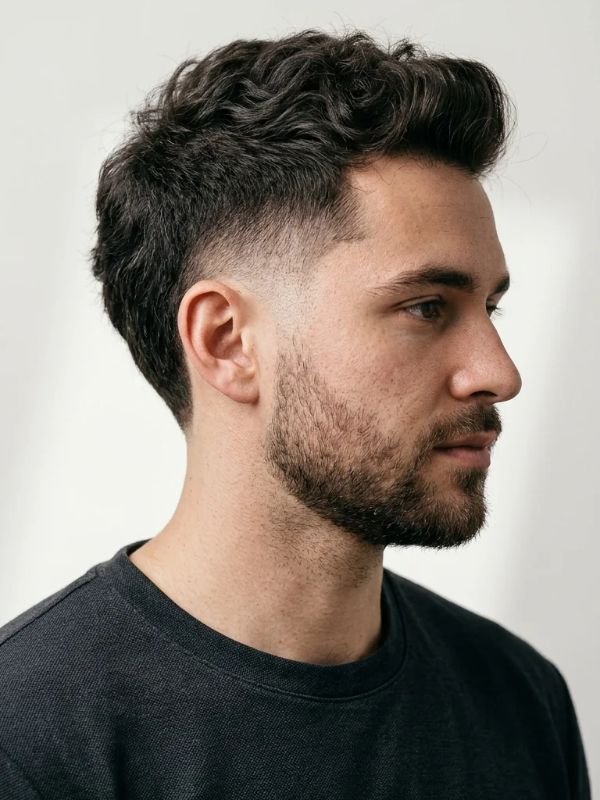
4. High Burst Fade
The fade climbs high toward the crown, leaving a stronger gap between the sides and the top. It is dramatic and looks sharp with a defined top section.
Best for: Bold looks, round faces that need more height. Ask for: “A high burst skin fade with full length on top.”

5. Burst Fade with Curly Top
Curls look best when the sides are sharp. The fade creates a clear border around the curl pattern, so the shape looks intentional instead of overgrown. Keep the curls moisturized and defined.
Best for: Type 2 to type 4 curls. Ask for: “A burst fade to skin, curls kept full on top, and don’t thin out the back.”
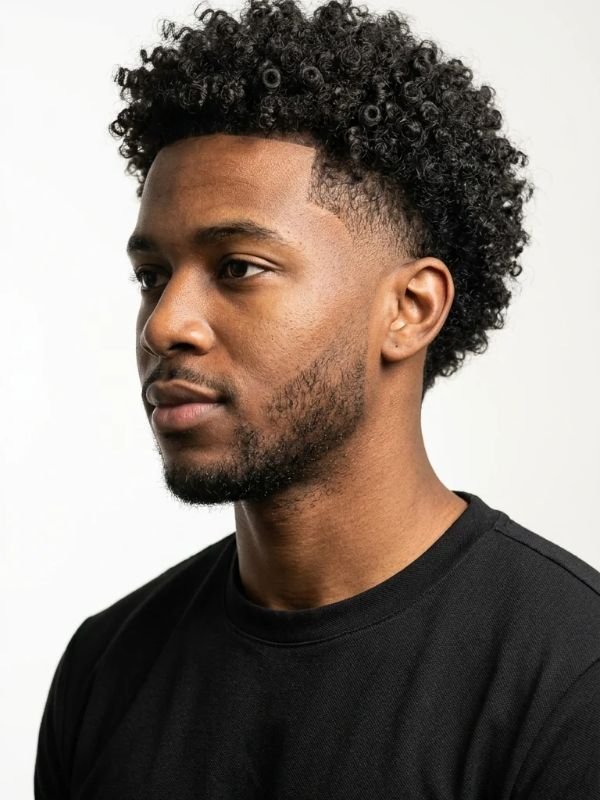
6. Burst Fade Mohawk
This is the style that made the burst fade famous. The sides fade tightly around the ear, and a strip of longer hair runs through the center. Style it upright for a punchy look or relaxed for something softer.
Best for: Thick hair and confident personalities. Ask for: “A mid burst mohawk, three inches on top, tapering down toward the nape.”
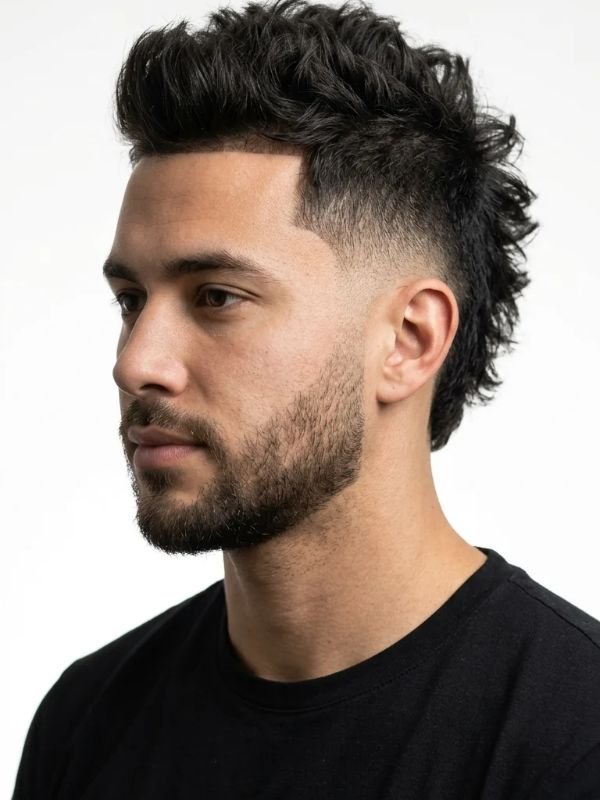
7. Burst Fade Faux Hawk
A softer take on the mohawk. The sides are not shaved as aggressively, and the top is brought forward and slightly upward. It gives you the shape without the full commitment.
Best for: Men who want edge but need to stay work-appropriate. Ask for: “A burst fade with a faux hawk, sides tapered, top lifted in the center.”
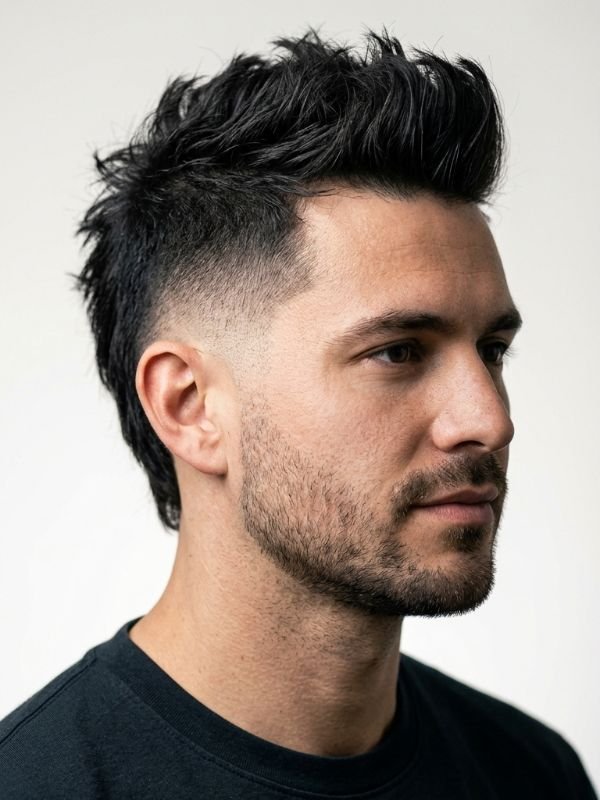
8. Textured Burst Fade
The barber cuts the top with texturizing techniques so it looks choppy and lived-in. A little matte clay or paste does the rest. It is low effort and looks effortless.
Best for: Straight or wavy hair that needs movement. Ask for: “A burst fade with a textured crop on top, not too uniform.”
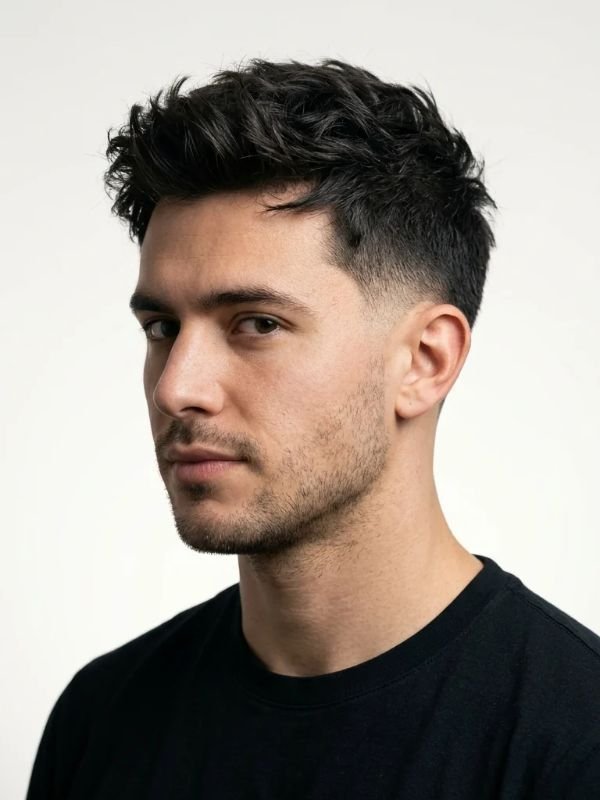
9. Burst Fade with Waves
For men who brush and maintain waves, the burst fade gives a crisp border that frames the pattern. It needs consistent brushing and a good wave routine, but the payoff is a very polished finish.
Best for: Coily hair and wave enthusiasts. Ask for: “A low burst fade that keeps my wave pattern, with a clean line at the back.”
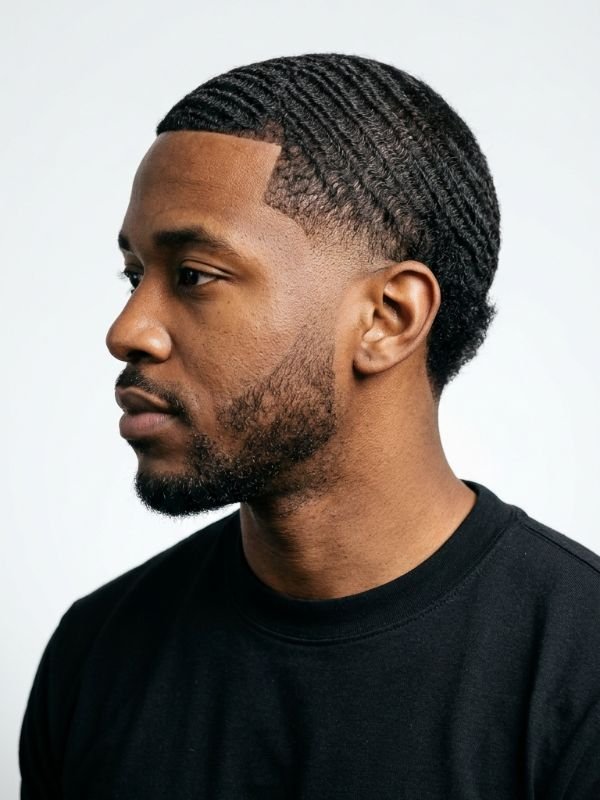
10. Subtle Burst Taper
If skin fades feel too stark, the burst taper gives the same curved shape with gradual shortening. It reads as neat rather than edgy.
Best for: Conservative dress codes, first-time burst fade wearers. Ask for: “A burst taper, nothing down to skin, keep the neckline natural.”
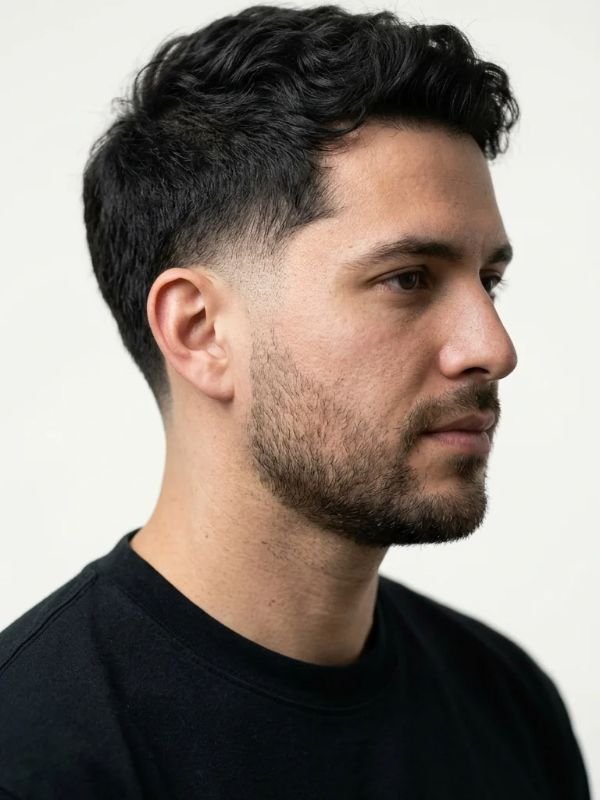
11. Burst Fade Mullet
The mullet and the burst fade are a natural pair. The fade cleans up the sides and ears, while the back keeps its length. Because the sides are tidy, the haircut feels modern rather than throwback.
Best for: Thick or wavy hair, creative workplaces. Ask for: “A mid burst fade, short on the sides, with length at the back past my collar.”
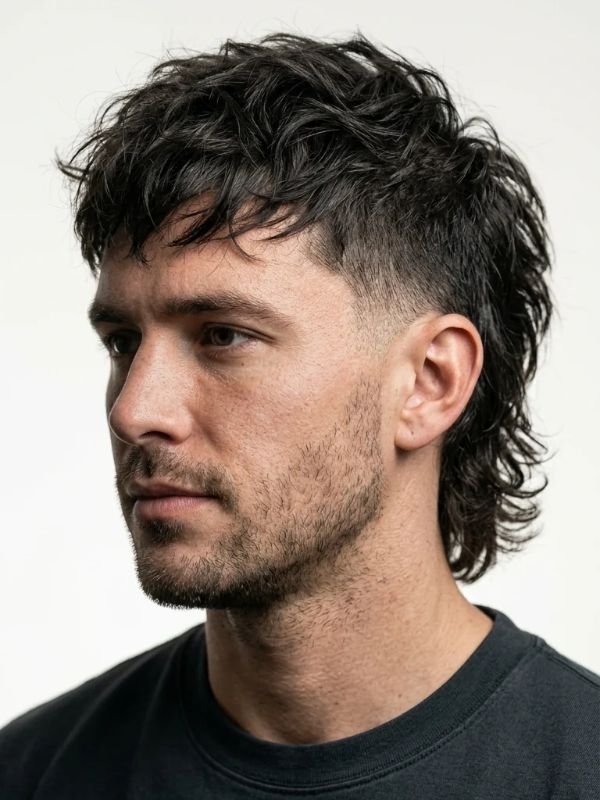
12. Burst Fade with Hair Design
A razor line, part or small pattern added to the fade turns the haircut into a personal signature. Keep the design simple. The more detail you add, the more often you will need a touch-up.
Best for: Short hair and creative personalities. Ask for: “A burst skin fade with a single hard part on the left.”
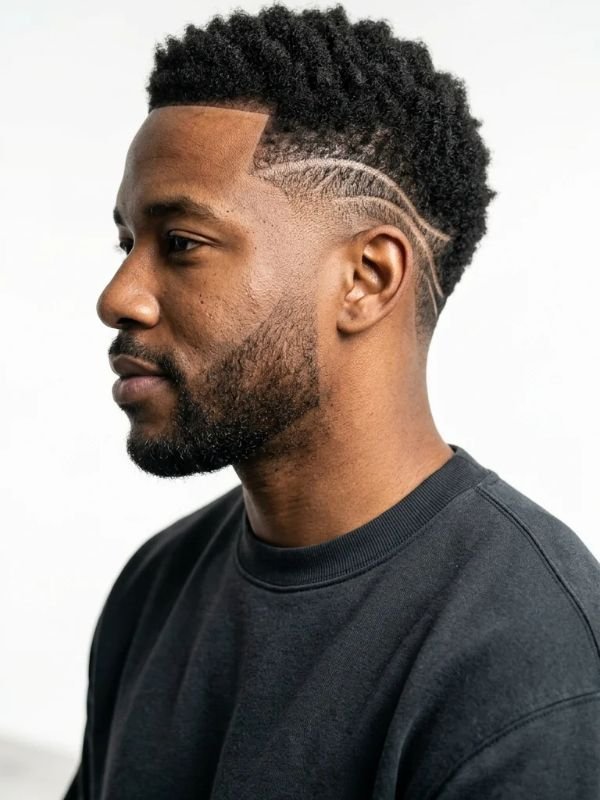
13. Burst Fade with Long Top
The fade stays tight while the hair on top grows out four inches or more. You can slick it back, push it to the side or let it fall forward. The contrast gets stronger as the length increases.
Best for: Thick hair and men growing out their cut. Ask for: “A burst fade with all the length kept on top, just clean up the ends.”
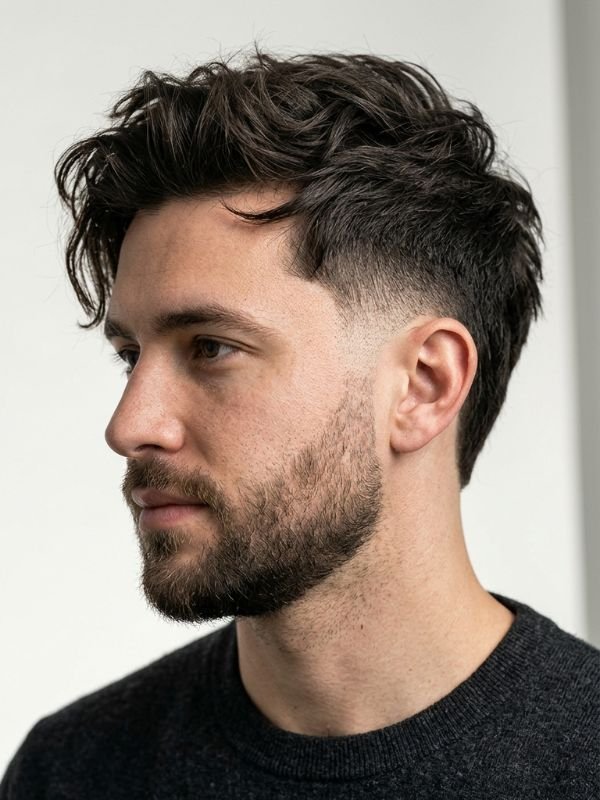
14. Burst Fade with Lineup
A lineup sharpens the hairline, temples and sideburns. Paired with a burst fade, it makes the whole outline look drawn with a pen. It does fade quickly, so expect to refresh it more often.
Best for: Short crops and buzz cuts. Ask for: “A burst fade with a natural lineup, not too straight across the front.”
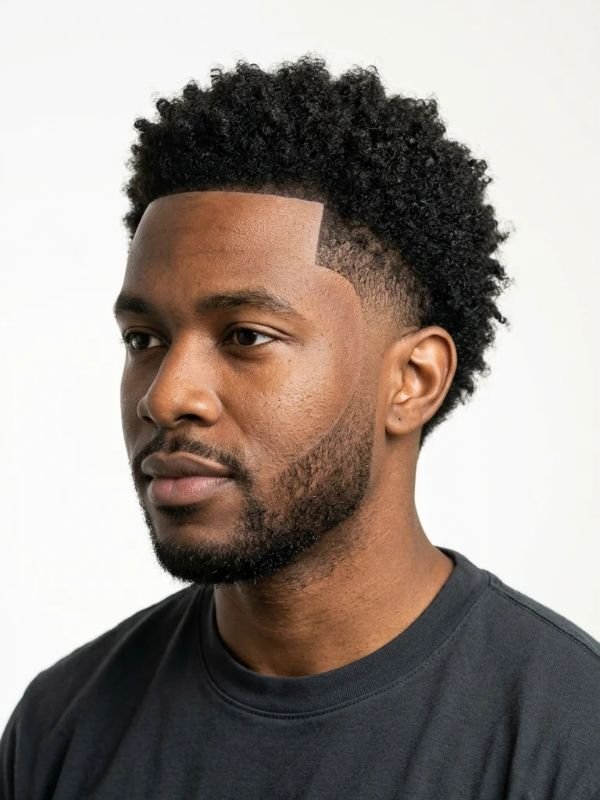
15. Messy Burst Fade
The most relaxed option. The sides stay clean while the top is deliberately unstructured. Run a little sea salt spray or light paste through dry hair and walk out the door.
Best for: Wavy or slightly curly hair, a laid-back style. Ask for: “A burst fade with a messy, textured top, nothing too neat.”
How to Choose the Right Burst Fade for Your Hair Type: The Texture Guide
Your hair texture changes how the fade looks and how the top behaves. Use this table as a starting point, then adjust with your barber.
| Hair Type | Best Burst Fade | Styling Tip |
| Curly | Mid burst with a curly top or mohawk | Use a curl cream on damp hair and let it air dry |
| Straight | Low or mid burst with a textured crop | Add matte clay for grip and separation |
| Wavy | Mid burst with a messy or slick-back top | Sea salt spray brings out natural movement |
| Thick | High burst with a long top or mullet | Ask for internal thinning if it feels heavy |
| Thin | Low burst taper with a short crop | Keep the top short and use a light powder |
Curly
Curls look their best with a clear fade around them. A mid burst with a curly top or a curly mohawk is the go-to. Keep the curls moisturized, since dry curls make the contrast look messy.
Straight
Straight hair shows every clipper line, so blending quality matters. A textured crop with a low or mid burst keeps the top from looking flat. A matte product adds the grip straight hair lacks.
Wavy
Wavy hair is the most versatile. You can wear it slicked back, tousled or in a messy fringe. A mid burst fade works well since the waves add natural volume.
Thick
Thick hair carries long tops and mullets without trouble. A high burst gives a nice contrast. If the hair feels bulky, ask your barber to remove some weight from the top.
Thin
Fine hair benefits from a lower, softer approach. A burst taper keeps the sides neat without exposing too much scalp. Short tops look fuller than long ones when hair is thin.
Best Burst Fade by Face Shape: What Suits You
The fade changes how your head looks from the side and the back, so face shape matters. Treat these as guidelines rather than rules.
| Face Shape | Recommended Burst Fade | Why It Works |
| Oval | Almost any height | Balanced proportions suit every style |
| Round | Mid to high burst with height on top | Adds vertical length and structure |
| Square | Low or mid burst with texture | Softens strong angles without hiding them |
| Heart | Low burst with a side-swept fringe | Balances a wider forehead and narrow chin |
| Long | Low burst with fullness at the sides | Avoids making the face look longer |
| Diamond | Mid burst with a textured fringe | Draws attention away from wide cheekbones |
Oval
You are the lucky one. Any height and any top length will work, so pick based on your lifestyle.
Round
Go for a mid or high burst with volume on top. The extra height makes your face look longer and more defined.
Square
A low or mid burst with a textured top softens the jawline. Avoid very flat tops, which can emphasize the squareness.
Heart
A low burst with a fringe or side sweep balances the forehead. Keep the sides slightly fuller so the chin does not look narrow.
Long
Avoid extra height on top. A low burst with a medium-length top and fullness at the sides keeps proportions even.
Diamond
A mid burst with a fringe pulls attention away from the cheekbones. Keep the top textured and slightly forward.
Read Also This: 8 Best Mid Taper Fade Textured Fringe Styles for Men (2026)
How to Ask Your Barber for a Burst Fade: Scripts That Work
Most bad haircuts come from unclear communication. Barbers are good at their craft, but they cannot read minds. Give them three pieces of information: the fade height, the top length and what you want at the back.
The basic script
“I’d like a mid burst fade. Take the hair around my ear down to a skin fade, keep the back fuller, and leave about three inches on top.”
The conservative script
“I want a low burst taper. Nothing down to skin, keep the neckline natural, and keep the top short and textured.”
The curly hair script
“I have curly hair. Give me a burst fade to skin around the ears, keep my curls full on top and don’t thin them out.”
The mullet script
“A mid burst fade with a mullet. Keep the sides short and clean, leave the back long past my collar.”
Extra tips for the chair
- Bring two photos. One from the side and one from the back.
- Show your hair type. Pick photos with similar texture and color.
- Say what you do not want. “No harsh line at the back” is useful information.
- Ask about maintenance. A good barber will tell you honestly how often you need to come back.
- Start longer. You can always go shorter next time.
Common Burst Fade Mistakes to Avoid: 6 Fixes
A few small errors can turn a great cut into a disappointing one. Watch for these.
- Picking the wrong height. A high burst on a narrow head can look severe. Fix: start with a low or mid burst and go higher on your next visit.
- Skipping the reference photo. “Burst fade” means different things to different barbers. Fix: always bring a picture.
- Ignoring your hair growth pattern. Cowlicks and crown swirls change how the fade blends. Fix: ask your barber to check them before cutting.
- Waiting too long between cuts. The arc loses its shape quickly. Fix: book your next appointment before you leave.
- Using too much product. Heavy gel or wax makes the top look greasy against clean sides. Fix: use a pea-sized amount of matte product.
- Going to a barber who does not do fades well. Burst fades need precise blending. Fix: look at the barber’s recent work on social media before booking.
How to Maintain a Burst Fade: The 2-Week Rule
The burst fade looks its best in the first two weeks. After that, the contrast begins to soften, and the arc gets fuzzy. Here is a practical routine.
Barber schedule
- Skin burst fade: Every two to three weeks.
- Mid or low burst fade: Every three to four weeks.
- Burst taper: Every four to five weeks.
At home
- Wash: Use a gentle shampoo two to three times a week.
- Moisturize: Curly and coily hair needs a leave-in conditioner to stay defined.
- Style: Apply product only to the top. The fade does not need any.
- Neckline: Do not shave the back yourself. You can easily ruin the curve.
- Protect the skin: A freshly faded area is more exposed to the sun, so apply sunscreen if you spend time outdoors.
The two-week rule is simple: if you want the sharpest version of the cut, plan a quick clean-up around the 14-day mark.
Burst Fade vs Drop Fade: The Real Difference
These two cuts get mixed up all the time because both are curved. They behave differently once you look closely.
| Feature | Burst Fade | Drop Fade |
| Shape | Semicircle around the ear | Arc that drops lower behind the ear |
| Back of head | Keeps length and volume | Follows the skull downward |
| Look | Rounded and full | Angular and sleek |
| Best for | Mohawks, mullets, curls | Slick styles, crops, pompadours |
| Upkeep | Every 2–4 weeks | Every 2–4 weeks |
The Shape
The burst fade forms a small half circle that stays focused around the ear. The drop fade draws a longer line that dips behind the ear and heads toward the neck.
The Back
This is the biggest difference. A burst fade leaves more hair at the back, which creates fullness. A drop fade follows the curve of the skull, which feels more streamlined.
Best For
Round and wide faces often look good with a burst fade because the extra volume adds structure. Oval and longer faces tend to suit a drop fade, which keeps the outline sleek.
Upkeep
Both need regular visits. The burst fade is slightly more forgiving as it grows out because the extra length at the back hides small changes.
Conclusion
The burst fade has earned its place as one of the most requested haircuts in barbershops because it solves a real problem: it keeps the sides clean while giving the back and top room to breathe. Whether you choose a quiet low burst taper or a loud high skin fade with a mohawk, the technique stays the same.
To get it right, choose a height that matches your head shape, pick a top style that suits your hair type, and give your barber clear instructions with a reference photo. Then protect your investment with regular trims and a simple routine at home.
If you are unsure where to start, ask for a mid burst fade and leave a little extra length on top. It is the easiest version to wear, and you can always go bolder next time.
