

Straight hair is easy to cut, but it can look flat when the sides and top don’t have any shape. A mid taper fade fixes that. The sides get shorter from about mid-height down, the top keeps its length, and the result looks sharp without the strong contrast of a skin fade.
This guide covers 20 mid taper fade haircuts for straight hair, from blowouts and fringes to slick backs and two block cuts. For each style, you’ll see the look, who it suits, and how much upkeep it needs. We also cover how to talk to your barber, what the cut costs, and how to keep it fresh between visits.
Mid Taper Fade Straight Hair: Blowout & Volume Styles
These styles depend on height, so plan on a blow-dryer and a few extra minutes each morning.
1. Mid Taper Fade Blowout Straight Hair
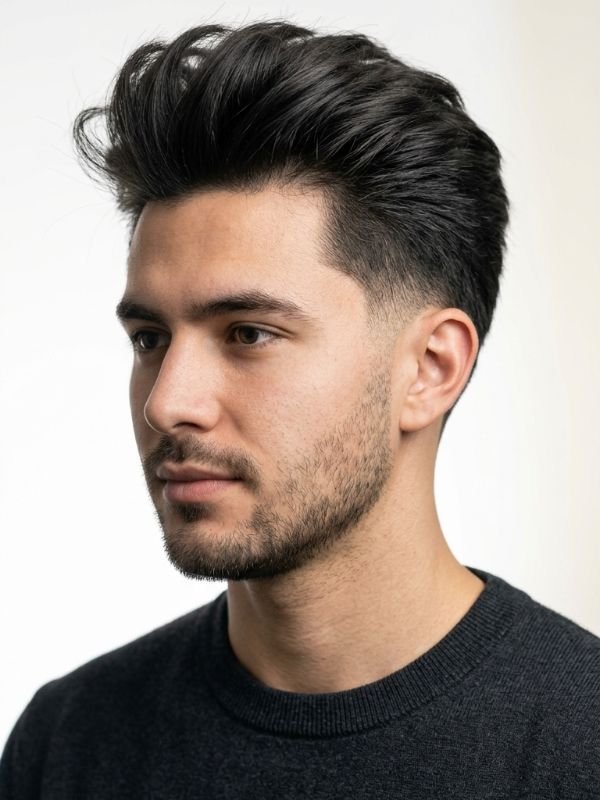
A blowout cut lifts the top with a dryer and a round brush, then sets it against a clean fade on the sides and back. It suits nights out and events better than a daily office look. One style guide pairs a longer guard on top with a much shorter one at the sides, and rates the upkeep as high because the look depends on styling tools.
Mid Taper Fade Straight Hair with Fringe
Fringes soften the front of the head and draw attention toward the eyes.
2. Mid Taper Fade Fringe Straight Hair
Airy, tousled bangs sit above a sharply graduated taper. The result feels casual and easy, with little daily effort. One guide suggests it for oval and heart faces and recommends a trim every two to three weeks.
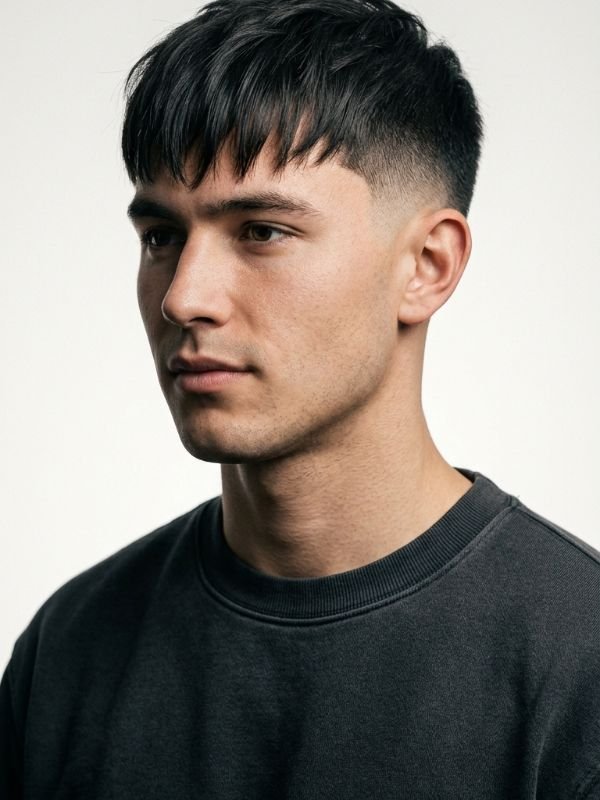
3. Mid Taper Fade Textured Fringe Straight Hair
The front is cut in broken, layered pieces, and the taper stays subtle near the ears and nape. It adds some edge while still looking work-appropriate. One guide suggests it for round and diamond faces, with low to moderate upkeep.
Short & Long Mid Taper Fade Styles
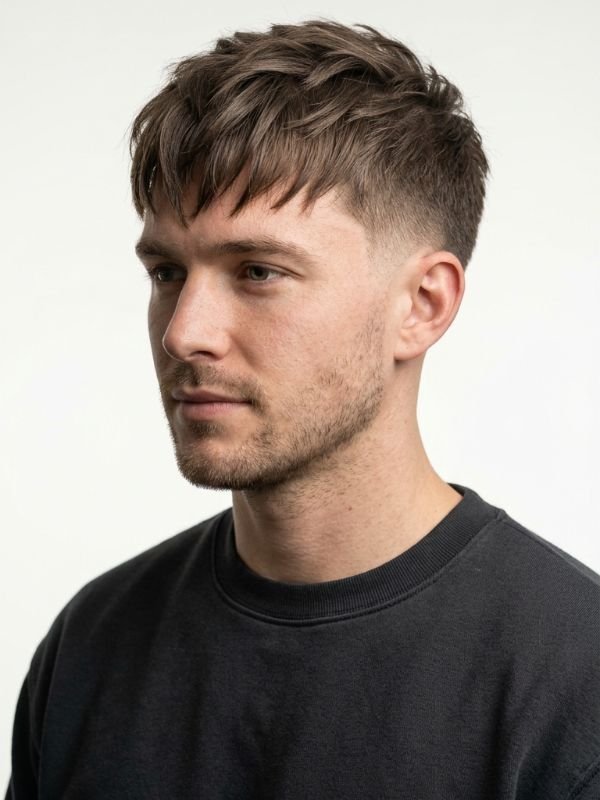
4. Mid Taper Fade Short Hair Straight
Short straight hair takes a mid taper well. The blend keeps the sides neat, and the top can stay short for a low-effort finish. One guide calls the mid taper a sweet spot for men with short hair, since it looks polished without much work.

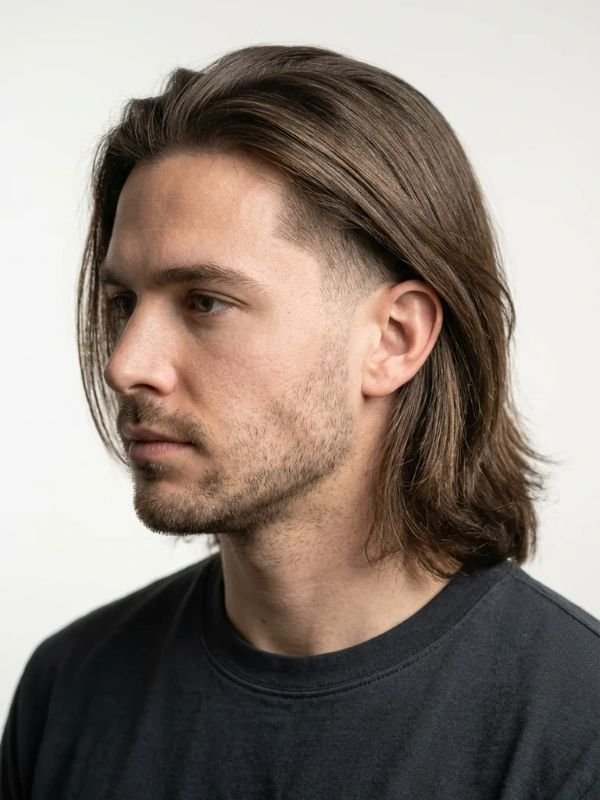
5. Mid Taper Fade Long Hair Straight
Longer straight hair needs a taper at the back and sides so the sides don’t look heavy under the length on top. The top can be swept, layered, or tied back. Long styles often stretch to six to eight weeks between cuts, but the sides look sharpest when you refresh them sooner.
Blonde Mid Taper Fade Styles
Lighter colors change how a fade reads, so color care matters as much as the cut.
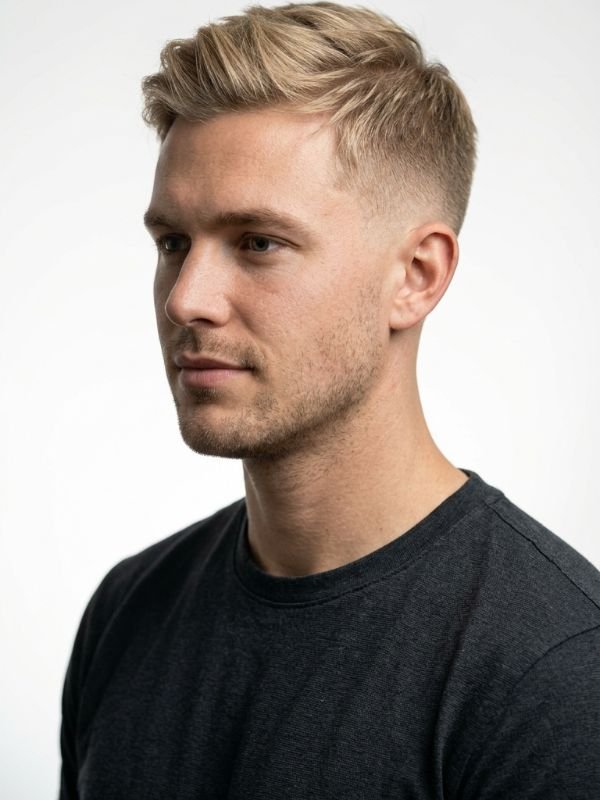
6. Mid Taper Fade Blonde Straight Hair
Blonde and fair hair tends to keep its shape longer than darker hair does, which makes a mid taper a practical pick. Bleaching and toning add upkeep, though. Bleached hair can dry out, so a bond or protein treatment helps, and a toning shampoo keeps brassiness in check. Dark roots can show quickly, so book color touch-ups alongside your barber visits.
Burst, Drop & Skin Fade Combos for Straight Hair
Burst and drop fades change the shape of the fade line around the ear. Skin fades appear in the comparison section near the end.
7. Mid Taper Burst Fade Straight Hair
A burst fade curves around the ear in a half-moon pattern instead of running straight along the sides. On a mid taper, the arc sits at mid-height while the top stays long. The curve reads as a deliberate design detail, which makes this a good pick for an edgier look.
8. Mid Taper Drop Fade Straight Hair
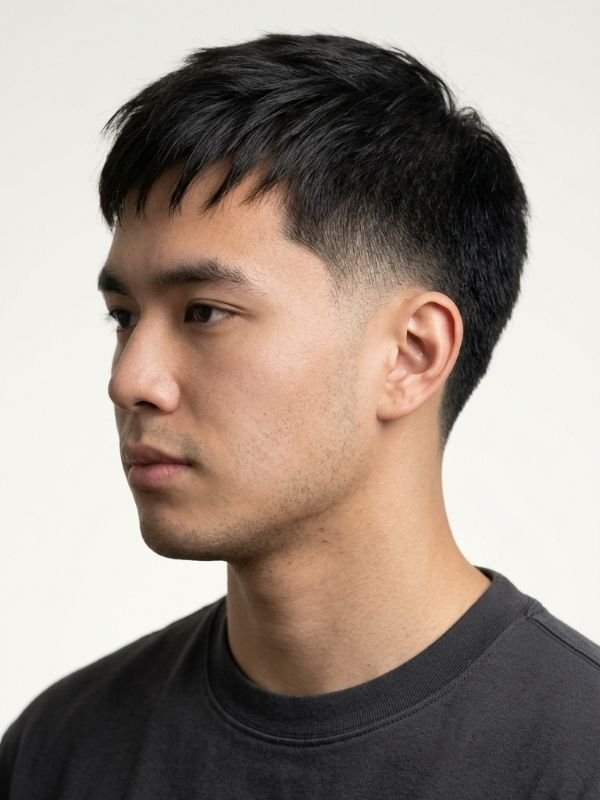
A drop fade dips behind the ear and follows the curve of the skull, forming a U shape at the back. On a mid taper, the dip is softer than a full burst. Many people choose it when they want something sharper than a low taper but less dramatic than a burst.

Buzz Cut & Low Mid Taper Combos
9. Mid Taper Fade Buzz Cut Straight Hair
A buzz cut keeps the top at one short, even length. Pairing it with a mid taper blends the sides down toward the neck, so the transition shows without a harsh line. It needs little styling, and one guide suggests it for people with well-shaped heads and strong jawlines.

10. Low Mid Taper Fade Straight Hair
“Low mid” isn’t a standard barber term, but it describes a blend that starts between the bottom of the ear and the top of the ear. It gives more shape than a low taper without the visible break of a classic mid taper. Ask for it by landmark rather than by name, so you and your barber start from the same point.

Slick Back, Beard & French Crop Styles for Straight Hair
11. Mid Taper Fade Slick Back Straight Hair
The top is combed straight back over sides that taper neatly into the neckline. It’s a polished choice for offices and formal events. Thicker hair stays in place more easily than fine hair, so fine straight hair needs a product with real hold and a comb to keep the shape.
12. Mid Taper Fade With Beard Straight Hair
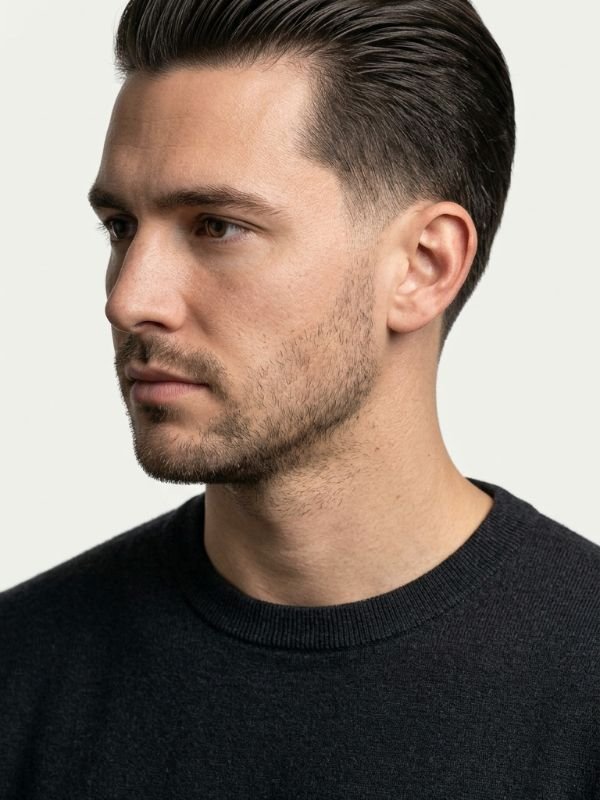
A neat beard adds visual weight at the jaw, which can balance a narrow chin. Keep the beard line matched to the taper so the head and face read as one shape. Ask for a beard trim at the same visit, since it’s usually a small add-on.
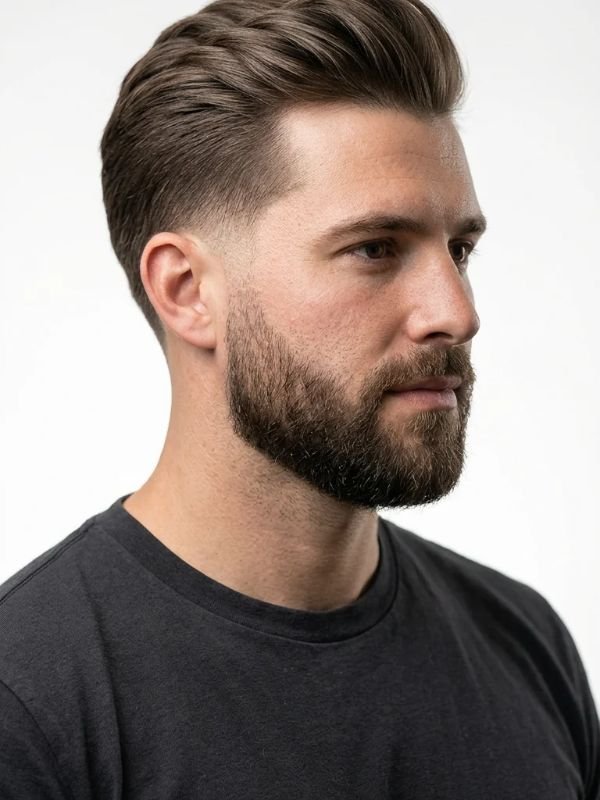
13. French Crop Mid Taper Fade Straight Hair
A French crop pairs a short, blunt fringe with tight sides. In this version, the taper starts at mid-height rather than low, which adds contrast on the sides. Some shops use “Caesar cut” as another name for the same cut, while others treat the two as separate styles. A light matte product keeps the fringe defined.

Design, Fluffy & Middle Part Styles for Straight Hair
14. Mid Taper Fade With Design Straight Hair
A line design, cut into the sides or near the sideburn, sits on top of a clean mid taper. Designs are high-maintenance. One guide recommends refreshing them every one to two weeks. Before booking, check that the pattern suits your hairline and that your barber does precision linework.

15. Mid Taper Fade Fluffy Straight Hair
Fluffy styling adds soft volume to the top while the sides stay tidy. Straight hair tends to fall flat, so use a round brush or dryer to lift it, then add a light mousse or cream. Start with less product than you think you need, since a fluffy top looks greasy when it’s overloaded.
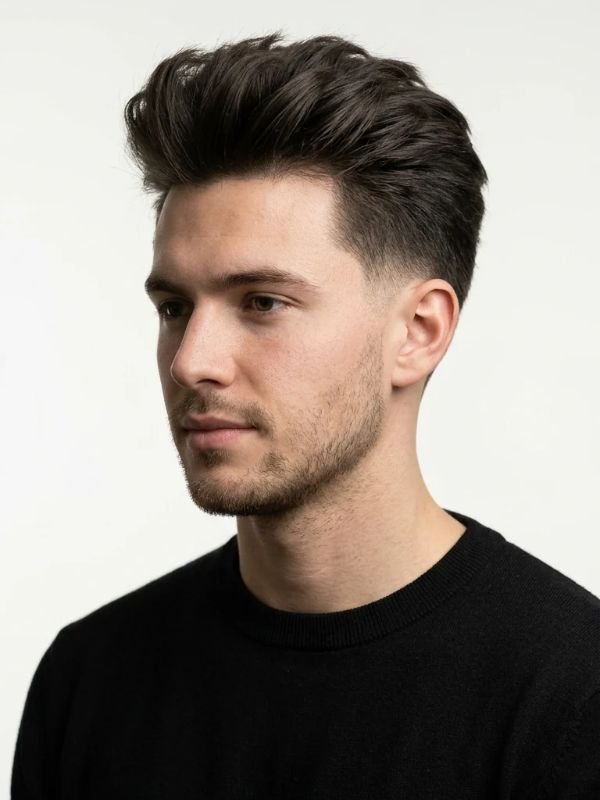
16. Mid Taper Fade Middle Part Straight Hair
A center part splits the top evenly, and the sides taper symmetrically on each side. It’s a classic shape that looks tidy from the front. The middle part also pairs well with curtain bangs, covered below.
Mid Taper Fade for Asian Straight Hair
Hair texture shapes this cut more than any single background does. Straight, dense hair appears across many backgrounds, so this section focuses on how thick, straight hair behaves.

17. Mid Taper Fade Straight Hair Asian
Dense, straight hair often holds volume at the top and can look heavy at the sides. Layers help break up that weight, and a taper that starts a little higher can clear bulk where it builds up. Check for cowlicks at the crown and temples before cutting, since they change where the blend should start. Shaping the top with scissors usually helps thick hair sit better.

Additional Mid Taper Fade Variations
18. Two Block Mid Taper Fade Straight Hair
A two block cut has a clear separation between a longer top and shorter sides and back. A mid taper smooths the transition beneath the longer top. The top can be textured, slicked, or side-parted, which makes the cut adaptable.
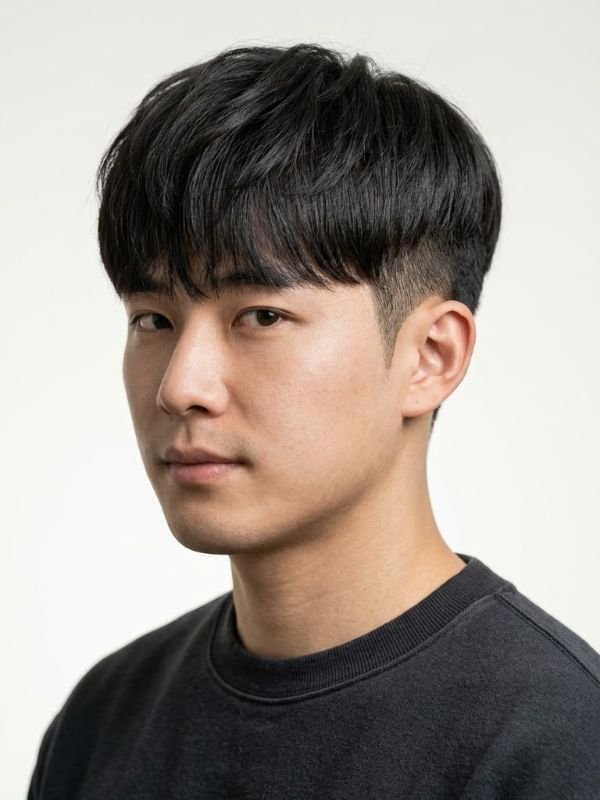
19. Mid Taper Fade Quiff Straight Hair
A quiff puts volume at the front hairline, styled up and back or swept to the side. The mid taper keeps the sides short, which makes the top look taller. Expect a blow-dry, a round brush, and a firm-hold product, plus more styling time than most cuts need. It works well for date nights and events.
![Mid Taper Fade Quiff Straight Hair]](https://nexttapper.com/wp-content/uploads/2026/11/Mid-Taper-Fade-Quiff-Straight-Hair.jpg)
20. Mid Taper Fade Curtains Straight Hair
Curtain bangs part in the middle and sweep out to frame the face. The sides get a gentle mid taper, which keeps the look relaxed with a ’90s feel. The bangs draw attention to the eyes and soften the forehead, and one guide suggests this look for heart-shaped faces.
![Mid Taper Fade Curtains Straight Hair]](https://nexttapper.com/wp-content/uploads/2026/11/Mid-Taper-Fade-Curtains-Straight-Hair.jpg)
Before & After: What a Mid Taper Fade Does for Straight Hair
A mid taper changes three things: the sides, the silhouette, and how the top reads.
- The sides get shorter and cleaner, which removes bulk and makes the head look neater.
- The silhouette tightens, so the top looks more defined from the front and side.
- The top keeps its length, so the cut still has shape and movement.
Before-and-after comparisons work best when the photos are taken in the same light and from the same three angles: front, side, and back. Take your own photos before the first visit and again after the cut, so you can judge the change for yourself.
How to Ask Your Barber for a Mid Taper Fade
A clear request saves a lot of frustration. Use specific phrases and bring photos.
Key Phrases to Use With Your Barber
- “Start the blend at the top of my ear.”
- “Keep about two inches on top, and leave the crown a little longer.”
- “Taper to a #1 at the neckline.”
- “Let the fringe fall just below my eyebrows, and texture the ends.”
- “I want it to grow out without a harsh line.”
The Guard Number Blending Sequence
A clean mid taper usually moves from longer guards at the top of the blend to shorter ones near the neck. A common sequence looks like this:
- Set the start point with a longer guard, such as a #3 at the blend line.
- Step down to a #2 as you move toward the ears.
- Move to a #1 or shorter near the neckline.
- Blend each step into the next with a clipper-over-comb or by sliding the guard slowly.
- Finish the neckline and sideburns with a trimmer.
The exact numbers depend on your hair thickness and the finish you want, so treat this as an example rather than a rule.
Guard Number Table: What Each Guard Leaves
| Guard | Approximate length | Where it often appears |
| #0.5 | Under 1/16 inch | Very short finish near the skin |
| #1 | About 1/8 inch (3 mm) | Common end point for a taper |
| #1.5 | About 3/16 inch | Transition between #1 and #2 |
| #2 | About 1/4 inch (6 mm) | Lower sides and neckline blend |
| #3 | About 3/8 inch (10 mm) | Start of the blend, or a short top |
| #4 | About 1/2 inch (13 mm) | Longer section near the blend line |
| #6 | About 3/4 inch (19 mm) | Longer top on blowouts and quiffs |
Guard lengths vary by brand, so check the markings on your own clippers.
Common Mistakes to Mention
- Saying “a little off.” Give inches or guard numbers instead.
- Forgetting a cowlick, a receding hairline, or a sharp crown. These change where the blend should start.
- Skipping fringe details. Say how long the bangs should be and where they should end.
- Not saying how you style the top. A blowout, a slick back, and a fluffy top each need different lengths.
How Much Does a Mid Taper Fade Cost?
Prices depend mostly on your city and the shop. A few recent price guides give a useful range:
- Across the US, one 2026 price overview lists men’s haircuts at $20 to $45 on average, and notes that detailed fades and neckline finishing push the price higher.
- In Elmhurst, Illinois, a local shop’s 2026 price guide lists a fade or taper at $28 to $40, with a beard trim at $15 to $25 as an add-on.
- In Queens, New York, one shop’s 2025 guide puts the average low fade at $40 to $60, with premium Manhattan shops charging $75 or more.
- Haircut prices have risen sharply nationally. A recent Boston Globe report, citing the Consumer Price Index, says prices for haircuts and other personal care services rose nearly 40 percent from 2019 to 2026.
How often you visit matters more than the sticker price. These figures are simple math, assuming a 52-week year and a flat price per visit. They exclude tips, beard trims, and products.
| Visit interval | Visits per year | At $35 per visit | At $45 per visit |
| Every 2 weeks | 26 | $910 | $1,170 |
| Every 3 weeks | 17 | $595 | $765 |
| Every 4 weeks | 13 | $455 | $585 |
Common Mid Taper Fade Mistakes to Avoid
- Ignoring the crown. A strong cowlick at the crown can push the top out of shape. Ask your barber to plan the cut around it.
- Cutting length before choosing a style. A blowout or slick back needs more length than a fluffy or textured look. Decide the style first.
- Using heavy product on fine hair. It weighs fine straight hair down and makes it look flat.
- Taking the blend too high on fine hair. A high blend can make the sides look thin.
- Neglecting the sideburns between visits. Shaggy sideburns make a crisp mid taper look untidy quickly.
- Rebooking only when the sides look bad. Book the next visit before the blend loses its shape.
How to Maintain a Mid Taper Fade for Straight Hair
Maintenance depends on the style, but a few habits apply to all of them.
Touch-Up Schedule
- Mid taper and fringe styles: every two to three weeks.
- Line designs: every one to two weeks.
- Longer tops: you can stretch the top to six to eight weeks, but refresh the blend sooner.
Daily Styling Routine
- Wash on your usual schedule with a gentle shampoo.
- Towel-dry until the hair is just damp.
- Apply product to the top, then style it while the hair is still damp.
- Dry or let it air-dry, then comb or brush the top into place.
- Once a week, check the neckline and sideburns and tidy them.
5-Minute Blow-Dry Routine at Home
Once you have the rhythm, this takes about five minutes:
- Start with damp hair, not soaking wet.
- Apply heat protectant and a light volumizer at the roots.
- Rough-dry with your fingers, lifting the top away from the head.
- Use a round brush at the front and crown, pulling the hair up and away from your face as you dry.
- Finish with a cool blast of air to set the shape.
- Add a small amount of matte product for hold and texture.
Styling Tools for Straight Hair
- Round brush: lifts the top and adds volume.
- Hair dryer with a concentrator nozzle: directs heat where you need it.
- Flat iron: smooths sleek styles when used at a moderate heat setting.
- Fine-tooth comb: creates clean parts and slick lines.
- Trimmer with guards: keeps the neckline and sideburns tidy between visits.
Products That Work Best
- Matte clay or paste: texture and control for most looks.
- High-hold pomade: slick backs and sharp parts.
- Cream or light mousse: soft volume for fluffy and quiff styles.
- Sea-salt spray: texture on thick straight hair.
Avoid heavy wax on fine hair, since it weighs the top down.
Best Mid Taper Fade for Straight Hair by Face Shape
Face shape gives you a starting point, not a verdict. Height on top tends to add length, while fullness at the sides adds width, so use that as a guide. Sources disagree on a few shapes, so check each option in a mirror before you commit.
Oval Face
Oval faces are the most balanced shape, so most styles work. Choose based on hair density and how much styling you want to do. Fringes and quiffs both suit oval faces.
Round Face
Height helps. A quiff, a pompadour, or a spiky top adds vertical lines, while flat, wide sides add width. Avoid a low, wide finish on the sides.
Square Face
A strong jaw is the main feature here. A mid taper with a textured fringe or a quiff softens the angles. One guide recommends a mid fade with a quiff for square and oval faces.
Heart-Shaped Face
Hearts are wider at the forehead and narrower at the chin. Curtains, bro flows, and textured fringes draw attention downward. A beard can add fullness at the jaw if you want it.
Oblong Face
Long faces need less height. Curtain bangs and a moderate top usually work better than a tall quiff. Sources disagree here: one guide pairs blowouts with oblong faces, while others warn that height adds length. Test both in a mirror.
Diamond Face
Diamond faces are widest at the cheekbones. A textured or longer fringe softens the forehead and balances the width. One guide also suggests a mullet with a mid taper for diamond and oval faces.
Best Mid Taper Fade Styles by Age Group
Age gives you a starting point, but hair health, lifestyle, and comfort with styling matter more.
Teenagers
Textured fringes with a taper suit teens and men in their twenties. They look fresh without heavy styling, which makes them easy to keep up with.
Young Men
Burst fades, drop fades, and two block cuts give a bolder look. They suit men who enjoy changing their style and can keep up with regular visits.
Professional Men
Comb-overs, side-swept styles, and slick backs look polished in an office. A mid taper keeps the sides neat with less contrast than a skin fade.
Older Men and Grey Hair
Subtle layering can soften mature features, and a softer taper often suits grey hair better than a high-contrast fade. A product with shine and light hold keeps the top from looking flat.
Mid Taper Fade vs Other Fades for Straight Hair
Straight hair shows every line, so the differences between fades stand out. Use this table for a quick comparison.
| Cut | Where the blend starts | Bottom finish | Typical upkeep |
| Mid taper | Temple to top of the ear | Short length, not skin | Every 2 to 3 weeks |
| Low taper | Lower ear and sideburn area | Short, neat neckline | Every 3 to 4 weeks |
| High taper | Above the temples | Short, with bolder contrast | About every 2 weeks |
| Skin fade | Mid or low, depending on the cut | Taken to bare skin | Every 2 to 3 weeks |
Mid Taper Fade vs Low Taper Fade
The low taper is subtler and easier to maintain. The mid taper adds more shape at the sides and works better on thick straight hair that builds bulk around the temples.
Read Also This: 8 Mid Taper Comb Overs That Look Clean in 2026
Mid Taper Fade vs High Taper Fade
A high taper starts above the temples, which gives stronger contrast and a taller look. One guide suggests high tapers for round faces, while the mid taper suits a wider range of face shapes.
Mid Taper Fade vs Skin Fade
A skin fade goes all the way to bare skin, which creates the most contrast, and it needs more sun protection and care. The mid taper keeps a short finish, so it’s easier to wear in conservative settings.
Mid Taper Fade vs Mid Fade
Both start at mid-height. The difference is the finish: a mid fade goes down to a buzz or skin, while a mid taper stays short. Straight hair suits either one, but the mid fade shows its edges more clearly.
Conclusion
Start with the style you want on top, since the top decides how much length the sides need. Then pick the blend height and finish. Bring photos, use guard numbers or inches, and book the next visit before you leave the chair. If you’re unsure, a mid taper with a textured fringe is a versatile starting point that works across many face shapes and routines.
